At a glance

LuvemBooks Verdict
Best for: Long-term Discworld readers who have followed Moist von Lipwig through Going Postal and Making Money, and who want to watch Ankh-Morpork cross the irreversible threshold into the industrial age — with all the political weight and elegiac resonance that carries given its place as the penultimate novel in Pratchett's series.
Worth it? Skip it? Read the full verdict →Preview the book
![By Terry Pratchett Raising Steam: A Discworld Novel (Export ed.) [Mass Market Paperback] by Terry Pratchett front cover](https://cdn.luvembooks.com/birthdais/media/original_images/By_Terry_Pratchett_Raising_Steam_A_Discworld_Novel_Export_ed._Mass_Mark_rH0sbZ4.webp)

Ask LuvemBooks
Was this helpful?
- Is it worth reading?
- For the long-term Discworld reader, Raising Steam delivers exactly what the late series does best: large themes — progress, extremism, institutional power, legacy — routed through fast-moving plot and a cast of characters who have earned their place on the page. Cory Doctorow, writing on Boing Boing, praised Pratchett for never having "quite balanced whimsy and gravitas as carefully as this," and The Guardian singles out the novel's thematic ambition as genuinely impressive. The key caveat is structural: readers new to the series will lack the character history the novel builds upon, and those who engage with Discworld primarily for its tight satirical comedy may find the later register — heavier on political narrative and world-building momentum — a different experience from the early books.
- Similar books
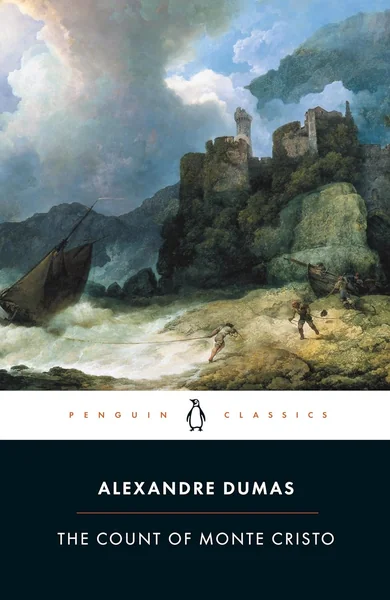
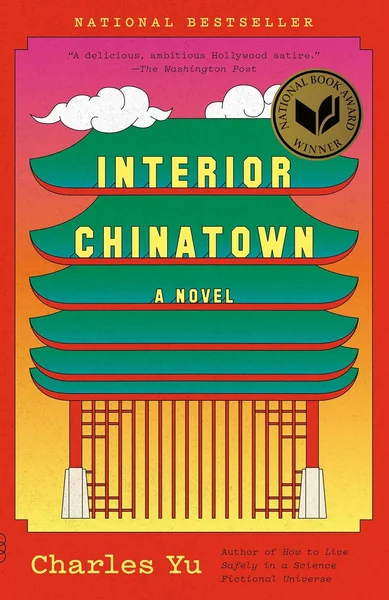
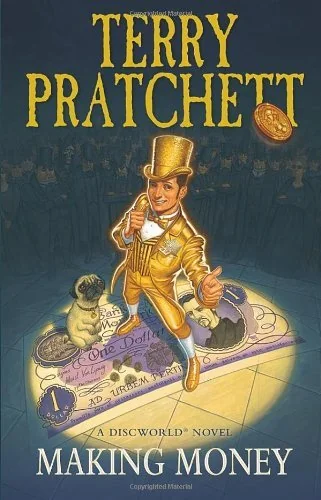
- Readers who enjoy Raising Steam's blend of comic ensemble fiction and political intrigue have several strong options among LuvemBooks' curated picks. Making Money by Terry Pratchett is the direct predecessor in the Moist von Lipwig trilogy, and an ideal read before or alongside Raising Steam. Station Eleven by Emily St. John Mandel shares a preoccupation with civilisational change and what survives a threshold moment in history, approached through an ensemble cast. The Count of Monte Cristo by Alexandre Dumas offers a similarly propulsive plot driven by a resourceful, morally complex protagonist navigating power and institutions. Interior Chinatown by Charles Yu, like Pratchett's late Discworld work, uses genre scaffolding to tackle serious questions about identity, systemic power, and individual meaning.
- Who should read this?
- Raising Steam is best suited to long-term Discworld fans — particularly those who have followed the Moist von Lipwig arc through Going Postal and Making Money, and who have watched Ankh-Morpork evolve over multiple novels. Readers drawn to Pratchett's politically engaged late work, or who enjoy comedy-adjacent fiction that takes large themes seriously — progress, extremism, legacy, competing rights and freedoms — will find this among the most ambitious entries in the sequence. Readers who engage with the series primarily for its early satirical comedy register, or who are coming to Discworld for the first time, are better served by an earlier entry point.
- About Terry Pratchett
- Terry Pratchett was a beloved British fantasy author best known for the Discworld series, celebrated for his satirical wit. He sold over 85 million books worldwide, making him one of the best-selling authors in the history of British fiction.
- What are the main themes?
- The Guardian identifies Pratchett's central preoccupations in Raising Steam as the threat and promise of change, the individual's search for meaning within their own society, and the fine moral judgments that must be made between competing rights and freedoms. The dwarfish fundamentalist subplot — encompassing arson, murder, and a palace coup in Uberwald — is handled as a serious political thriller running in parallel to the railway adventure, giving the novel genuine stakes alongside its comedy. Harry King's arc, a self-made man desperate to shed the stigma of his own success, adds a poignant secondary thread about legacy and identity. The novel also functions as a threshold moment for the Discworld itself: the industrialisation of a world that began as satirical parody and became, in Ben Aaronovitch's words in The Guardian, something "striving to become a real place."
- Where does this fit in the series?
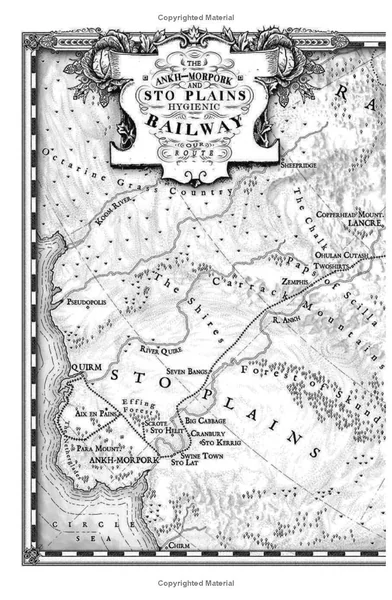
- Raising Steam is the 40th Discworld novel and the penultimate entry in the series — a historically charged position, given Pratchett's death in 2015. It is the third and final novel to star Moist von Lipwig, following Going Postal and Making Money, and it marks the moment the Discworld itself industrialises, crossing what LuvemBooks describes as an irreversible threshold. The novel even opens with a railway map of the Disc — a detail The Guardian review singled out as a pointed symbol of the world's arrival into a modern era. The final Discworld novel, The Shepherd's Crown, followed in 2015.
- How does this compare to other Pratchett books?
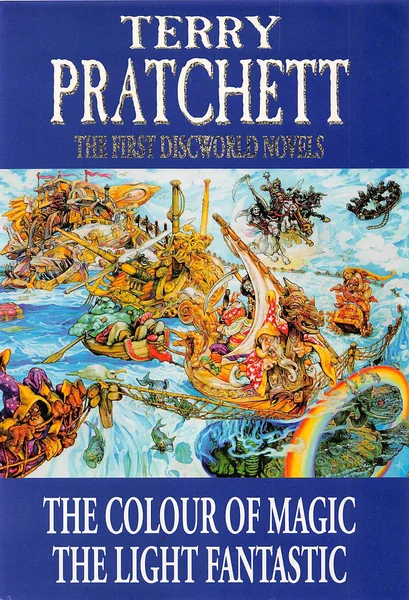
- Compared to the early Discworld novels — including The Colour of Magic and The Light Fantastic, which LuvemBooks has also reviewed — Raising Steam operates in a markedly different register. Where the early series was built on satirical parody, the later Discworld, as Ben Aaronovitch observed in The Guardian, gradually "took on a certain solidity, as if it were striving to become a real place," driven by richly three-dimensional recurring characters. Raising Steam is the culmination of that arc: it trades tight satirical comedy for political thriller plotting, large thematic ambition, and the full weight of a forty-novel ensemble. Compared to Making Money, its immediate predecessor in the Moist von Lipwig trilogy, it is notably more urgent in tone and more expansive in scope.
Summarize this book
Follow up
Synthesized from verified book data & published reviews · How we review
Press Enter to ask. Answers come from our editorial Q&A — start typing to see related questions.
Age & Reading Level
Recommended age
Adult
Reading level
Adult
2 content notes · who it suits
Content to know about
Skip if you're looking for the tight satirical comedy of early Discworld and have no appetite for political thriller plotting
Editorial Review
The 40th Discworld novel sends the irrepressible Moist von Lipwig racing across the Disc on its first steam railway, balancing industrial-age comedy with a genuinely urgent political thriller — a penultimate entry that science fiction author Cory Doctorow, writing on Boing Boing, called "a spectacular novel, and a gift from a beloved writer to his millions of fans."
Read the Full ReviewBooks like Raising Steam
Curated picks for readers who enjoyed Raising Steam, with our reasoning for each match.
If you liked Raising Steam