At a glance

LuvemBooks Verdict
Best for: Readers of serious Holocaust fiction who are drawn to perpetrator-adjacent moral perspectives, particularly those already familiar with The Boy in the Striped Pyjamas and interested in exploring questions of complicity, generational guilt, and late-in-life reckoning across a dual-timeline narrative.
Worth it? Skip it? Read the full verdict →Ask LuvemBooks
Was this helpful?
- Is it worth reading?
- For readers drawn to Holocaust literature that centres perpetrator-adjacent perspectives and moral reckoning across a lifetime, All the Broken Places offers genuine rewards: The Guardian praised it as 'gripping, well honed and very much aimed at adults,' and John Irving called its 'magnitude and emotional impact' something that cannot be prepared for. Gretel Fernsby is a richly drawn, morally complex narrator, and Boyne's structural decision to delay the full picture of her guilt generates real suspense. The key caveat is pacing — critics noted some 'avoidable repetitiousness in the writing and an occasional sense of aimlessness in the plot,' and readers expecting the taut economy of The Boy in the Striped Pyjamas will find this a considerably denser, slower-cohering novel. Prospective readers may also wish to research the ongoing critical debate around the historical framing of the Holocaust in Boyne's work before engaging.
- Similar books
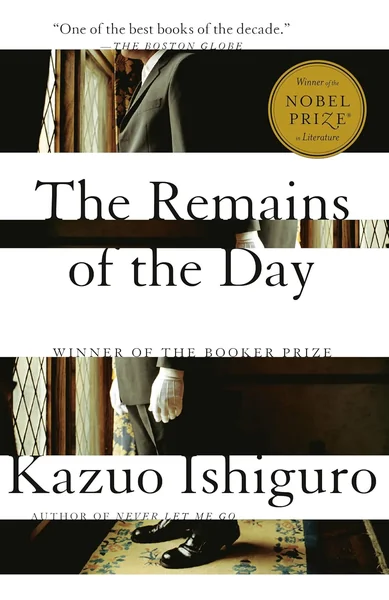
- Readers drawn to All the Broken Places tend to gravitate toward fiction that grapples with historical atrocity, moral complicity, and lives shaped by guilt. The Tattooist of Auschwitz by Heather Morris is a natural companion — also set against the Holocaust, though from a survivor's perspective rather than a perpetrator-adjacent one. The Reader by Bernhard Schlink is particularly close in spirit, centering a German narrator's reckoning with complicity and silence across decades. The Remains of the Day by Kazuo Ishiguro shares the architecture of a lifetime of suppressed guilt examined in old age, while Half of a Yellow Sun by Chimamanda Ngozi Adichie offers a comparably serious engagement with atrocity and its long aftermath. For something lighter in register but equally preoccupied with second chances and the weight of the past, The Midnight Library by Matt Haig offers a thought-provoking companion read.
- Who should read this?
- All the Broken Places is written explicitly for an adult audience and will resonate most strongly with readers drawn to Holocaust literature that centres perpetrator-adjacent perspectives — those interested in guilt, complicity, and the long reach of historical atrocity into everyday life. It is particularly well suited to readers who engage with questions of generational guilt, survivor identity, and late-in-life moral courage, and to those already familiar with The Boy in the Striped Pyjamas who want to follow Gretel's story into adulthood. Readers expecting a quick, propulsive read in the vein of its predecessor should be aware that this is a considerably denser novel with a much broader canvas.
- About John Boyne
- John Boyne is an Irish novelist and writer.
- What are the main themes?
- The novel's driving themes are complicity, guilt, and the cycles of grief that world-shaking historical events set in motion across generations. Gretel's sense of guilt is described in the review as 'a complex amalgam of feelings about her father's role in the death camp, her initial ignorance and eventual realization of what Auschwitz represented, her silence after the war, and the part she thinks she played in Bruno's death.' Boyne draws a deliberate structural parallel between Gretel's wartime passivity and the moral choice she faces in present-day London — making the novel's argument explicit that complicity is not only a historical sin. The subplot involving Gretel's mother Elsa, who drifts toward pro-Nazi sentiment in the postwar years, adds further moral complexity to the novel's dense thematic fabric.
- Is this a good book club pick?
- All the Broken Places is rich in discussion material and well suited to a serious book club. The central moral question — what does a bystander owe the world, then and now? — is designed to generate debate, and the parallel Boyne draws between Gretel's wartime passivity and her present-day crossroads gives that question concrete narrative stakes. The ongoing critical conversation about the historical framing of Boyne's Holocaust fiction, noted in the LuvemBooks review, offers an additional layer of context for groups interested in engaging with literary reception alongside the novel itself. Critics' observations about occasional plot aimlessness may also be worth discussing in the context of how the dual timeline serves — or sometimes strains — the novel's ambitions.
Summarize this book
Follow up
Synthesized from verified book data & published reviews · How we review
Press Enter to ask. Answers come from our editorial Q&A — start typing to see related questions.
Age & Reading Level
Recommended age
Adult
Reading level
Adult
4 content notes · who it suits
Content to know about
Best for: Adults — the novel is explicitly written for an adult audience, engaging with perpetrator-adjacent Holocaust guilt, domestic violence, and moral complicity across a lifetime
Skip if you're looking for a fast-paced, tightly compressed read in the fable-register of The Boy in the Striped Pyjamas
Editorial Review
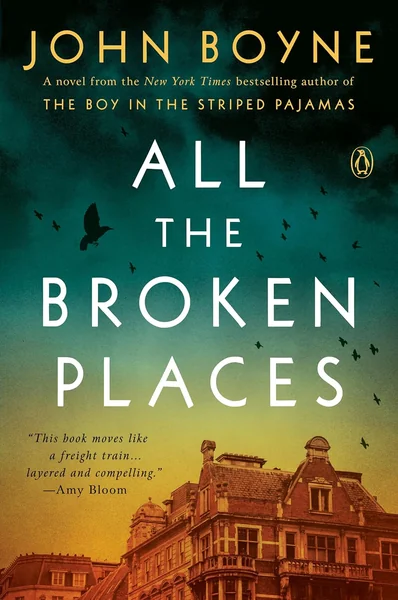
All the Broken Places is a historical fiction novel by New York Times bestselling author John Boyne — a sequel to his book The Boy in the Striped Pyjamas — that follows Gretel Fernsby, now 91 years old and living quietly in a London mansion block, as the arrival of a new family forces her to confront decades of buried guilt over her father's role as commandant of a Nazi extermination camp, her own complicity, and her part in her brother Bruno's death.
Read the Full ReviewBooks like All the Broken Places
Curated picks for readers who enjoyed All the Broken Places, with our reasoning for each match.
If you liked All the Broken Places