Interior Chinatown: A Novel (National Book Award Winner) (Vintage Contemporaries)
by Charles Yu
At a glance

LuvemBooks Verdict
Best for: Readers of formally adventurous literary fiction who are drawn to culturally urgent satire — particularly those interested in race, Hollywood representation, and the Asian American immigrant experience — and who are willing to engage with a novel that deploys screenplay structure as its central argument.
Worth it? Skip it? Read the full verdict →Ask LuvemBooks
Was this helpful?
- Is it worth reading?
- Interior Chinatown earned widespread critical recognition — including the 2020 National Book Award for Fiction, a New York Times bestseller designation, and best-book-of-the-year honors from The New Yorker, NPR, Time, The Washington Post, The Atlantic, and Vanity Fair — because its formal invention and emotional stakes are genuinely inseparable. The screenplay format is not a gimmick but, as critics noted, "the perfect delivery system" for a satire that is simultaneously an acid indictment of Hollywood's Asian stereotypes and a moving exploration of family and identity. Readers willing to engage with a formally unconventional book will find it operating at the highest level of experimental American literary fiction.
- Similar books
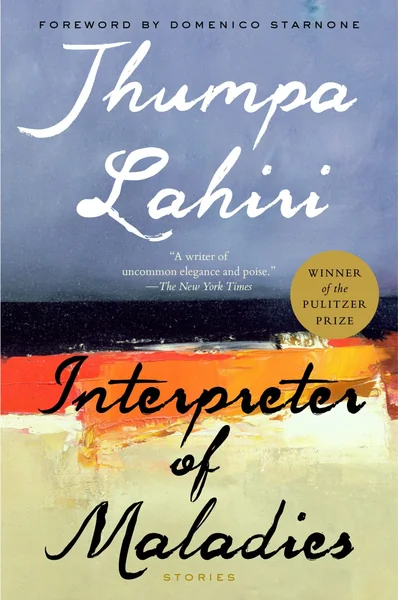
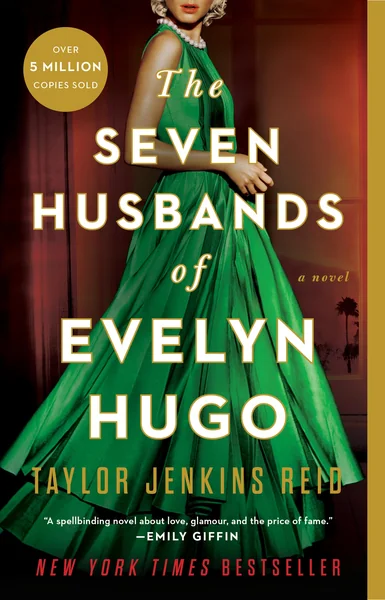
- Readers drawn to Interior Chinatown's blend of literary experimentation, cultural identity, and immigrant experience will find rich companions in several works. Jhumpa Lahiri's Interpreter of Maladies shares the novel's attentiveness to the interior lives of the Asian American immigrant experience, while Viet Thanh Nguyen's The Sympathizer similarly deploys a formally inventive, satirically charged voice to interrogate race, identity, and the American gaze. For formally ambitious literary fiction with a Hollywood lens, Taylor Jenkins Reid's The Seven Husbands of Evelyn Hugo offers another story of constructed identity and the roles we perform for others. Emily St. John Mandel's Station Eleven shares Interior Chinatown's genre-defying ambition and its meditation on the stories we tell to make sense of our lives.
- Who should read this?
- Interior Chinatown is essential reading for fans of formally experimental literary fiction — particularly those who appreciate work where structure itself functions as argument, in the tradition of Paul Beatty's The Sellout. Readers interested in Asian American identity, Hollywood's history of racial stereotyping, and the immigrant experience across generations will find it both lacerating and deeply moving. It also rewards readers drawn to cultural criticism embedded in fiction: critics described it as "part novel, part screenplay, part screed, and part sociology." Those who prefer traditional prose narratives with clear genre boundaries may find the form demanding, but readers willing to meet the book on its own terms will encounter one of the most formally inventive American novels in recent memory.
- About Charles Yu
- Charles Chowkai Yu is an American writer and lawyer.
- Tell me about the adaptation
- A Hulu television adaptation of Interior Chinatown, created by Charles Yu himself, premiered on November 19, 2024, with Jimmy O. Yang starring as Willis Wu. Yu's direct involvement in the adaptation signals a continuity of vision between the novel and the series. The Hulu series demonstrates the story's reach beyond the page and brings the novel's satirical examination of Asian American representation in Hollywood to a streaming audience.
- What are the main themes?
- Interior Chinatown is built around several interlocking themes: racial stereotyping in Hollywood and American pop culture, the Asian American immigrant experience across generations, assimilation and the cost of conformity, inherited identity and family, and the desire to live authentically outside the roles assigned by society. The novel uses Willis Wu's desire to graduate from "Background Oriental Male" to "Kung Fu Guy" — the only archetype the fictional show Black and White offers — as a precise satirical metaphor for the limited space American culture has historically made for Asian and Asian American people. Anita Felicelli of the San Francisco Chronicle described the novel as "a moving exploration of race and assimilation," while critics also called it "a parable for outcasts feeling invisible in this fast-moving world."
- When was it published?
- Interior Chinatown was first published by Pantheon Books on January 28, 2020. It went on to win the 2020 National Book Award for Fiction and became a New York Times bestseller, arriving, as critics noted, as a genuine cultural event. The Vintage Contemporaries paperback edition followed, making it widely available to a broader readership.
Summarize this book
Follow up
Synthesized from verified book data & published reviews · How we review
Press Enter to ask. Answers come from our editorial Q&A — start typing to see related questions.
Age & Reading Level
Recommended age
Adult
Reading level
Adult
1 content note · who it suits
Content to know about
Skip if you want a straightforward narrative in conventional prose fiction format
Editorial Review
Charles Yu's Interior Chinatown is a National Book Award–winning novel that deploys the screenplay format as a vehicle for biting satire, using the story of Willis Wu — a "Generic Asian Man" trapped in the background of a fictional TV police procedural — to interrogate racial stereotyping in Hollywood, the Asian American immigrant experience, and the suffocating pressure of inherited identity. Named a New York Times bestseller and a best book of the year by outlets including The New Yorker, NPR, Time, The Washington Post, The Atlantic, and Vanity Fair, it stands as one of the most formally inventive and culturally urgent American novels of recent years.
Read the Full ReviewBooks like Interior Chinatown
Curated picks for readers who enjoyed Interior Chinatown, with our reasoning for each match.
If you liked Interior Chinatown