At a glance

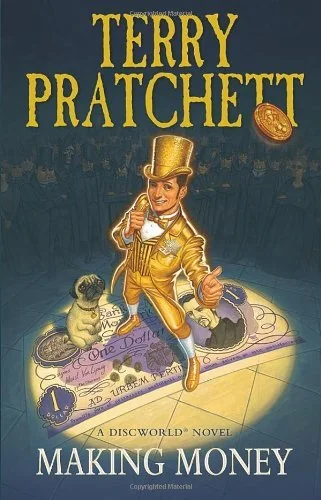
Making Money
LuvemBooks Verdict
Best for: Committed Discworld readers — particularly those who have already met Moist von Lipwig in Going Postal — and anyone drawn to comic fantasy that treats economic systems and the philosophy of money as genuine satirical and narrative material.
Worth it? Skip it? Read the full verdict →Ask LuvemBooks
3 users found this summary helpful
- Is it worth reading?
- For committed Discworld readers and fans of Moist von Lipwig, Making Money is absolutely worth reading — it won the Locus Award for Best Fantasy Novel in 2008 and received a Nebula Award nomination the same year, placing it among that year's most formally recognised fantasy releases. Its intellectual core — Pratchett dramatising why we trust banks and the arbitrary foundations of currency — is built into the plot mechanics rather than just the backdrop, and the ensemble cast, including the Mr. Bent reveal and Adora Belle Dearheart's substantial golem storyline, rewards investment. The honest caveat is that critical opinion is genuinely divided: The Observer's Rowland Manthrope argued the satire lacks Pratchett's normal cutting edge, and readers coming directly from Going Postal may feel the difference in momentum.
- Similar books
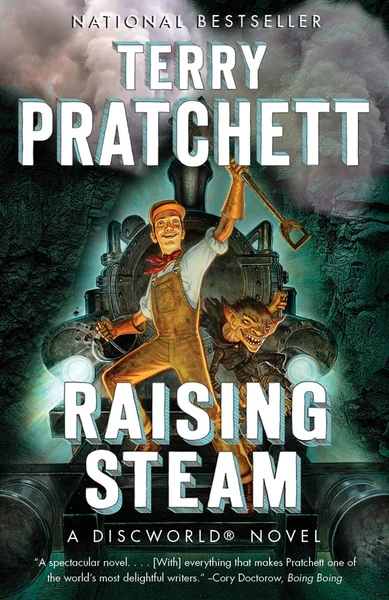
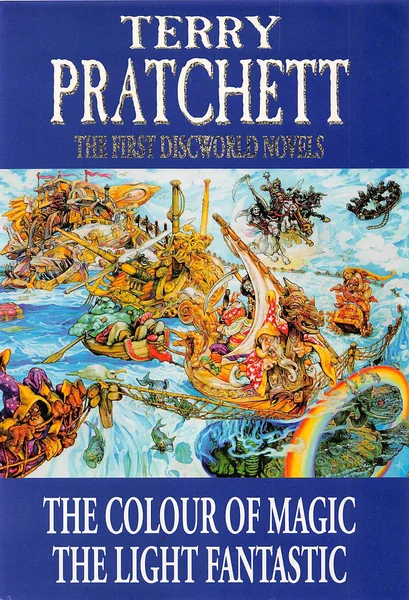
- Readers who enjoy Making Money's blend of satirical wit, roguish protagonists, and institutional comedy will find strong companions among the curated selections below. Raising Steam by Terry Pratchett continues Moist von Lipwig's story in the same Discworld setting, making it the most natural next step. For those drawn to the series from the beginning, The Colour of Magic and The Light Fantastic — also reviewed on LuvemBooks — offer Pratchett's foundational Discworld voice. Outside Discworld, The Count of Monte Cristo by Alexandre Dumas shares Making Money's themes of a clever, resourceful protagonist navigating corrupt institutions through cunning rather than force. Interior Chinatown by Charles Yu and First Lie Wins by Ashley Elston both feature protagonists operating through constructed identities and deception, echoing Moist von Lipwig's con-artist DNA in very different registers.
- Who should read this?
- Making Money is essential reading for committed Discworld fans, particularly those who have already met Moist von Lipwig in Going Postal and want to follow his arc into the world of banking and currency. It is also a strong pick for readers interested in fantasy that uses its genre scaffolding to interrogate real ideas — here, the arbitrary nature of money, the psychology of institutional trust, and the gap between a currency's nominal and actual foundations. Readers who enjoy farce, ensemble casts with genuine depth, and satirical comedy that rewards close attention will find it rewarding. Those seeking the compressed momentum of Going Postal, or looking for Pratchett at his sharpest satirical edge, may want to temper expectations based on the critical division the novel has attracted.
- About Terry Pratchett
- Terry Pratchett was a beloved British fantasy author, best known as the creator of the Discworld series. He is celebrated for his satirical wit and has sold over 85 million books worldwide, cementing his place as one of the most widely read fantasy authors of all time.
- What are the main themes?
- The novel's central theme is the nature of money itself as a collective fantasy — a shared agreement that abstract numbers carry real value. Pratchett dramatises this through Moist's plan to back currency with the city of Ankh-Morpork rather than gold, which mirrors the actual philosophical foundations of modern monetary theory. Surrounding that core are closely linked themes of institutional trust and inertia (why do citizens trust banks?), the arbitrariness of value, and the ethics of a reformed con artist applying his skills within legitimate systems. Cosmo Lavish's obsessive impersonation of Vetinari adds a thread about the corrupting nature of power, while Adora Belle Dearheart's golem excavation widens the novel's scope to include questions about lost civilisations and what endures.
- How does it compare to Going Postal?
- Making Money is the direct successor to Going Postal in the Moist von Lipwig sequence, and the comparison is the dominant critical conversation around the book. Critics noted that Making Money is not quite as successful as Going Postal, citing a lack of that novel's forward drive — readers coming directly from the predecessor may feel the difference in momentum. The Observer's Rowland Manthrope argued the satire loses some of Pratchett's usual cutting edge. Against that, Making Money is arguably more intellectually ambitious in its satirical target: money and monetary theory are more philosophically slippery than postal reform, and Pratchett's decision to make that theme structural rather than decorative is widely praised. The Locus Award and Nebula nomination suggest it landed strongly with genre readers despite the mixed critical press.
- Where does this fit in the Discworld series?
- Making Money is the second novel in the Moist von Lipwig sub-sequence within the broader Discworld series, following Going Postal and preceding Raising Steam. The Discworld novels are designed to be readable in any order, so Making Money is accessible as a standalone, but it rewards readers who have already met Moist in Going Postal. Within the wider Discworld canon it sits as a later-period entry — Pratchett was deep into the series by 2007 — and is part of the 'Industrial Revolution' cluster of Discworld novels that includes Raising Steam.
Summarize this book
Follow up
Synthesized from verified book data & published reviews · How we review
Press Enter to ask. Answers come from our editorial Q&A — start typing to see related questions.
Age & Reading Level
Recommended age
Adult
Reading level
Adult
who it suits
Skip if you're looking for propulsive, tightly plotted fantasy and rank Going Postal among the series' very best — the slightly looser momentum and occasionally blunted satirical edge may disappoint.
Editorial Review
Making Money is a Discworld fantasy novel in which reformed con artist Moist von Lipwig is coerced into running the Royal Bank of Ankh-Morpork, using the premise to deliver sharp satire about the nature of money, public trust, and financial institutions. First published in 2007, it won the Locus Award for Best Fantasy Novel in 2008 and was nominated for the Nebula Award the same year.…
Read the Full ReviewBooks like Making Money
Curated picks for readers who enjoyed Making Money, with our reasoning for each match.
If you liked Making Money