At a glance
LuvemBooks Verdict
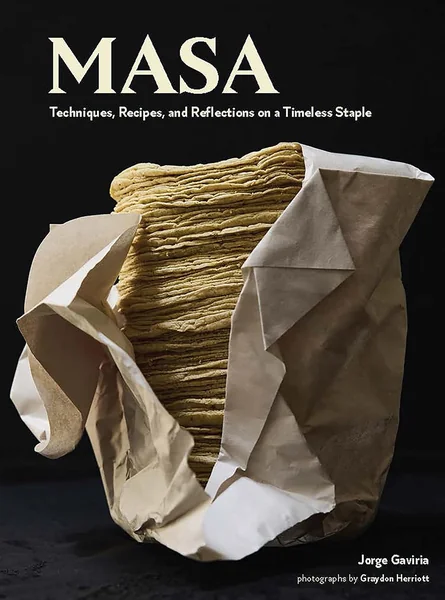
Best for: Serious home cooks, culinary professionals, and food-culture enthusiasts who want an authoritative, encyclopedic guide to masa — from its Mesoamerican origins and the science of nixtamalization through 50 recipes spanning tortillas to Tamal Gnocchi.
Worth it? Skip it? Read the full verdict →Preview the book
Ask LuvemBooks
Was this helpful?
- Is it worth reading?
- Masa holds a rare concentration of institutional recognition for a debut cookbook: it is a national bestseller, a James Beard Award Nominee, a 2023 IACP Award Finalist, and appeared on Best Cookbook of 2022 lists from six major outlets including the Los Angeles Times, Food & Wine, The Washington Post, the San Francisco Chronicle, NPR, and Saveur. Ernesto Gomez of cookswithoutborders.com described it as 'an important, encyclopedic work' and called it 'outstanding.' For cooks who want to go deep on masa — its history, science, and full technical range — it is the kind of reference that doesn't need a sequel to feel complete. Casual cooks seeking a lighter introduction to Mexican cooking may find the scope exceeds their needs.
- Similar books
- Readers drawn to Masa's combination of technical rigor and cultural depth will find strong companions in the curated titles below. The Food Lab: Better Home Cooking Through Science by J. Kenji López-Alt shares the same commitment to explaining the 'why' behind cooking technique through food science. Salt, Fat, Acid, Heat: Mastering the Elements of Good Cooking by Samin Nosrat similarly builds foundational cooking knowledge from first principles rather than recipe-to-recipe instruction. For readers who appreciate the school-of-craft approach, Mastering the Art of French Cooking, Volume 1 by Julia Child, Louisette Bertholle, and Simone Beck set the template for the authoritative, technique-forward cookbook that Masa carries forward in a new culinary tradition. Cook This Book: Techniques That Teach by Molly Baz offers a more accessible entry point for readers who want technique-driven instruction with a lighter touch.
- Who should read this?
- Masa is best suited to serious home cooks, culinary professionals, and food writers who want an authoritative, technically grounded guide to masa and its cultural history. Published reviews note it 'is primarily directed at chefs,' while also acknowledging 'there's also plenty in it that will captivate home cooks who are serious about Mexican cooking.' Readers fascinated by food science, the history of Mesoamerican corn cultivation, or the contemporary 'third wave masa movement' will find the encyclopedic scope a feature rather than a limitation. Those seeking a broad Mexican cooking resource or a quick weeknight recipe collection are better served by a different title.
- About Jorge Gaviria
- Jorge Gaviria is the founder and CEO of Masienda, a company dedicated to sourcing heirloom corn from small Mexican farms. He is the James Beard Award–winning and bestselling author of Masa, a cookbook exploring the history, science, and techniques behind masa. Based in Los Angeles, he studied at New York University and has been recognized by Forbes as a food entrepreneur.
- How much history and culture does it cover?
- Cultural and historical context is integral to the book's structure, not supplementary. Masa opens with the history of masa from its Mesoamerican roots through what Gaviria calls the 'third wave masa movement,' framing masa not as a niche ingredient but as a living, evolving staple with global applications. The book traces the full continuum from ancient Mesoamerican corn cultivation to the contemporary American culinary scene, drawing on input from academics, corn breeders, journalists, and third-generation tortilleria owners. One industry endorsement quoted by Chronicle Books captures the consensus: 'Maíz is the backbone of Mexican cuisine, and Masa tells its story and elevates its status.'
- How was the book researched and developed?
- One of Masa's defining qualities is the breadth of its sourcing. Gaviria did not write it in isolation: the book incorporates input from food scientists, academics, corn breeders, journalists, tortilla artisans, third-generation tortilleria owners, and home cooks. According to the publisher, Gaviria also drew on direct experience fielding tens of thousands of inquiries from home cooks on topics ranging from best equipment to ideal cooking temperatures to preventing a tortilla from falling apart during reheating. That collaborative foundation gives the technical sections — nixtamalization chemistry, equipment operation, and troubleshooting — a credibility that goes beyond a single author's perspective.
Summarize this book
Follow up
Synthesized from verified book data & published reviews · How we review
Press Enter to ask. Answers come from our editorial Q&A — start typing to see related questions.
Age & Reading Level
Recommended age
Adult
Reading level
Adult
who it suits
Skip if you're looking for a broad introduction to Mexican cooking rather than a deep technical dive into a single ingredient.
Editorial Review
Jorge Gaviria's Masa: Techniques, Recipes is a national bestseller and James Beard Award–nominated cookbook from Chronicle Books that functions as both a comprehensive technical manual and a cultural history of masa, the nixtamalized corn dough at the heart of Mesoamerican cooking. Drawing on input from food scientists, academics, corn breeders, tortilla artisans, and home cooks, Gaviria — founder of heirloom corn supplier Masienda — guides readers from dried kernel to finished dish across 50 base recipes and 28 masa "shapes."…
Read the Full ReviewBooks like Masa
Curated picks for readers who enjoyed Masa, with our reasoning for each match.
If you liked Masa