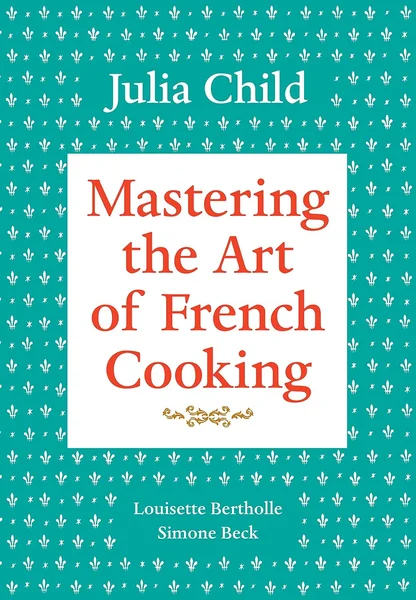
Mastering the Art of French Cooking, Volume 1: A Cookbook
by Julia Child, Louisette Bertholle, Simone Beck
At a glance
About the Author
Julia Child, Louisette Bertholle, Simone Beck1 book reviewed
Mastering the Art of French Cooking, Volume 1
A Cookbook
by Julia Child, Louisette Bertholle, Simone Beck
LuvemBooks Verdict
Best for: Cooks who want to understand French technique from first principles — and anyone interested in the history of American food culture who wants both a practical reference and a primary document of a culinary turning point.
Worth it? Skip it? Read the full verdict →Ask LuvemBooks
Was this helpful?
- Is it worth reading?
- For cooks who approach the kitchen as a discipline — readers who want to understand why a technique works, not just what to do — Mastering the Art of French Cooking, Volume 1 is an essential volume. Entertainment Weekly called it precisely 'what a cookbook should be: packed with sumptuous recipes, detailed instructions, and precise line drawings,' and Thomas Keller credited Julia Child with having 'taken the fear out of the term haute cuisine.' It is also indispensable for anyone interested in the history of American food culture, functioning simultaneously as a practical reference and a primary document of a pivotal cultural moment. Readers looking for quick, convenient weeknight cooking will find the complexity and time demands a genuine mismatch with their needs.
- Similar books
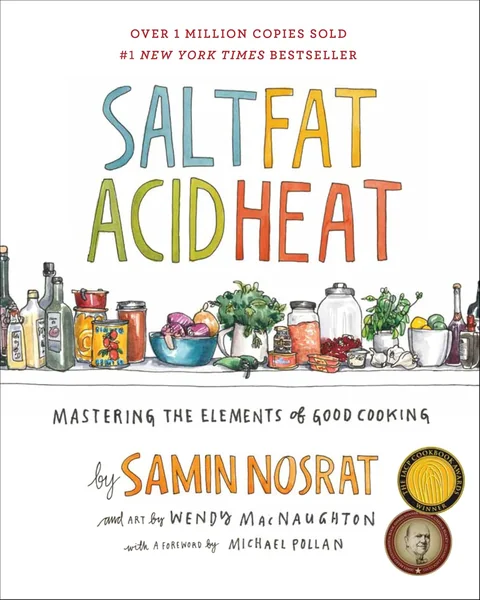
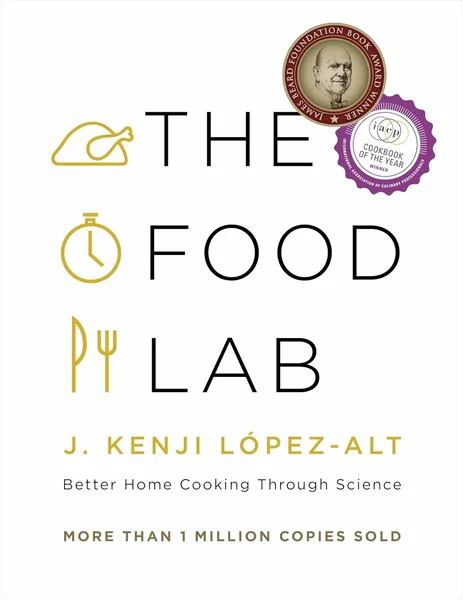
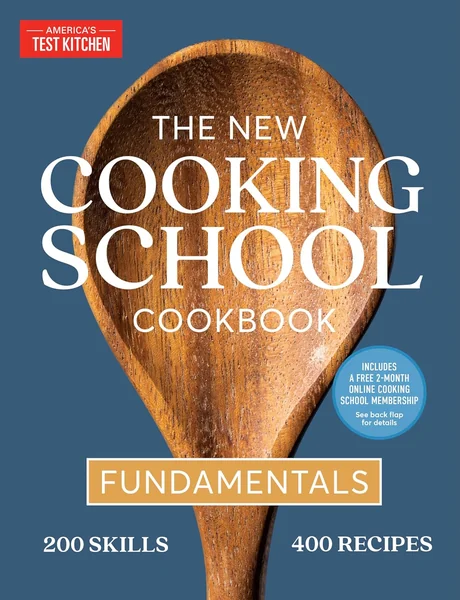
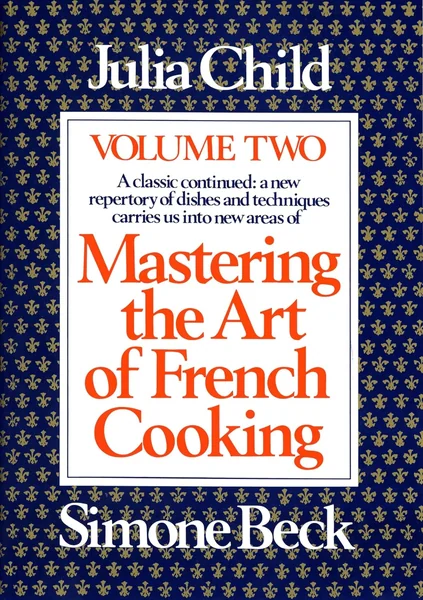
- Readers drawn to Mastering the Art of French Cooking, Volume 1 for its technique-first philosophy will find strong companions on the shelf. Samin Nosrat's Salt, Fat, Acid, Heat: Mastering the Elements of Good Cooking shares the same commitment to teaching underlying principles rather than isolated recipes. J. Kenji López-Alt's The Food Lab: Better Home Cooking Through Science extends that logic into a rigorously analytical, science-grounded approach to home cooking. America's Test Kitchen's The New Cooking School Cookbook: Fundamentals offers a more contemporary, structured culinary-school framework for building technique. For a more approachable, technique-led entry point aimed at modern cooks, Molly Baz's Cook This Book: Techniques That Teach is a notable option. Julia Child's own The Way to Cook and Mastering the Art of French Cooking, Volume 2 — co-authored with Simone Beck — are natural next steps for those who want to stay in Child's world, though these are not currently in the LuvemBooks catalogue.
- Who should read this?
- Mastering the Art of French Cooking, Volume 1 is best suited to cooks who treat the kitchen as a discipline — readers who want to understand the logic behind classical French technique, not just execute a list of steps. While the publisher positions it as offering 'something for everyone, from seasoned experts to beginners who love good food and long to reproduce the savory delights of French cuisine,' the level of detail and the genuine complexity of many preparations make it most rewarding for those willing to invest sustained time and attention. It is also essential reading for anyone interested in American culinary history: historian David Strauss called its publication the single most consequential event in reshaping the gourmet dining scene over the last half century. Readers seeking quick weeknight cooking or modern dietary flexibility will find it a poor match.
- What is its cultural significance?
- Few cookbooks in American publishing history can claim the chain of cultural consequences that followed Mastering the Art of French Cooking, Volume 1. Its success led directly to Julia Child being given her own television programme, The French Chef, launched by Boston's WGBH in 1963 as one of the first cooking shows on American public television. Historian David Strauss stated in 2011 that the book's publication 'did more than any other event in the last half century to reshape the gourmet dining scene' — a claim that reflects the consensus position the volume occupies in culinary history. Thomas Keller and James Beard, two of the most authoritative voices in American gastronomy, both lent their full endorsement to its legacy.
- How is the book structured?
- Rather than organising itself as a sprawling recipe catalogue, the book breaks classical French cooking into a logical sequence of themes and variations — introducing a foundational technique and then demonstrating how it extends across related preparations. This cumulative architecture is designed to build a cook's genuine understanding rather than deliver isolated, disconnected recipes. The 524 recipes are supported by over 100 instructive illustrations by Sidonie Coryn, integrated as part of the instructional design to provide visual support for step-by-step written guidance. Entertainment Weekly specifically cited this combination of 'sumptuous recipes, detailed instructions, and precise line drawings' as defining what a cookbook should be.
- What are its main limitations?
- The book's two principal limitations are complexity and era. On complexity: many of the instructions are, as Entertainment Weekly acknowledged, 'daunting' — classical French technique is genuinely demanding, and the book makes no concessions to speed or convenience, making it a poor fit for readers seeking quick or practical weeknight cooking. On era: originally published in 1961 for a mid-twentieth-century American market, the book's ingredient assumptions and cultural framings do not map cleanly onto contemporary pantry realities, dietary approaches, or modern kitchen contexts. These are not design flaws so much as honest reflections of the book's ambition and its original moment.
Summarize this book
Follow up
Synthesized from verified book data & published reviews · How we review
Press Enter to ask. Answers come from our editorial Q&A — start typing to see related questions.
Age & Reading Level
Recommended age
Adult
Reading level
Adult
who it suits
Skip if you're looking for quick, convenient weeknight recipes rather than a deep study of classical French technique.
Editorial Review
A New York Times bestseller first published by Knopf in 1961 and still in print, Mastering the Art of French Cooking, Volume 1 is a foundational French cookbook co-authored by Julia Child, Simone Beck, and Louisette Bertholle, designed to translate the full logic of classic French cuisine for the American home cook — and widely credited with reshaping how the country thinks about food.
Read the Full ReviewBooks like Mastering the Art of French Cooking, Volume 1
Curated picks for readers who enjoyed Mastering the Art of French Cooking, Volume 1, with our reasoning for each match.
If you liked Mastering the Art of French Cooking, Volume 1