At a glance
LuvemBooks Verdict
Best for: Home cooks at any level who want to build genuine, lasting culinary competence through a structured, curriculum-driven approach rather than simply collecting recipes to reproduce.
Worth it? Skip it? Read the full verdict →Ask LuvemBooks
Was this helpful?
- Is it worth reading?
- For readers who want to build genuine cooking competence rather than simply reproduce a single dish, the curriculum-style structure offers a clear and well-designed path forward. The combination of 80 courses, 400 recipes, 200-plus kitchen tips, and culinary history embedded in every course makes it an exceptionally comprehensive resource for its intended audience. The main caveat is scale: at 680 pages, it is designed as a foundational reference volume, not a quick-start guide, so readers who want a lean weeknight cookbook will find the depth disproportionate to that goal.
- Who should read this?
- The book is explicitly designed for two audiences: beginners who want a structured, progressive path to foundational cooking competence, and more confident cooks who want to close technique gaps or revisit fundamentals. The 80-course architecture serves both groups — beginners follow the sequence from scratch, while experienced cooks can target individual courses as needed. Readers seeking a quick, concise weeknight-meal reference, or advanced cooks looking for complex, restaurant-style techniques, are better served by other titles.
- Similar books
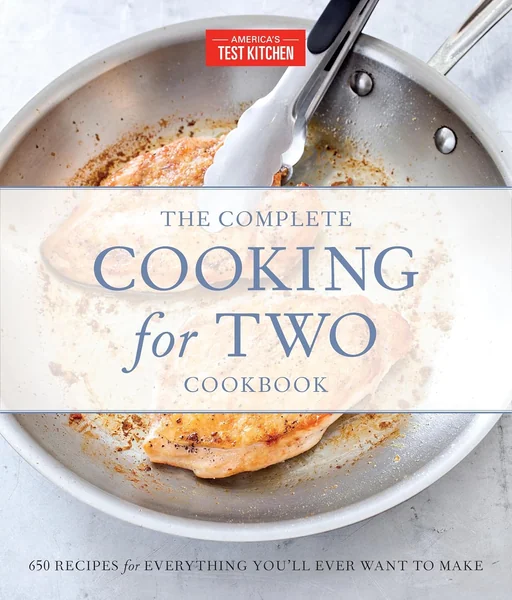
- Readers drawn to the systematic, technique-first approach of this book will find kindred titles in the curated selection below. The Food Lab: Better Home Cooking Through Science by J. Kenji López-Alt shares ATK's science-driven, test-kitchen methodology and similarly rewards engaged, curious cooks. Salt, Fat, Acid, Heat: Mastering the Elements of Good Cooking by Samin Nosrat takes a more conceptual approach to foundational cooking principles, while Mastering the Art of French Cooking, Volume 1 by Julia Child, Louisette Bertholle, and Simone Beck offers a comparable depth of instruction in a curriculum-style format. For a more compact take on technique-led cooking, Cook This Book: Techniques That Teach by Molly Baz is also worth considering — and ATK's own The Complete Cooking for Two Cookbook, Gift Edition is a natural companion for households cooking at smaller scale.
- About America's Test Kitchen
- America's Test Kitchen is a multimedia culinary brand encompassing television shows, magazines, and cookbooks. It was co-founded by Christopher Kimball, who served as its editor, publisher, and television host from its inception through 2016. The brand publishes comprehensive cookbooks — including The Complete Cooking for Two Cookbook — and produces the public television show of the same name.
- How does this compare to other ATK books?
- Within the ATK library, The New Cooking School Cookbook: Fundamentals is distinguished by its explicit classroom architecture — 80 sequenced courses designed to build skills progressively — whereas The Complete Cooking for Two Cookbook, Gift Edition (also reviewed by LuvemBooks) is organised around scale and practicality, collecting 650 recipes for two-person households. For cooks ready to go beyond the basics, ATK's companion volume New Cooking School Cookbook: Advanced Fundamentals covers 100 advanced courses and 400-plus recipes pitched at confident home cooks — making the two volumes a natural pairing for a full culinary education.
- Does it cover culinary history?
- Yes — each of the 80 courses includes historical background on the dishes it covers, giving readers cultural and historical context for the techniques they're learning rather than treating recipes as isolated instructions. This makes the book not just a practical instruction manual but an educational resource that addresses the 'why' of cooking alongside the 'how' — an approach that aligns with America's Test Kitchen's broader publishing identity.
Summarize this book
Follow up
Synthesized from verified book data & published reviews · How we review
Press Enter to ask. Answers come from our editorial Q&A — start typing to see related questions.
Age & Reading Level
Recommended age
Adult
Reading level
Adult
who it suits
Skip if you want a lean, quick-reference cookbook for fast weeknight meals rather than a structured culinary education.
Editorial Review
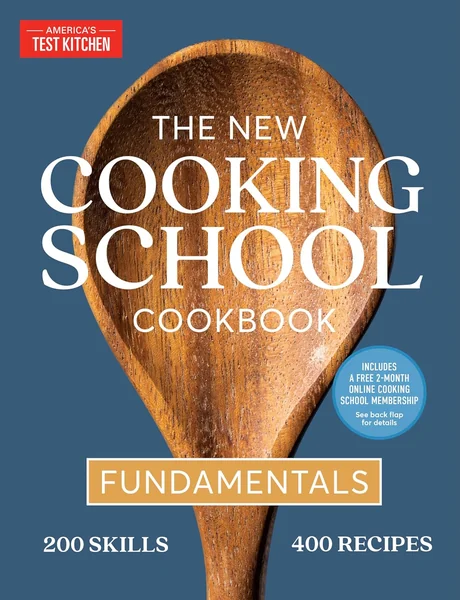
America's Test Kitchen's *The New Cooking School Cookbook: Fundamentals* is a comprehensive culinary reference designed to teach foundational cooking skills through 80 themed courses, 400 recipes, and more than 200 kitchen tips and techniques — structured explicitly as an in-home cooking school for cooks at any level.
Read the Full ReviewBooks like The New Cooking School Cookbook
Curated picks for readers who enjoyed The New Cooking School Cookbook, with our reasoning for each match.
If you liked The New Cooking School Cookbook