At a glance

LuvemBooks Verdict
Best for: Home cooks at any level — from complete beginners to confident kitchen regulars — who want to understand the principles behind why food tastes good rather than simply accumulate more recipes to follow.
Worth it? Skip it? Read the full verdict →Ask LuvemBooks
Was this helpful?
- Is it worth reading?
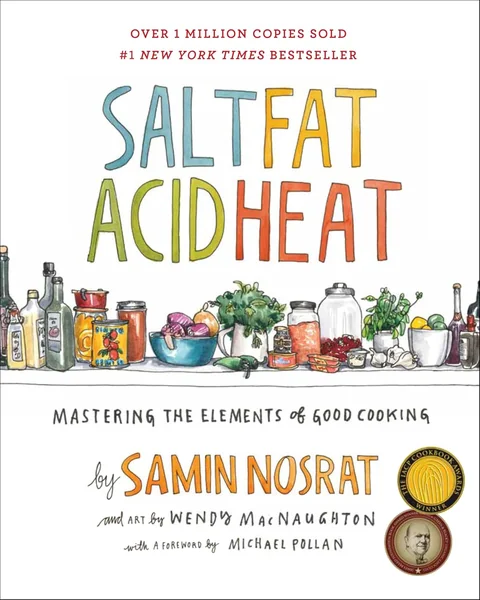
- For cooks who want to understand why food behaves as it does, Salt, Fat, Acid, Heat has earned exceptional critical praise — Publishers Weekly described it as an "exceptional debut" that would "inspire greater confidence in readers," and Bon Appétit stated it will "make you a better cook." Its seven-year development arc, rooted in years of classroom teaching and curriculum refinement, gives the instructional content unusual depth for the genre. The key caveat is that readers seeking a densely packed recipe library may find the recipe count modest relative to the book's technique-focused chapters — it is a teaching text first and a recipe collection second.
- Similar books
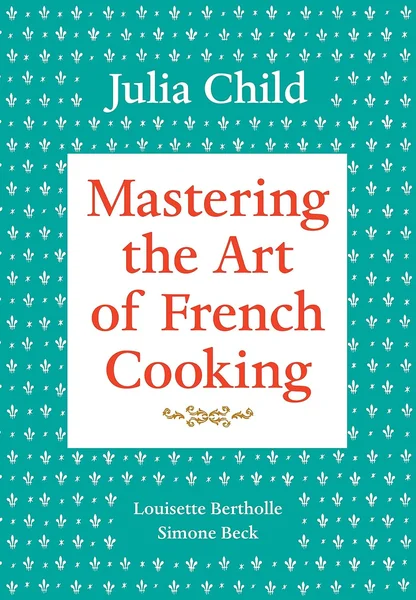
- Readers drawn to Salt, Fat, Acid, Heat's technique-first philosophy will find strong companions among the curated titles below. J. Kenji López-Alt's The Food Lab: Better Home Cooking Through Science shares the same drive to explain the why behind cooking, grounding recipes in rigorous food science. Molly Baz's Cook This Book: Techniques That Teach is a direct spiritual successor — structured, as the title signals, around building skills rather than just producing dishes. For the tradition of transformational culinary educators, Mastering the Art of French Cooking, Volume 1 by Julia Child, Louisette Bertholle, and Simone Beck is the landmark Nosrat herself is compared to. Yotam Ottolenghi, Ixta Belfrage, and Tara Wigley's Ottolenghi Flavor approaches cooking through a similarly conceptual lens — flavor principles rather than recipes alone — while America's Test Kitchen's The New Cooking School Cookbook: Fundamentals offers a structured, school-style grounding in essential techniques.
- Who should read this?
- Salt, Fat, Acid, Heat is most naturally suited to home cooks who want to understand why food behaves as it does, not just what to do next — whether they are complete beginners or accomplished cooks looking to sharpen intuitive skills. The framework operates at the level of principle rather than procedure, making it valuable across experience levels. Readers who come to a cookbook primarily seeking a large, diverse library of tested recipes may find the book's conceptual emphasis and relatively modest recipe count a mismatch for their needs.
- About Samin Nosrat
- Born to Iranian parents in 1979, Samin Nosrat has transformed how home cooks understand the fundamentals of great cooking.
- Tell me about the adaptation
- Salt, Fat, Acid, Heat inspired a 2018 four-part Netflix documentary series of the same name, starring Nosrat herself — a crossover that is rare for any cookbook. The series mirrors the book's four-part elemental structure, with each episode devoted to one of the four governing principles. While the Netflix series extended the book's cultural reach significantly, the book's extended instructional chapters, detailed infographics, and recipes offer a depth of culinary education that the documentary format cannot replicate.
- What makes the book's design unusual?
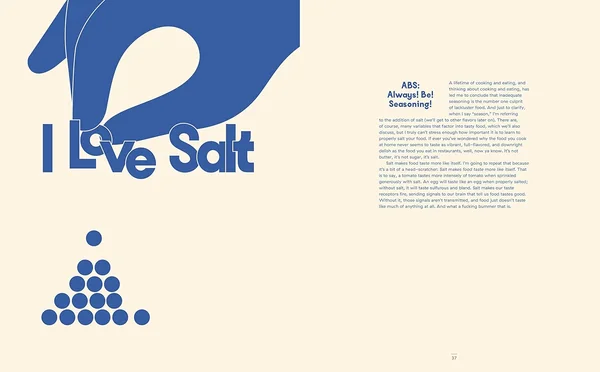
- One of the book's most discussed features is its complete absence of food photography — a deliberate ideological choice rather than a cost-cutting one. Wendy MacNaughton's watercolor illustrations, charts, infographics, and hand-lettering replace the genre's standard recipe-facing-photograph formula, which Saveur described the book as a "refreshing break from." Nosrat chose illustrations specifically so readers would not feel there is one correct way to execute a recipe, and the diagrams — mapping sources of salt, fat, and acid, for instance — extend that philosophy into practical visual reference form.
- Is it a good book club pick?
- Salt, Fat, Acid, Heat is an unusually discussion-rich cookbook: its argument that four elemental principles underpin all good cooking is a genuinely provocative organising idea that invites debate among cooks of varying experience and background. The deliberate design choice to omit food photography, the seven-year development arc, and the "next Julia Child" cultural framing all offer talking points beyond the recipes themselves. A book club with cooking-curious members could pair discussion with a group cook using one of the book's elemental techniques as a shared exercise.
Summarize this book
Follow up
Synthesized from verified book data & published reviews · How we review
Press Enter to ask. Answers come from our editorial Q&A — start typing to see related questions.
Age & Reading Level
Recommended age
Adult
Reading level
Adult
who it suits
Skip if you come to cookbooks primarily for a large, densely packed library of tested recipes rather than conceptual instruction.
Editorial Review
Samin Nosrat's Salt, Fat, Acid, Heat is a landmark technique-driven cookbook that reorganises culinary education around four governing elements — salt, fat, acid, and heat — rather than around recipes alone, earning praise from Publishers Weekly as "exceptional" and inspiring a four-part Netflix documentary series. This review assesses the book's content, structure, and published reception; it does not reflect a kitchen test.
Read the Full ReviewBooks like Salt, Fat, Acid, Heat
Curated picks for readers who enjoyed Salt, Fat, Acid, Heat, with our reasoning for each match.
If you liked Salt, Fat, Acid, Heat