
At a glance

LuvemBooks Verdict
Best for: Readers aged five and up — and adults revisiting childhood favourites — who want a beautifully written story about friendship, sacrifice, and mortality that treats young readers as emotionally capable without losing an ounce of warmth.
Worth it? Skip it? Read the full verdict →Ask LuvemBooks
Was this helpful?
- Is it worth reading?
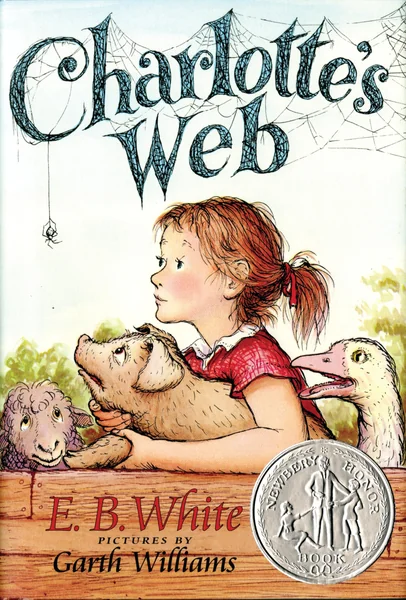
- Charlotte's Web is widely regarded as essential children's literature — Publishers Weekly ranked it the best-selling children's paperback of all time, with more than 45 million copies sold and translations into 23 languages across more than seven decades of continuous readership. Critics praised it as "told with delicacy, humor, and wisdom... A perfect blending of fantasy and complete realism," and adult re-readers consistently report finding new layers in White's treatment of mortality and memory. For any reader drawn to stories that engage honestly with friendship and loss, it is as foundational as children's fiction gets.
- Similar books
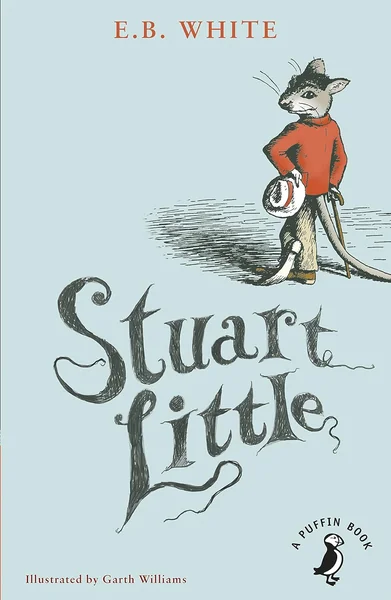
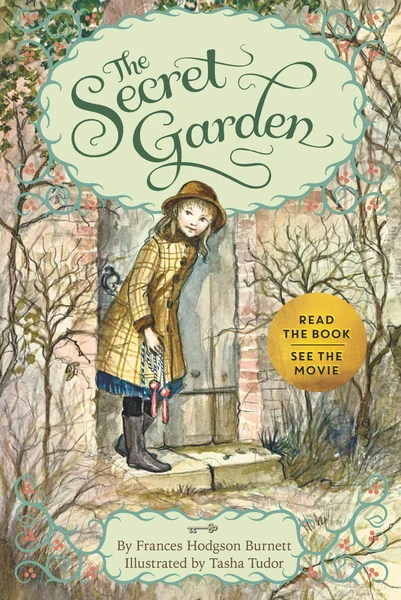
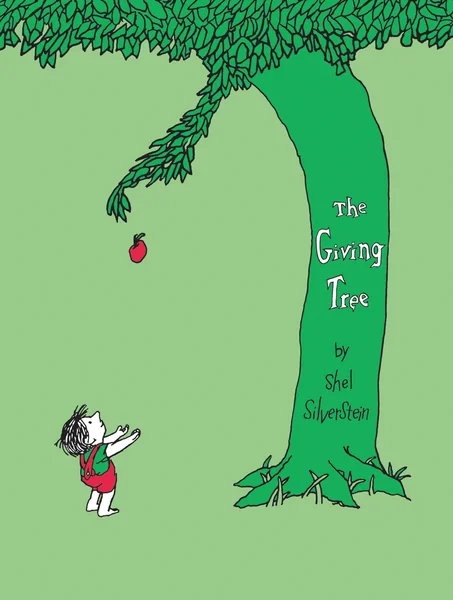
- Readers who love Charlotte's Web will find natural companions in several of the curated titles below. E. B. White's Stuart Little shares White's distinctive prose style and his ability to render an animal's inner life with warmth and wit. Bridge to Terabithia by Katherine Paterson explores childhood friendship and grief with a similar emotional honesty that does not soften loss. The Secret Garden by Frances Hodgson Burnett offers another classic story of transformation and renewal in a richly observed natural world. Matilda by Roald Dahl delivers the same combination of a vulnerable young protagonist finding unexpected champions, while The Giving Tree by Shel Silverstein shares the book's meditation on selfless devotion and what love leaves behind.
- Who should read this?
- Charlotte's Web is recommended for readers ages five and up, spanning roughly grades three through seven in classroom use, though its appeal extends well beyond those bands. It is especially well-suited to young readers who are ready to encounter stories that don't shy away from difficult emotions, as well as parents and teachers looking for a text that opens conversations about friendship, sacrifice, and death. Adult re-readers consistently find new layers in White's treatment of mortality and memory, making it a genuinely multigenerational book rather than one that simply tolerates adult attention.
- What age is it for?
- Best for ages 5 and up, with classroom use spanning roughly grades three through seven. White's prose is accessible to early and confident young readers, but the book's honest, unsentimental treatment of Charlotte's death means the youngest readers benefit from having a parent or teacher alongside for that passage. Older children and adult re-readers encounter additional depth in White's meditation on grief, memory, and enduring friendship.
- About E. B. White
- Born Elwyn Brooks White in 1899, E. B. White was a masterful American writer who carved out a unique literary legacy that bridged the sophisticated world of The New Yorker magazine and the enchanting realm of children's literature.
- Tell me about the adaptations
- Charlotte's Web has been adapted multiple times across formats. The first was a 1973 animated feature film produced by Hanna-Barbera Productions and distributed by Paramount Pictures, followed by a 2006 live-action film — the production of which publicized that the book had by then sold more than 45 million copies. Most recently, a 2025 miniseries produced by Sesame Workshop and Guru Studio for HBO Max brought the story to a new generation. The review cites this sustained run of adaptations as "a testament to the story's sustained cultural presence across generations."
- What are the main themes?
- Charlotte's Web engages with friendship, sacrifice, mortality, and renewal — themes the review notes are treated with "full seriousness while never losing the warmth that makes the story accessible to young readers." At its core, the novel argues that an act of devoted friendship — Charlotte's web-weaving campaign to save Wilbur — creates something permanent that outlasts even death. White frames Charlotte's passing not as tragedy to be escaped but as a reality to be honored, and Wilbur's protection of her egg sac enacts that honoring directly.
Summarize this book
Follow up
Synthesized from verified book data & published reviews · How we review
Press Enter to ask. Answers come from our editorial Q&A — start typing to see related questions.
Age & Reading Level
Recommended age
Ages 8–12
Reading level
Middle grade
2 content notes · who it suits
Content to know about
Best for: Ages 5+ — text and vocabulary are accessible to young readers, though the honest, unsentimental treatment of Charlotte's death suits confident readers aged 8 and up best; parental presence recommended for the youngest readers during that section.
Skip if you want a children's story that softens or avoids the reality of death and loss.
Editorial Review
First published by Harper & Brothers on October 15, 1952, Charlotte's Web is a Newbery Honor children's novel by E. B.…
Read the Full ReviewBooks like Charlotte's Web
Curated picks for readers who enjoyed Charlotte's Web, with our reasoning for each match.
If you liked Charlotte's Web
Why It’s Trending
Charlotte's Web Is Capturing Readers' Attention All Over Again
One of the best-selling children's books of all time, Charlotte's Web is seeing a fresh wave of reader interest. Whether it's parents revisiting a childhood favorite or new readers discovering it for the first time, E. B. White's classic story of friendship and loyalty never really goes out of style.