
At a glance

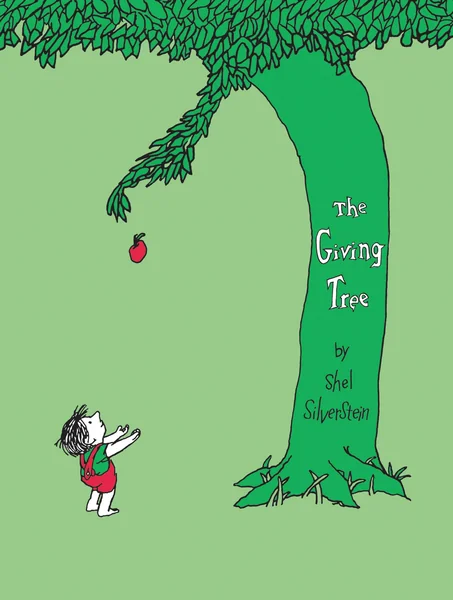
The Giving Tree
LuvemBooks Verdict
Best for: Parents, caregivers, and educators who want a picture book that sparks genuine, open-ended conversation about generosity, relationships, and what it means to give — and who are comfortable sitting with ambiguity rather than a tidy moral resolution.
Worth it? Skip it? Read the full verdict →Ask LuvemBooks
Was this helpful?
- Is it worth reading?
- The Giving Tree has remained continuously in print for over sixty years, been translated into numerous languages, and ranks simultaneously high on 'favorite' and 'least favorite' lists of children's books — a distinction that itself attests to the book's unusual power. LuvemBooks finds it genuinely worth reading precisely because it refuses to leave readers indifferent: the tree-and-boy relationship is compact enough to read in minutes yet durable enough to prompt substantive conversation about generosity, reciprocity, and the nature of relationships across a lifetime. The key caveat is that the book offers no moral guidance — its deliberate refusal to editorialize is a formal choice, not an oversight, and readers who want a clear interpretive framework will not find one here.
- Who should read this?
- The Giving Tree is genuinely for a wide range of readers, but it rewards different things at different life stages. Young children encounter a straightforward story of companionship told in accessible, rhythmic prose. Adults — particularly parents — often find the book prompts uncomfortable but productive reflection on the nature of giving and receiving in relationships. Those who value picture books that open genuine conversations rather than resolve them will find it uniquely durable; those who want children's literature to model clearly healthy relational dynamics will find its deliberate ambiguity frustrating.
- What age is it for?
- The Giving Tree is best for ages 4 and up as a read-aloud, with the simple prose and black-and-white illustrations well-suited to young children. Older children and adults encounter progressively more layered interpretive territory — the questions the book raises about generosity, reciprocity, and the tree-and-boy dynamic become more complex with life experience, making it a picture book that genuinely grows with its reader.
- Similar books
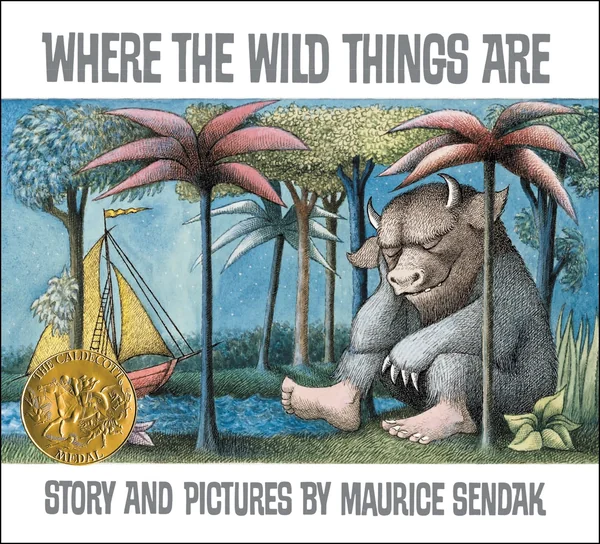
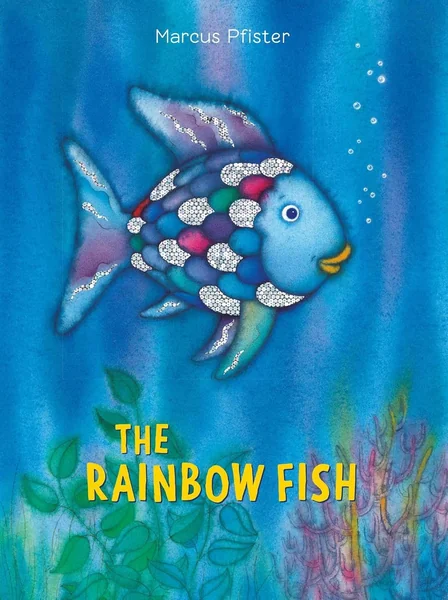
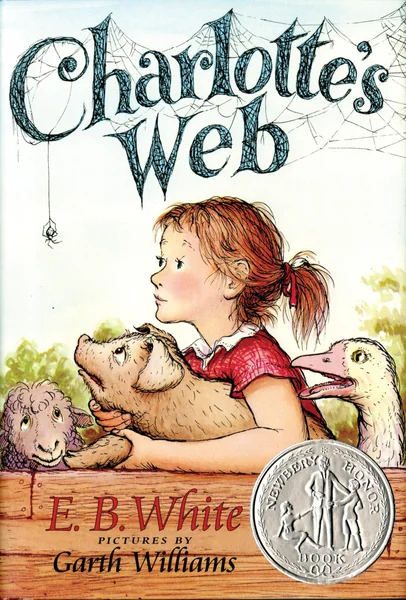
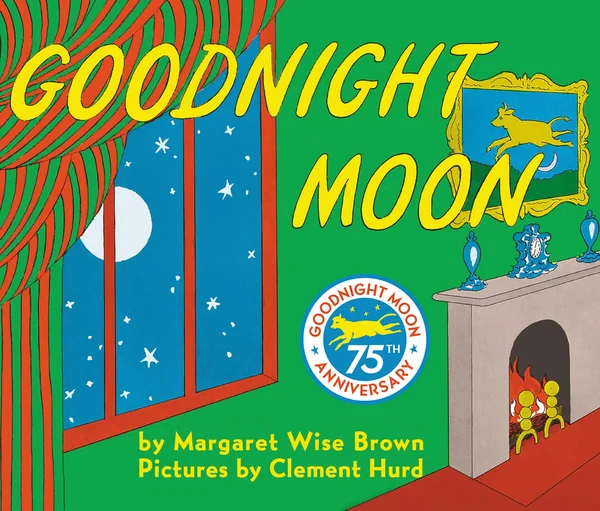
- Readers drawn to The Giving Tree's themes of love, belonging, and the emotional weight carried in simple prose will find rich company in several classic picture books. E. B. White's Charlotte's Web explores a similarly profound and sacrificial bond between characters. Marcus Pfister's The Rainbow Fish raises its own quietly contested questions about generosity and what it costs. Maurice Sendak's Where the Wild Things Are shares The Giving Tree's spare, emotionally charged approach to depicting a child's inner world. Margaret Wise Brown's Goodnight Moon offers the same pared-back visual and textual minimalism, though in a far gentler register. For more of Silverstein's voice, Where the Sidewalk Ends and The Light in the Attic showcase his poetry, while Margery Williams's The Velveteen Rabbit returns to the theme of love and what it demands of the one who gives it.
- About Shel Silverstein
- Sheldon Allan Silverstein was an American writer, cartoonist, songwriter, and musician.
- Tell me about the adaptations
- The Giving Tree has inspired several notable adaptations. In 1973, a short animated film was produced with Silverstein himself narrating — a relatively rare instance of an author lending his own voice to a screen adaptation of his work. Bobby Bare recorded a song based on the book, released on his 1974 album Singin' in the Kitchen. In 2010, filmmaker Spike Jonze directed the short film I'm Here, whose main character, named Sheldon, is a direct tribute to Silverstein — the name echoing his full given name, Sheldon Allan Silverstein.
- How did this book come to be published?
- The road to publication was notably difficult. An editor at Simon & Schuster rejected the manuscript on the grounds that it was 'too sad' for children and 'too simple' for adults. It was the illustrator Tomi Ungerer who encouraged Silverstein to bring the manuscript to Ursula Nordstrom at Harper & Row, where it was ultimately published in 1964 in a modest first edition of only 5,000–7,500 copies. From that quiet start, the book grew into one of Silverstein's best-known titles, sustained in print for over sixty years and translated into numerous languages.
Summarize this book
Follow up
Synthesized from verified book data & published reviews · How we review
Press Enter to ask. Answers come from our editorial Q&A — start typing to see related questions.
Age & Reading Level
Recommended age
Ages 5–8
who it suits
Best for: Ages 4+ — simple prose and illustrations are accessible to young children; the book's deeper questions about generosity and relational dynamics grow more resonant with age and life experience.
Skip if you want a children's picture book that models clearly healthy, reciprocal relationships and offers an unambiguous moral framework.
Editorial Review
First published in 1964 by Harper & Row, Shel Silverstein's The Giving Tree is a children's picture book that has spent six decades generating both fierce devotion and fierce debate — one of the most talked-about titles in American children's literature, and one of its most genuinely unresolved.
Read the Full ReviewBooks like The Giving Tree
Curated picks for readers who enjoyed The Giving Tree, with our reasoning for each match.
If you liked The Giving Tree
Why It’s Trending
The Giving Tree Is Having a Moment on TikTok Right Now
Shel Silverstein's classic is making the rounds on TikTok, with creators sharing read-alouds, nostalgic memories, and takes on the book's famously complicated themes. It's a reminder that this little picture book never really goes away.