
9 min read
4.4
· 47,234 Amazon ratingsFeatured In
Share This Review
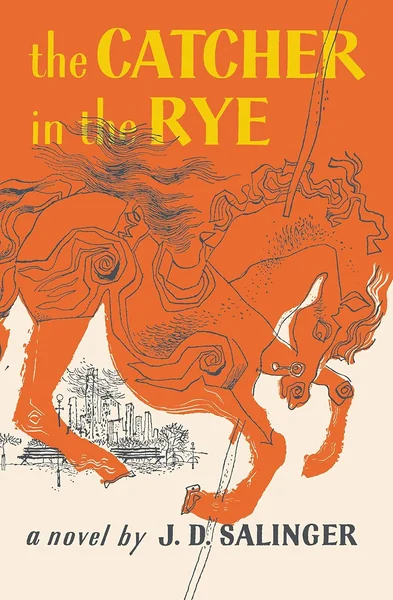
The Catcher in the Rye by J. D. Salinger Review: A Defining American Coming-of-Age Novel
J. D. Salinger's novel The Catcher in the Rye follows sixteen-year-old Holden Caulfield through a turbulent few days after his expulsion from Pencey Preparatory Academy, as he wanders New York City railing against the "phoniness" of the adult world. Decades after its publication, it continues to sell roughly one million copies per year — a testament to the enduring power of Holden's voice and the novel's unflinching portrait of adolescent alienation, grief, and the desperate search for authenticity.
LuvemBooks Verdict
Best for
Readers drawn to confessional, first-person narration and psychologically complex protagonists who want to understand why Holden Caulfield became a defining icon of adolescent alienation in American literature.
Worth it if
You're willing to surrender the expectation of conventional plot resolution and let Holden's voice — raw, grieving, and darkly funny — carry you through a deliberately circular portrait of a young man unraveling.
Skip if
You need a traditionally structured narrative with clear momentum and catharsis, or find relentlessly critical, repetitive narration more exhausting than compelling.
What readers & critics say
Kirkus Reviews, in its original appraisal, described the novel as having "a compulsive impact" as "a violent surfacing of adolescence." The Guardian's review calls it "an exciting and compelling read, with a gallon of brutal reality poured in along with some humour," judging it a "modern classic of the coming of age genre" whose themes remain relatable to teenagers decades after publication. Britannica notes that initial reception was lukewarm before many critics grew impressed, while Wikipedia's record documents the book's extraordinary canonical standing: inclusion on Time's 2005 list of the 100 best English-language novels since 1923, placement among Modern Library's 100 best of the 20th century, and total sales exceeding 65 million copies.
“An exciting and compelling read, with a gallon of brutal reality poured in along with some humour — a modern classic of the coming of age genre.”
— The Guardian“A violent surfacing of adolescence… has a compulsive impact.”
— Kirkus ReviewsAge & Reading Level
Recommended age
Ages 12–18
Reading level
Young adult
5 content notes · who it suits
Content to know about
Best for: Mature teens 15+ — themes of depression, grief, sexual anxiety, and social alienation are treated without softening, and the novel was originally written for an adult readership.
Skip if you need a conventionally plotted narrative with clear resolution and a likeable protagonist.
The Catcher in the Rye by J. D. Salinger is Trending
Holden Caulfield Is Still Everywhere — Here's Why People Keep Coming Back to This One
The Catcher in the Rye doesn't need a movie deal or a viral moment to stay relevant — it just keeps showing up in conversations about alienation, authenticity, and what it means to feel like an outsider. With the book's complicated cultural legacy back in discussion, readers are picking it up all over again.
The Catcher in the Rye has never really gone away, but right now people seem especially drawn back to it. The book's strange and sometimes troubling place in American culture — its connections to real-world violence, its total absence from movie screens despite decades of Hollywood interest, and Salinger's own near-mythic reclusiveness — keeps resurfacing in online discussions and articles. That ongoing fascination with the book's darker legacy is pulling curious readers back in.
Part of what makes this moment feel different is that the questions Holden Caulfield asks — about phoniness, about fitting in, about grief — don't feel dated. If anything, they feel pretty current. There's something about a kid who sees through the performance of adult life that resonates when the world feels especially exhausting or fake. The book still sells around a million copies a year for a reason, and that reason tends to resurface whenever people start talking about it again online.
If you've never read it, or if you read it in school and didn't love it, now might be a good time to give it a real shot on your own terms. It's a short book — you can get through it in a weekend — and Holden's voice is one of the most distinctive in American fiction. Just know going in that it's less a plot-driven story and more of a mood, a portrait of a kid unraveling in real time.
In This Review
- What Works & What Doesn't
- What the Novel Is and What It Does
- Cultural Significance and Lasting Reach
- What the Novel Does Well
- Controversy and the Book's Complicated Legacy
- Who This Novel Is For — and Where It Resists
What Works & What Doesn't
What Works
- A sustained first-person voice that drives the entire narrative with remarkable consistency and emotional range
- Thematic depth spanning alienation, grief, identity, innocence, and depression — broader than its reputation as a simple rebellion story
- Documented canonical status: included on Time's 2005 list of the 100 best English-language novels since 1923 and ranked among Modern Library's 100 best of the 20th century
- Extraordinary longevity, with approximately one million copies sold per year and total sales exceeding 65 million — evidence of multigenerational resonance
- Holden Caulfield's portrait of 1950s New York, which Adam Gopnik has called an unmatched literary capture of the city in that era
What Doesn't
- The novel's deliberately unresolved, circular structure will frustrate readers expecting conventional plot momentum or closure
- Holden's relentlessly critical narrative voice — his contempt for 'phonies' applied to nearly everyone he meets — can alienate readers who find his worldview repetitive or exhausting
What the Novel Is and What It Does
Cultural Significance and Lasting Reach
What the Novel Does Well
Controversy and the Book's Complicated Legacy
Who This Novel Is For — and Where It Resists
Frequently Asked Questions
Sources & Further Reading
The key facts and claims in this review are grounded in the retrieved, verified sources listed below.
- Cited in this review
- 1
hachettebookgroup.com
- 2
hachettebookgroup.com
- 3
en.wikipedia.org
- Further reading
- 4
J. D. Salinger, Wikipedia
- 5
- 6
- 7
americanliterature.com
- 8
theacademyadvocate.com
- 9
- 10
Related Reviews
Reviews of books we picked for readers who enjoyed The Catcher in the Rye.
Reader Comments
No comments yet
Be the first to share your thoughts!