BOOKS
Published
Read Time
6 min read
Reader ratingfrom 1,785 Amazon ratings — not a LuvemBooks score
4.6
Share This Review
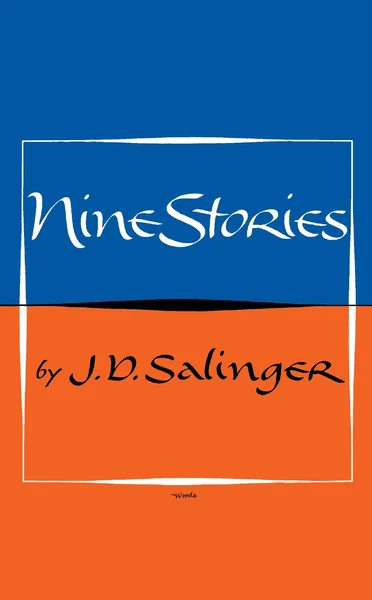
Nine Stories by J.D. Salinger Review: Short Story Masterpiece
Reader rating
4.6
Nine Stories showcases Salinger's masterful short story craft through psychologically complex tales that remain emotionally challenging but literarily essential, best suited for mature readers ready to engage with difficult themes.
In This Review
- What Works & What Doesn't
- The Architecture of What Goes Unsaid
- Prose That Cuts Clean
- The Figures at the Center
- War, Disconnection, and the Glass World
- Where the Collection Earns Its Reputation (and Where It Tests Patience)
- Reading Level, Content Warnings, and Audience Fit
What Works & What Doesn't
What Works
- Masterful prose style that appears effortless while achieving extraordinary precision in dialogue and character development
- Sophisticated use of subtext and restraint, allowing emotional weight to be carried through implication rather than explicit explanation
- Stories reward multiple readings as new details and layers of meaning emerge with each encounter
- Exceptional ability to capture authentic speech patterns that reveal characters' backgrounds, education levels, and emotional states
- Skillful blending of dark psychological themes with seemingly light everyday scenarios
What Doesn't
- Requires active reading and careful attention, as key information is deliberately withheld from readers
- Sophisticated themes and emotional complexity may not be suitable for all teenage readers
The Architecture of What Goes Unsaid
One of the finest American short-story collections of the twentieth century — and one that earns its reputation through specifics, not status. Nine Stories by J. D. Salinger themes run through a consistent and disciplined obsession: people who cannot communicate the thing that most defines them. War damage, grief, the particular loneliness of being too sensitive for the room you are standing in — these are the load-bearing walls of the collection. The opening story, "A Perfect Day for Bananafish," introduces Seymour Glass, a war veteran who interacts with luminous ease around a young child on a beach and with cold, almost terrifying distance from the adult world. The story ends with sudden violence that most readers do not see coming, not because Salinger conceals it, but because he has placed it so plainly in sight.
The Glass family reappears across several stories, and their particular affliction — extraordinary sensitivity combined with an inability to survive ordinary life — gives the collection its spine. What distinguishes Salinger's handling of these characters from lesser work is his refusal to explain them. He renders damage without editorializing it.
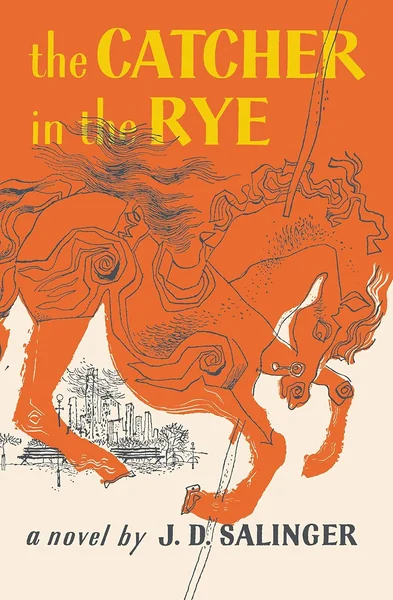
For readers who have asked "what to read after The Catcher in the Rye," this collection is the logical destination. Holden Caulfield's alienation is adolescent and vocal. Seymour Glass's is adult and silent. They are different manifestations of the same wound, and reading both illuminates each.
Prose That Cuts Clean
Salinger's sentences in these stories are deceptively ordinary on the surface. Dialogue carries enormous weight — what characters refuse to say matters more than what they articulate. This is a technique he shares with Raymond Carver, whose Cathedral operates on similar principles of productive silence, though Carver strips language even further toward the bone. Salinger allows himself slightly more surface texture, more wit, which makes his moments of devastation land with greater surprise.
The wartime story "For Esmé — with Love and Squalor" is the collection's most formally daring piece. A soldier encounters a precocious English girl before D-Day; the story then jumps forward to its aftermath. The tonal shift between the two halves is breathtaking — almost jarring in the way it replicates the rupture of war itself. This is craft deployed invisibly, which is the highest form of it.
The prose rarely calls attention to itself, which is both a virtue and, occasionally, a limitation. A few of the middle stories feel more like accomplished exercises than fully realized worlds. The technique is consistent; the inspiration is not always equally distributed across all nine entries.
The Figures at the Center
Seymour Glass looms over the collection even in stories where he does not appear. He is the collection's absent presence — the character whose damage radiates outward through siblings, strangers, and the reader. His wife Muriel in "A Perfect Day for Bananafish" represents the conventional world that Seymour cannot re-enter: she is not a villain, which is precisely the point. She is simply a person trying to conduct ordinary life around a man who has been irrevocably altered.
The child characters — Esmé, the young girl on the beach in "Bananafish," several others scattered through the collection — are portrayed with a reverence that has drawn both admiration and critical scrutiny over the decades. Salinger positions childhood perception as morally superior to adult accommodation, a thesis that some readers find profound and others find sentimental. This is a fair tension to hold in mind while reading.
War, Disconnection, and the Glass World
The post-World War II context is essential to understanding these stories. They were written in the decade immediately following the war, by a writer who served in it, and that experience saturates the collection without ever being stated overtly. The central wound is almost always invisible: a veteran who seems functional but isn't, a marriage that looks stable but isn't, a childhood that appears happy but carries something heavier underneath.
This thematic territory connects Salinger to Hemingway — The Sun Also Rises and A Farewell to Arms haunt the same emotional landscape — and it is worth noting that both writers believed understatement was the appropriate response to experiences that exceed language. Where Hemingway's characters drink to manage what they cannot say, Salinger's characters often retreat into playfulness or deflection. The method differs; the necessity is the same.
Where the Collection Earns Its Reputation (and Where It Tests Patience)
The strongest stories here — "A Perfect Day for Bananafish," "For Esmé — with Love and Squalor," "The Laughing Man," "De Daumier-Smith's Blue Period" — are among the finest American short fiction of the twentieth century. That is not hyperbole; it reflects a broad critical consensus that has held across seven decades.
The main weakness is unevenness. A collection this emotionally concentrated requires every story to justify its place, and two or three of the nine feel thinner than their companions. "Just Before the War with the Eskimos" and "Pretty Mouth and Green My Eyes" are skillfully constructed but lack the resonant afterimage of the best work here. They read as demonstrations of technique rather than transmissions of something urgent.
Readers expecting the sustained teenage voice of The Catcher in the Rye may also need time to adjust. These stories are cooler, more formally varied, and in some ways more demanding. They reward slow, attentive reading — the kind that Lahiri's Interpreter of Maladies also asks for — rather than the propulsive momentum some readers prefer.
Reading Level, Content Warnings, and Audience Fit
What reading level is Nine Stories by J. D. Salinger? The vocabulary is accessible, but the emotional and structural complexity places it firmly in adult or advanced high school territory. The content warnings parents should know: "A Perfect Day for Bananafish" ends in a suicide, depicted briefly but without ambiguity. There is wartime trauma throughout, some adult drinking, and emotionally intense situations. Not recommended for readers under 14 without adult discussion.
For adults who read Carver, Lahiri, or early Hemingway, this collection belongs on the shelf alongside those writers — not as a historical artifact, but as work that continues to repay attention. The Seymour Glass stories alone justify the read; the best of the remaining seven earn their company.
Readers who can sit with silence the way these stories demand — and who want the best American short fiction of the postwar period — will find Nine Stories worth owning.
Frequently Asked Questions
is Nine Stories by J. D. Salinger worth reading
That said, the collection's relentless focus on psychological distress and social alienation makes it emotionally draining, so it's best approached as individual pieces rather than read all at once.
is Nine Stories by J. D. Salinger appropriate for teenagers
The reviewer says this question "requires careful consideration" because several stories deal with suicide, mental illness, and the psychological aftermath of war — including Seymour Glass's fate at the end of "A Perfect Day for Bananafish," which "requires sophisticated understanding to process appropriately." That's why it typically appears on high school reading lists rather than middle school curricula.
what actually happens in a perfect day for bananafish in Nine Stories by J. D. Salinger
The reviewer deliberately withholds a full plot summary, which mirrors Salinger's own technique of "withholding key information" to create lingering mystery. What they do say is that the story "immediately establishes Salinger's ability to blend dark themes with seemingly light scenarios" and that Seymour Glass's fate at the end is dark enough to require sophisticated emotional processing.
is Nine Stories by J. D. Salinger hard to read
It demands active reading — the reviewer notes that "Salinger trusts his audience to recognize the deeper currents running beneath polite social interactions" rather than spelling motivations out. The emotional complexity can be overwhelming even for adults, and the lack of easy answers or comfortable resolutions can feel frustrating for readers who want clear moral guidance.
what is Nine Stories by J. D. Salinger actually about
The reviewer frames the collection's core argument as: "those most capable of deep feeling are least equipped to survive society's demand for conformity," a tension played out most directly through Seymour Glass. The nine stories explore alienation, authenticity, and lost innocence, with protagonists ranging from World War II veterans struggling to readjust to civilian life to children whose innocence collides with adult cynicism.
is Nine Stories by J. D. Salinger similar to The Catcher in the Rye
There's clear thematic overlap — the reviewer notes that Nine Stories was published in 1953, before The Catcher in the Rye made Salinger a household name, and that characters across both works share "an almost painful awareness of phoniness and artificiality in social interactions." However, Nine Stories is a short story collection, so readers who struggled with the novel's sustained first-person voice will find a different, more fragmented reading experience here.
does Nine Stories by J. D. Salinger have a hopeful ending
Not really — the reviewer warns that Salinger's worldview across the collection "offers little hope for meaningful human connection or personal happiness." While that pessimism is presented as a genuine literary insight about modern life, the reviewer acknowledges it "limits the collection's appeal for readers seeking more balanced perspectives."
Sources & Further Reading
The key facts and claims in this review are grounded in the retrieved, verified sources listed below.
- 1
J. D. Salinger, Wikipedia
Related Reviews
Reviews of books we picked for readers who enjoyed Nine Stories.


Reader Comments
No comments yet
Be the first to share your thoughts!