BOOKS
Published

Read Time

3 min read

Curated & edited by

LuvemBooks Editorial

How we create our reviews →
Share This Review

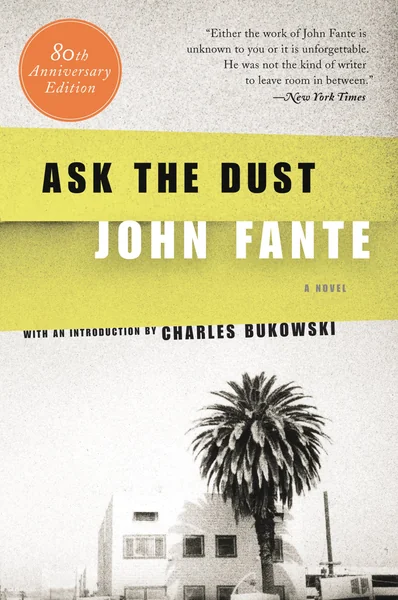
Ask the Dust by John Fante Review: A Rediscovered Great Depression Masterwork

First published in 1939 and resurrected for a wide audience by a landmark 1980 Black Sparrow Press reissue championed by Charles Bukowski, Ask the Dust is John Fante's most celebrated novel — a roman à clef following the desperate, exhilarating, and self-destructive arc of Arturo Bandini against the backdrop of Depression-era Los Angeles, and widely regarded as an American classic.

LuvemBooks Verdict

Best for

Readers drawn to autobiographically grounded American fiction, the literary history of Los Angeles, or the chain of influence running from Fante through Bukowski and into confessional working-class writing.

Worth it if

The appeal of a singular, unreliable outsider consciousness — grandiose, self-lacerating, and historically situated in Depression-era Bunker Hill — outweighs any need for a morally tidy protagonist.

Skip if

Readers who need a sympathetic or morally consistent protagonist at the centre of a story will likely find Bandini's cruelty and ego exhausting rather than compelling.

What readers & critics say

The Guardian notes that Ask the Dust is today "widely regarded as a classic of American literature" and that many have declared it "the finest novel ever to emerge from Los Angeles," though its initial reception was mixed and its early cultural life stunted — a trajectory Wikipedia traces to poor sales, a publisher's legal entanglements, and decades of near-obscurity before Charles Bukowski's 1980 championing brought it back into print. Alta Online situates the novel firmly in the California Canon, arguing that Fante portrays both Bandini and the city "in complicated ways," its strength lying in realism rather than rhapsody.

Today it's widely regarded as a classic of American literature; many have declared it the finest novel ever to emerge from Los Angeles.

The Guardian

The strength of Fante's novel is that it is not rhapsodic so much as realistic, portraying Bandini, as well as the city itself, in complicated ways.

Alta Online

The spare, well-crafted prose really brings you into the story — one of those books where you marvel at what such simple compositions can evoke.

Pajiba

Far before Salinger's Catcher in the Rye and Toole's A Confederacy of Dunces, there was an author writing about young misfits with flair and passion: John Fante.

Dan Kaufman Books
Sources: The Guardian, Wikipedia, Alta Online
4.4from 1,927 Amazon ratings— reader ratings, not a LuvemBooks score

Look inside the book

Preview the actual pages, via Google Books
In This Review
  • What Works & What Doesn't
  • What the Novel Is and What It Contains
  • The Novel's Place in American Literature
  • Strengths: Autobiography, Specificity, and the Bandini Voice
  • Genuine Limitations: Bandini as a Difficult Protagonist
  • Who This Novel Is For

What Works & What Doesn't

What Works
  • Widely regarded as an American classic, with a documented presence on college American literature syllabi
  • A roman à clef grounded in Fante's own life, giving Arturo Bandini's voice rare autobiographical specificity and immediacy
  • Historically significant as one of the earliest literary portraits of Depression-era Los Angeles, with Robert Towne calling it the greatest novel ever written about the city
  • Carries an extraordinary legacy of literary influence, most notably on Charles Bukowski, who championed the 1980 Black Sparrow Press reissue and wrote that 'Fante was my god'
  • Part of the Bandini Quartet, giving readers who engage further a larger fictional world built around a sustained alter ego
What Doesn't
  • Arturo Bandini is a grandiose, self-contradictory, and at times cruel protagonist — readers who require a sympathetic or morally consistent center may find him alienating
  • As the second entry in the Bandini Quartet, it presupposes a character already in motion; readers who prefer full origin context may want to begin with Wait Until Spring, Bandini
Ask the Dust is John Fante's most enduring novel — a roman à clef first published in 1939 that spent decades in near-obscurity before earning the canonical status it now holds, and one that rewards readers looking for a raw, precisely situated portrait of Depression-era ambition and collapse.

What the Novel Is and What It Contains

Ask the Dust centers on Arturo Dominic Bandini, a young Italian-American writer from Colorado who has transplanted himself to the Bunker Hill neighborhood of Downtown Los Angeles, surviving on oranges and the fumes of his own outsized literary ambition. His published short story, "The Little Dog Laughed," earns him no recognition among the residents of his seedy boarding house except from a single fourteen-year-old girl named Judy. Wandering into the Columbia Buffet, Bandini meets Camilla Lopez, a waitress with whom he falls into a turbulent, consuming love — complicated by the fact that Camilla is herself in love with her co-worker Sammy, who advises Bandini that cruelty, not tenderness, is the path to winning her over. The novel traces the deterioration of both Bandini and Camilla: she is eventually admitted to a mental hospital, escapes, and returns to Bandini's apartment, where the novel arrives at its harrowing conclusion. Throughout, Bandini wrestles with poverty, Catholic guilt, and the contradictions of his own Italian-American identity — themes Wikipedia identifies as recurring preoccupations across all of Fante's work.

The Novel's Place in American Literature

According to Wikipedia, Ask the Dust is widely regarded as an American classic and regularly appears on college syllabi for American literature courses. Its initial print run of only 2,200 copies and modest sales meant the novel languished for decades; a Bantam paperback edition appeared in 1954, but the book's broader cultural life did not begin until 1980, when Black Sparrow Press reissued it with a foreword by Charles Bukowski. Bukowski, who had discovered Fante's work in a public library as a young writer, wrote in that foreword: "Fante was my god." Wikipedia notes that Fante was among the first writers to portray Depression-era Los Angeles with unflinching specificity, and screenwriter Robert Towne — who adapted the novel into a 2006 film starring Colin Farrell and Salma Hayek — has called it the greatest novel ever written about Los Angeles. That is a remarkable critical lineage for a book that initially sold almost nothing.

Strengths: Autobiography, Specificity, and the Bandini Voice

The novel's power is inseparable from its autobiographical foundation. As a roman à clef, the text draws directly on incidents from Fante's own life, giving Bandini's voice an immediacy and specificity that purely invented characters rarely achieve. Bunker Hill is not a generic urban backdrop but a named, historically grounded place; the Columbia Buffet, Camilla Lopez, and the self-lacerating internal monologue of a writer who simultaneously worships and despises himself all register as products of lived experience pressed hard into fiction. Wikipedia also notes the novel's thematic kinship with Knut Hamsun's 1890 novel Hunger, placing Bandini in a tradition of literary protagonists defined by starvation — material, sexual, and spiritual — and uncontrollable egomania. Fante told journalist Warga, upon the book's belated recognition: "What pleases me most is to be hearing from so many people and to know the damn thing has stood up to the test of time."

Genuine Limitations: Bandini as a Difficult Protagonist

Bandini's combination of grandiosity, cruelty toward Camilla, and ethnic self-contempt makes him a genuinely difficult center of gravity for a novel. He absorbs Sammy's toxic advice and acts on it; he is both victim of circumstance and architect of harm. Readers who require a protagonist capable of moral growth or reliable self-awareness may find Bandini exhausting rather than compelling. The novel is also explicitly part of a series — Fante's Bandini Quartet — meaning it participates in a larger arc that the standalone reader does not fully receive. Those coming to Ask the Dust without prior acquaintance with Wait Until Spring, Bandini will meet Arturo already mid-formation, which is not a barrier to entry but is worth noting for readers who prefer complete context.

Who This Novel Is For

Ask the Dust is essential reading for anyone interested in the American literary tradition of the outsider artist, in Los Angeles as a literary subject, or in the line of influence that runs from Fante through Bukowski and into subsequent generations of confessional and working-class fiction. Its classroom presence on American literature syllabi reflects genuine pedagogical utility as well as canonical standing. Readers drawn to autobiographically grounded fiction, to Depression-era social history rendered through a singular and unreliable consciousness, or to the question of how an overlooked novel becomes a classic will find Ask the Dust an unusually rich case study on every count.

Sources & Further Reading

The key facts and claims in this review are grounded in the retrieved, verified sources listed below.

  1. 1
    John Fante — author profileHigh-authority source

    John Fante, Wikipedia

  2. 2

    en.wikipedia.org

  3. 3
  4. 4
  5. 5
  6. 6
  7. 7
  8. 8
  9. 9
  10. 10