BOOKS
Published

Read Time

3 min read

Curated & edited by

LuvemBooks Editorial

How we create our reviews →
Share This Review

Eleanor Oliphant Is Completely Fine by Gail Honeyman Review: A Debut That Earns Every Accolade

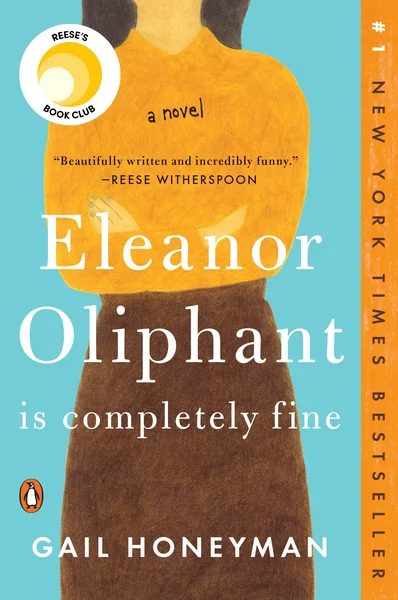
Gail Honeyman's debut novel introduces Eleanor Oliphant — a Glasgow-based finance clerk, classics graduate, and self-described loner — whose deadpan social observations and rigidly timetabled life conceal a deeply traumatic past. Published by Penguin Books in 2017, the novel won the Costa First Novel Award and the British Book Awards Book of the Year, became a #1 New York Times bestseller, and was selected as a Reese Witherspoon Book Club pick. It is, by any credible measure, one of the breakout literary fiction debuts of the past decade.

LuvemBooks Verdict

Best for

Readers of literary fiction who appreciate dark subject matter handled with wit — particularly those drawn to character-driven British novels about loneliness, trauma recovery, and the transformative power of unlikely friendship.

Worth it if

Worth reading if you can commit to a deliberately paced first half in exchange for a richly layered unreliable narrator whose deadpan comedy and emotional depth pay off with genuine force by the novel's end.

Skip if

Skip it if you're coming primarily for thriller-paced plot mechanics or conventional romance — the emotional centre lies in friendship and self-recovery, and the first half rewards patience rather than momentum.

What readers & critics say

The novel swept major debut prizes — the Costa Debut Novel Award and British Book Awards Book of the Year among them — and became a #1 New York Times bestseller, with barnesandnoble.com noting critics called it "hilarious, deadpan, and irresistible." Josephrauch.com credits Honeyman's success to "a moving and relatable story on needing supportive human connections to thrive," while bookpassage.com records a starred critical coverage verdict of "Readers will cheer" and PopMatters' single word: "Astounding."

Sources: Barnes & Noble, josephrauch.com, Book Passage, Parnassus Books
4.5from 252,028 Amazon ratings— reader ratings, not a LuvemBooks score
In This Review
  • What Works & What Doesn't
  • What the Novel Actually Is and Does
  • The Unreliable Narrator as Structural Engine
  • Awards, Reception, and Cultural Reach
  • What the Novel Does Well
  • Who This Novel Is For, and Where It Resists Easy Categorization

What Works & What Doesn't

What Works
  • #1 New York Times bestseller and winner of both the Costa First Novel Award and the British Book Awards Book of the Year — an unusually decorated debut
  • Eleanor Oliphant is a richly specific, original protagonist: a Classics-educated Glasgow finance clerk whose deadpan social commentary generates both comedy and genuine pathos
  • The unreliable-narrator structure is used purposefully — Eleanor's lack of self-awareness is rooted in psychological trauma, giving the formal device real emotional stakes
  • Critical reception was broad and strong, with a starred Booklist review, Associated Press praise, and Reese Witherspoon's personal endorsement as Book Club pick
  • The novel operates on two registers simultaneously — comic surface and emotional depth — a tonal balance that critics consistently highlighted as one of its defining achievements
What Doesn't
  • Its hybrid form — part comic novel, part emotional thriller, part character study — means it resists easy genre classification and may not fully satisfy readers with narrower expectations for any one of those modes
  • The novel is deliberately paced in its first half, a function of its character-driven design that may test readers expecting plot-forward momentum from the outset
Gail Honeyman's debut novel is one of the most decorated works of literary fiction to emerge from a first-time novelist in recent years — and the record shows that reception was earned, not manufactured.

What the Novel Actually Is and Does

Eleanor Oliphant Is Completely Fine: Reese's Book Club: A Novel by Gail Honeyman front cover
Eleanor Oliphant Is Completely Fine is a first-person literary novel narrated by its 29-year-old protagonist, Eleanor Oliphant, a finance clerk at a graphic design company in Glasgow, Scotland. Eleanor holds a degree in Classics, completes the Daily Telegraph crossword every lunch break, and maintains a life of near-total social isolation: weekends structured around frozen pizza and two bottles of vodka, colleagues she dismisses as "shirkers and idiots," and a Wednesday-evening phone call with her mother. She is, by her own repeated insistence, "absolutely fine." The novel tracks what happens when that rigid self-sufficiency cracks — first through an infatuation with Johnnie Lomond, a local band's lead singer, and then through a genuinely transformative friendship with Raymond, the office IT technician, after the two of them help an elderly man, Sammy, who has collapsed on a Glasgow street. What begins as a wry character study deepens, through careful accumulation of detail, into a narrative about trauma recovery, loneliness, and the life-altering power of small acts of human connection.

The Unreliable Narrator as Structural Engine

One of the novel's most discussed formal choices is its deployment of an unreliable narrator — though, as Honeyman explained in an interview with Costa, Eleanor's unreliability stems not from malice or deception but from a lack of self-awareness caused by psychological scarring. Clues to Eleanor's past are seeded throughout: a badly scarred face, a childhood spent largely in foster care and children's homes, no knowledge of her father, and a history of abuse by an ex-boyfriend. The revelation that the weekly phone conversations with her mother have been entirely in Eleanor's imagination reframes the entire novel's emotional architecture. This structural device means that the reader's understanding of Eleanor outpaces Eleanor's own — a technique that keeps the novel taut without resorting to conventional thriller mechanics.

Awards, Reception, and Cultural Reach

The novel's accolades are substantial and specific. It won the 2017 Costa Debut Novel Award and the British Book Awards Book of the Year. It was shortlisted for the Lucy Cavendish College Fiction Prize, the Desmond Elliot Award, and the Author's Club Best First Novel, and longlisted for the Women's Prize for Fiction. It became a #1 New York Times bestseller and a Reese Witherspoon Book Club selection — Witherspoon describing it as "beautifully written and incredibly funny" and calling Eleanor "an eccentric and regimented loner whose life beautifully unfolds." Critical outlets added their own weight: critical coverage gave it a starred review, writing that "readers will cheer," while the Associated Press called it "a fascinating story about loneliness, hope, tragedy and humanity" and noted that "Honeyman's delivery is wickedly good." PopMatters offered a single-word verdict: "Astounding." A major motion picture adaptation, produced by Reese Witherspoon, is also in development.

What the Novel Does Well

The publisher's synopsis frames Eleanor's appeal precisely: her "deadpan weirdness and unconscious wit" drive what is described as an "irresistible journey." The novel is designed to function on two registers simultaneously — as a genuinely comic portrait of a woman who blames every social misunderstanding on the other party's "underdeveloped social skills," and as a slow-building emotional reckoning with the aftermath of childhood trauma. That tonal balance — the comic surface and the devastating substrate — is the quality that critics and the Reese Witherspoon Book Club citation most consistently highlight. Honeyman also grounds the novel in concrete, specific detail: Eleanor's Glasgow setting, her Classics education, her crossword habit, and the precise texture of her daily rituals give the character a density that prevents her from reading as a quirky archetype. Raymond and Sammy, too, are rendered with enough specificity — Raymond described in the publisher's synopsis as "bumbling and deeply unhygienic" — to function as genuine counterweights to Eleanor's isolation rather than merely symbolic helpers.

Who This Novel Is For, and Where It Resists Easy Categorization

The Associated Press described the novel as "part comic novel, part emotional thriller, and part love story" — a hybrid quality that is one of its genuine strengths but may also shape reader expectations in ways the book doesn't entirely satisfy. Readers who come to it primarily as a thriller may find the pacing in its first half deliberate; those seeking conventional romance will find the book's emotional center lies in friendship and self-recovery rather than romantic resolution. The novel is unambiguously character-driven, and its pleasures are inseparable from close attention to Eleanor's voice. For readers drawn to literary fiction that combines dark subject matter with wit — and who are willing to sit with a narrator whose self-knowledge is, by design, limited — Eleanor Oliphant Is Completely Fine represents one of the strongest debuts in recent British fiction.

Sources & Further Reading

The key facts and claims in this review are grounded in the retrieved, verified sources listed below.

  1. 1

    Gail Honeyman, Wikipedia

  2. 2
  3. 3
  4. 4
  5. 5
  6. 6
  7. 7
  8. 8
  9. 9
  10. 10