At a glance
The Power of Your Subconscious Mind
LuvemBooks Verdict
Best for: Readers already drawn to the New Thought tradition — or to classics like Think and Grow Rich — who want a structured, technique-oriented guide to harnessing the subconscious mind across health, finances, relationships, and fear.
Worth it? Skip it? Read the full verdict →Ask LuvemBooks
Was this helpful?
- Is it worth reading?
- For readers open to the New Thought tradition, The Power of Your Subconscious Mind has demonstrated broad, sustained appeal — attested by its international bestseller status and millions of copies sold across decades. Its strength lies in pairing a clear theoretical framework with practical, real-life case studies and techniques covering a wide range of life domains within a single structured progression. The key caveat is that Murphy's framework blends psychological concepts with religious and metaphysical language, including prayer as a mechanism for engaging the subconscious, which readers seeking a secular or neuroscience-based approach may find unconvincing. Those already drawn to motivational classics like Think and Grow Rich or The Master Key System will find it a natural and focused companion.
- Similar books
- Readers who respond to Murphy's subconscious-mind framework and New Thought premises will find natural companions among several classics curated below. Think and Grow Rich by Napoleon Hill shares the same mid-twentieth-century motivational landscape and the conviction that mental states shape material outcomes — Murphy's 1963 book entered a self-help world Hill's work had already shaped. The 7 Habits of Highly Effective People by Stephen R. Covey and Atomic Habits by James Clear both address the mechanics of belief, habit, and behavior change, though from more structured and empirically grounded perspectives respectively. The Four Agreements by Don Miguel Ruiz similarly blends personal-development practice with a distinct spiritual and philosophical tradition, while Stop Overthinking by Nick Trenton addresses the mind's role in daily functioning from a more contemporary angle.
- Who should read this?
- The Power of Your Subconscious Mind is best suited to readers who are open to the New Thought tradition and its premise that mental and spiritual discipline can reshape material circumstances. It particularly rewards those already drawn to motivational classics like Think and Grow Rich or The Master Key System, for whom Murphy's focused, technique-oriented approach offers a natural companion. Readers seeking clinically grounded or neuroscience-based approaches to habit and behavior change will find the methodology here more metaphysical than empirical and may be better served by contemporary alternatives.
- About Joseph Murphy
- Joseph Denis Murphy was an Irish writer and New Thought minister, ordained in Divine Science and Religious Science.
- What are the main themes?
- The Power of Your Subconscious Mind is organized around the interplay between the conscious and subconscious minds — the former as the seat of decision-making and the latter as the seat of emotion, habit, and creative execution. Key themes include the idea that the subconscious acts on conscious thoughts without distinguishing between positive and negative inputs, and that deliberate belief and feeling can direct it toward desired outcomes. The book applies this framework across specific life domains: health and physical well-being, financial prosperity, relationships, and overcoming fear — making its thematic scope notably broad for a single structured work.
- Is this science or spirituality?
- Murphy's framework sits firmly in the metaphysical rather than the empirical camp. While the book uses psychological language — conscious mind, subconscious mind, habit — it blends these concepts with religious and metaphysical premises, including prayer as a mechanism for engaging the subconscious, and does not cleanly separate the two. Some reader commentary notes agreement with the general principle that positive thinking and conviction can benefit mood and health, while finding the theological framing less persuasive on its own terms. Readers seeking clinically grounded or neuroscience-based approaches to habit and behavior change will find the methodology here more metaphysical than scientific.
Summarize this book
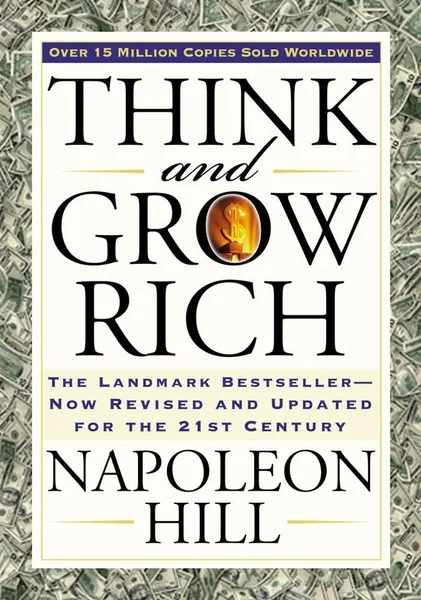
Think and Grow Rich: The Landmark Bestseller Now Revised by Napoleon Hill
4.8
/ 5
Originally published in 1937 and revised for the 21st century by Arthur R. Pell, Ph.D., Think and Grow Rich remains one of the most widely read and commercially successful personal development books ever produced, having sold 15 million copies worldwide and earning its reputation as the "Granddaddy of All Motivational Literature" — though modern readers will want to engage it with eyes open to both its enduring framework and its contested historical claims.
View on LuvemBooks →
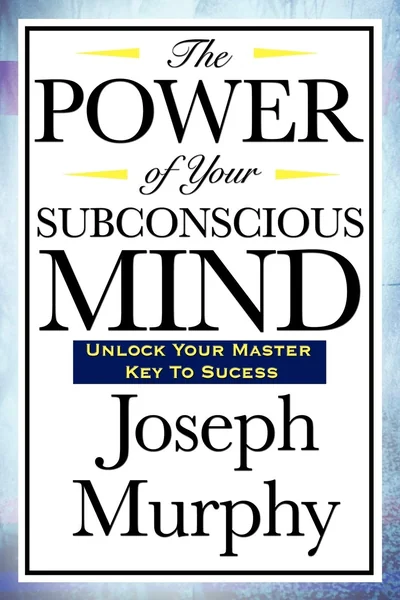
The Power of Your Subconscious Mind by Joseph Murphy
4.7
/ 5
First published in 1963, Joseph Murphy's The Power of Your Subconscious Mind is an international bestseller and a foundational text in the personal development genre, arguing that the subconscious mind is a creative, neutral force that executes commands given to it by the conscious mind through belief and feeling — a premise it supports with real-life anecdotes and practical techniques designed to help readers improve their health, finances, and relationships.
View on LuvemBooks →
Follow up
Synthesized from verified book data & published reviews · How we review
Press Enter to ask. Answers come from our editorial Q&A — start typing to see related questions.
Age & Reading Level
Recommended age
Adult
Reading level
Adult
1 content note · who it suits
Content to know about
Skip if you're looking for a clinically grounded or neuroscience-based approach to habit and behavior change
Editorial Review
First published in 1963, Joseph Murphy's The Power of Your Subconscious Mind is an international bestseller and a foundational text in the personal development genre, arguing that the subconscious mind is a creative, neutral force that executes commands given to it by the conscious mind through belief and feeling — a premise it supports with real-life anecdotes and practical techniques designed to help readers improve their health, finances, and relationships.
Read the Full ReviewBooks like The Power of Your Subconscious Mind
Curated picks for readers who enjoyed The Power of Your Subconscious Mind, with our reasoning for each match.
If you liked The Power of Your Subconscious Mind