The Courage to Be Disliked
A philosopher and a skeptical young man debate Alfred Adler's psychology across five nights, exploring trauma, freedom, relationships, and the conditions of human happiness.
Best for
Readers who feel stuck in people-pleasing or approval-seeking patterns and are open to a philosophical, argument-driven introduction to Adlerian psychology rather than a clinical or workbook-style approach.
Our full verdict ↓At a glance
Be one of the first readers to answer.
Read it? Was it right for you?
The Courage to Be Disliked
The Japanese Phenomenon That Shows You How
LuvemBooks Verdict
Best for: Readers who feel stuck in people-pleasing or approval-seeking patterns and are open to a philosophical, argument-driven introduction to Adlerian psychology rather than a clinical or workbook-style approach.
Worth it? Skip it? Read the full verdict →Ask LuvemBooks
Was this helpful?
- Is it worth reading?
- For readers who feel stuck in patterns of people-pleasing or approval-seeking, The Courage to Be Disliked offers a genuinely distinctive framework: Adlerian psychology presented through an accessible, argument-driven dialogue that anticipates objections and builds its case progressively. The book's global reach — more than 13 million copies sold worldwide and New York Times bestseller status — reflects wide cross-cultural resonance that goes well beyond a regional publishing phenomenon. The main caveat is the format: there are no worksheets or step-by-step exercises, and the insistence that all problems are interpersonal may feel reductive to readers coming from a therapeutic background or those whose circumstances involve structural hardship. Readers already familiar with Adlerian psychology will also find it functions primarily as an introduction.
- Similar books
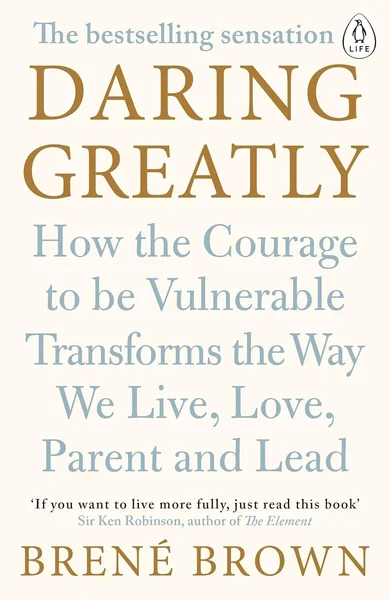
- Readers drawn to The Courage to Be Disliked often connect with other books that explore happiness, personal responsibility, and freedom from others' judgments through philosophical or reflective frameworks. Don Miguel Ruiz's The Four Agreements similarly distills ancient wisdom into practical principles for living free from self-limiting beliefs. Brené Brown's Daring Greatly shares the book's concern with vulnerability and the cost of seeking approval, while Mel Robbins' The Let Them Theory offers a more contemporary, practical take on releasing attachment to others' reactions. For a deeper philosophical grounding in meaning and personal responsibility under adversity, Viktor E. Frankl's Man's Search for Meaning is a natural companion, and The Art of Happiness by the Dalai Lama approaches the same question of genuine happiness from a Buddhist perspective.
- Who should read this?
- The Courage to Be Disliked is designed for readers who feel stuck in patterns of people-pleasing, approval-seeking, or self-limitation rooted in past experience — and who are open to a philosophical rather than clinical approach to change. Readers drawn to philosophy, non-Western self-development traditions, or Stoic-adjacent thinking about personal responsibility will find natural points of connection. It also serves as an accessible entry point for anyone curious about Alfred Adler, a foundational figure in psychology who has historically received far less popular attention than Freud or Jung. Those seeking empirically grounded psychological techniques, workbook-style exercises, or a more nuanced acknowledgment of external circumstance should be aware the book does not offer those.
- What are the main themes?
- The book's central themes are personal freedom, the courage to live without others' approval, and the Adlerian claim that human problems are ultimately interpersonal problems. A key tension runs throughout between Adler's teleological psychology — asking what purpose a feeling serves now — and the Freudian etiological approach that traces present suffering back to past causes. The 'separation of tasks' framework, which asks readers to distinguish their own responsibilities from what belongs to others, addresses anxiety about social judgment directly. The book also argues that community feeling, not individual achievement, is the foundation of genuine happiness — a counterintuitive claim that the dialogue format works hard to earn.
- How did this book become a TikTok phenomenon?
- The Courage to Be Disliked became a notable phenomenon on TikTok in the English-language market, introducing Adler's ideas to audiences who may never have encountered them through academic or clinical channels. The 'separation of tasks' concept — the idea that another person's dislike of one's choices is that person's problem to manage, not the chooser's — proved especially shareable, offering a concrete, named reframe for anxiety about social judgment that translated well to short-form content. The book had already achieved massive domestic success in Japan before its international expansion, and the TikTok wave extended its reach to younger readers drawn to philosophy and self-development outside traditional self-help formats.
- How does it compare to The Courage to Be Happy?
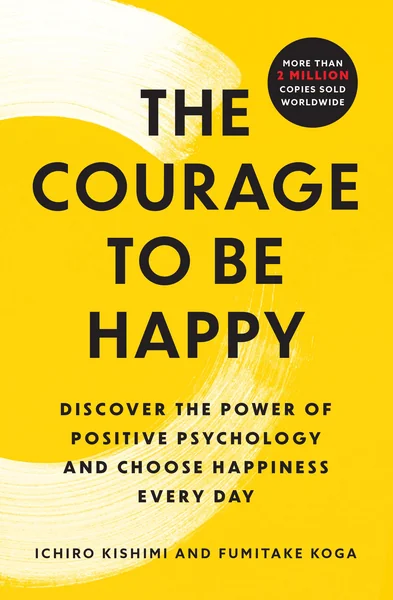
- The Courage to Be Happy is the direct sequel by Kishimi and Koga, continuing the same Socratic dialogue format between the youth and the philosopher across a new set of conversations. Where The Courage to Be Disliked functions primarily as an introduction to Adlerian psychology — covering foundational concepts like separation of tasks, teleological thinking, and community feeling — The Courage to Be Happy builds on those foundations and extends the Adlerian framework further. Readers who find the first book's ideas compelling and want to go deeper with the same authors and structure would be the natural audience for the sequel. Note that The Courage to Be Happy is not currently in the LuvemBooks catalogue.
Summarize this book
Follow up
Synthesized from verified book data & published reviews · How we review
What would you like to know about The Courage to Be Disliked?
Answers come from our editorial notes on this book. If we haven't covered something, we'll say so.
Readers often ask
Editorial Review
The Courage to Be Disliked is a New York Times bestselling self-help book by Ichiro Kishimi and Fumitake Koga that uses a Socratic dialogue between a youth and a philosopher to present the core principles of Alfred Adler's psychology — arguing that happiness, freedom, and personal change are available to anyone willing to stop seeking others' approval and take full responsibility for their own choices.
Read the Full ReviewReader reviews
No reader reviews yet
Read it? Be the first to say what you thought.
Books like The Courage to Be Disliked
Curated picks for readers who enjoyed The Courage to Be Disliked, with our reasoning for each match.
If you liked The Courage to Be Disliked