
8 min read
4.7
· 7,281 Amazon ratingsShare This Review
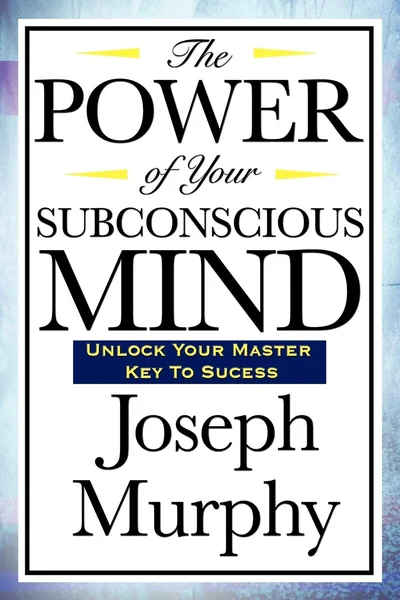
The Power of Your Subconscious Mind by Joseph Murphy Review: A Foundational Classic in Self-Help
First published in 1963, Joseph Murphy's The Power of Your Subconscious Mind is an international bestseller and a foundational text in the personal development genre, arguing that the subconscious mind is a creative, neutral force that executes commands given to it by the conscious mind through belief and feeling — a premise it supports with real-life anecdotes and practical techniques designed to help readers improve their health, finances, and relationships.
LuvemBooks Verdict
Best for
Readers already drawn to the New Thought tradition — or to classics like Think and Grow Rich — who want a structured, technique-oriented guide to harnessing the subconscious mind across health, finances, relationships, and fear.
Worth it if
You're willing to engage Murphy's blended psychological and metaphysical framework on its own philosophical terms and are looking for actionable techniques rather than empirically grounded habit science.
Skip if
You prefer clinically or neuroscience-backed approaches to behaviour change, or are likely to be put off by religious framing, metaphysical claims, and mid-twentieth-century cultural assumptions that the Wilder Publications edition leaves uncontextualised.
What readers & critics say
Readtm.com notes the book's strength lies in its accessible explanation of abstract concepts, making it "a gateway for many into self-directed manifestation," while flagging a lack of empirical scientific backing as a key limitation. Butler-bowdon.com observes the book is simply written and tries to be free of culture or religion, though it is slightly repetitive — a quality that mirrors its own theory of subconscious programming.
Sources: readtm.com, butler-bowdon.comAge & Reading Level
Recommended age
Adult
Reading level
Adult
1 content note · who it suits
Content to know about
Skip if you're looking for a clinically grounded or neuroscience-based approach to habit and behavior change
In This Review
- What Works & What Doesn't
- What the Book Actually Is and Argues
- Significance and Place in the Genre
- Core Strengths: Scope and Practical Structure
- Genuine Limitations and Points of Friction
- Who This Book Is Genuinely For
What Works & What Doesn't
What Works
- An international bestseller with decades of sustained readership, attesting to its broad and lasting appeal
- Covers a wide range of life domains — health, finances, relationships, and overcoming fear — within a single structured framework
- Pairs theoretical explanation of how the conscious and subconscious minds interact with practical, real-life case studies and applicable techniques
- Bundled with Murphy's companion work How to Attract Money, extending the volume's scope
- Written in a direct, accessible voice shaped by Murphy's long career as a popular public lecturer
What Doesn't
- Murphy's framework blends psychological and metaphysical/religious language in ways that readers seeking a secular or science-based approach may find unconvincing
- At over sixty years old from its original 1963 publication, some examples and cultural assumptions reflect mid-twentieth-century attitudes that contemporary readers may find dated
What the Book Actually Is and Argues
Significance and Place in the Genre
Core Strengths: Scope and Practical Structure
Genuine Limitations and Points of Friction
Who This Book Is Genuinely For
Frequently Asked Questions
Sources & Further Reading
The key facts and claims in this review are grounded in the retrieved, verified sources listed below.
- Cited in this review
- 1
- 2
- Further reading
- 3
Joseph Murphy, Wikipedia
- 4
- 5
- 6
- 7
- 8
web.iitd.ac.in
- 9
- 10
- 11
Related Reviews
Reviews of books we picked for readers who enjoyed The Power of Your Subconscious Mind.



Reader Comments
No comments yet
Be the first to share your thoughts!