
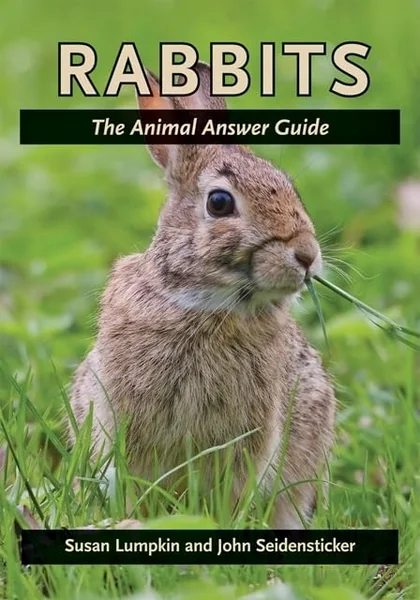
Rabbits: The Animal Answer Guide (The Animal Answer Guides:
by Susan Lumpkin, John Seidensticker
At a glance
About the Author
Susan Lumpkin, John Seidensticker1 book reviewed
Rabbits
The Animal Answer Guide (The Animal Answer Guides:
by Susan Lumpkin, John Seidensticker
LuvemBooks Verdict
Best for: Wildlife educators, nature writers, and curious generalists — including engaged secondary-level students — who want a rigorous yet readable scientific grounding in rabbit biology, ecology, behavior, and conservation.
Worth it? Skip it? Read the full verdict →Ask LuvemBooks
Was this helpful?
- Is it worth reading?
- For wildlife educators, nature writers, and curious generalists, Rabbits: The Animal Answer Guide delivers scope and credibility that shorter popular treatments do not — situating rabbits in their full ecological, behavioral, and cultural context with the authority of Smithsonian-backed conservationists. Standout details include the finding that several of the roughly 90 rabbit species are among the world's most endangered animals, and everyday surprises like the fact that baby rabbits nurse only once a day. The key caveat is structural: the episodic Q&A format is not designed for readers seeking a sustained analytical argument, and the book is calibrated to curious generalists rather than academic zoologists.
- Similar books
- Readers who enjoy the evidence-based natural history approach of Rabbits: The Animal Answer Guide will find strong companions in the curated titles below. Ed Yong's An Immense World explores how animal senses reveal hidden ecological realities, offering the same spirit of challenging assumptions about the natural world. Thomas McNamee's The Inner Life of Cats and Jonathan Balcombe's What a Fish Knows both investigate the inner lives and surprising complexity of animals popularly underestimated, much as Lumpkin and Seidensticker do for rabbits. Peter Wohlleben's The Hidden Life of Trees similarly reframes a familiar subject — trees — with scientific depth aimed at a general readership.
- Who should read this?
- Rabbits: The Animal Answer Guide is best suited to curious naturalists, wildlife enthusiasts, nature writers, and wildlife educators who want a rigorous but readable foundation in rabbit biology, ecology, and conservation. Engaged secondary-level students — the publisher designates ages 14–17 — will also find it well-calibrated to their level. Pet owners hoping for husbandry guidance and academic zoologists seeking primary-literature depth are the two groups most likely to find the book a partial fit rather than an ideal one.
- What age is it for?
- Best for ages 14 and up. The publisher designates a reading age of 14–17, reflecting content calibrated for engaged secondary-level students and curious generalists rather than young children or academic specialists. The scientific vocabulary and thematic depth — covering ecology, conservation status, and the rabbit-human relationship — suit confident teen readers and adults alike.
- What's the reading level?
- The book is written for curious non-specialists, with the publisher designating a reading age of 14–17. The prose is scientifically grounded but deliberately accessible, reflecting Susan Lumpkin's background in science communication and her nearly two decades editing ZooGoer magazine for a general audience. Academic zoologists and working ecologists may find some sections introductory, while secondary-level students and adult general readers should find the level well-matched to their needs.
- What does it say about rabbit conservation?
- One of the book's most striking contributions is its conservation chapter, which documents that despite the cultural shorthand of rabbits as prolific breeders, several of the roughly 90 rabbit species are among the most endangered animals on Earth — a figure noted by Science News that reframes how readers think about the group. Lumpkin and Seidensticker directly address the tension between the familiar image of thriving backyard rabbits and the endangered status of multiple species, making conservation a central rather than peripheral theme.
Summarize this book
Follow up
Synthesized from verified book data & published reviews · How we review
Press Enter to ask. Answers come from our editorial Q&A — start typing to see related questions.
Age & Reading Level
Recommended age
Ages 12–18
Reading level
Young adult
who it suits
Best for: Ages 14+ — scientific vocabulary, analytical scope across ecology and conservation, and secondary-level comprehension demands suit teen and adult readers.
Skip if you are a rabbit owner seeking practical husbandry or pet-care guidance, or an academic zoologist expecting primary-literature depth.
Editorial Review
Published by Johns Hopkins University Press in 2011 as part of The Animal Answer Guides: Q&A for the Curious Naturalist series, this illustrated paperback by wildlife conservationists Susan Lumpkin and John Seidensticker addresses 95 frequently asked questions about rabbits and their lagomorph relatives, covering everything from anatomy and ecology to conservation and the long, complex relationship between rabbits and humans.
Read the Full ReviewBooks like Rabbits
Curated picks for readers who enjoyed Rabbits, with our reasoning for each match.
If you liked Rabbits
Why It’s Trending
Rabbit Curiosity on the Rise Among Nature Lovers
This Q&A-style guide from wildlife conservationists is drawing renewed reader interest as nature content continues to find enthusiastic audiences. It's a solid pick for anyone who's ever wondered about the surprisingly complex lives of rabbits.
Reading Lists