
7 min read
Featured In
Share This Review
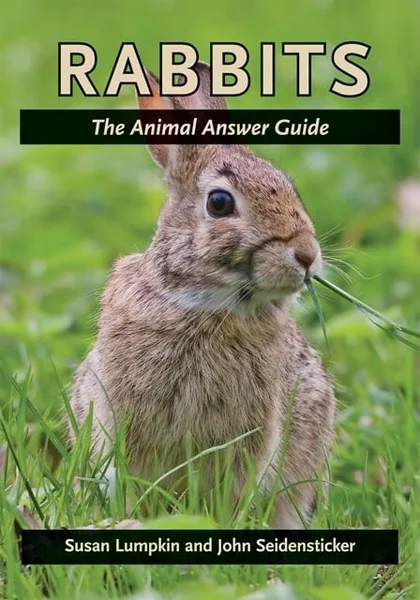
Rabbits: The Animal Answer Guide by Susan Lumpkin & John Seidensticker Review: A Rigorous, Curiosity-Driven Natural History
Published by Johns Hopkins University Press in 2011 as part of The Animal Answer Guides: Q&A for the Curious Naturalist series, this illustrated paperback by wildlife conservationists Susan Lumpkin and John Seidensticker addresses 95 frequently asked questions about rabbits and their lagomorph relatives, covering everything from anatomy and ecology to conservation and the long, complex relationship between rabbits and humans.
LuvemBooks Verdict
Best for
Wildlife educators, nature writers, and curious generalists — including engaged secondary-level students — who want a rigorous yet readable scientific grounding in rabbit biology, ecology, behavior, and conservation.
Worth it if
You want a serious, evidence-based Q&A reference that reveals the full ecological and cultural complexity of lagomorphs — including the sobering fact that several of the roughly 90 species are among the world's most endangered animals.
Skip if
You're a pet owner primarily seeking husbandry advice, or an academic zoologist who needs primary-literature depth rather than an authoritative but introductory-level overview.
What readers & critics say
Science News noted that the book surfaces little-known facts about familiar animals, highlighting that the roughly 90 rabbit species include several of the world's most endangered. NHBS describes the text as accessible in its coverage of anatomy, physiology, evolutionary history, ecology, conservation, behavior, and the rabbit-human relationship.
Sources: Science News, NHBSAge & Reading Level
Recommended age
Ages 12–18
Reading level
Young adult
who it suits
Best for: Ages 14+ — scientific vocabulary, analytical scope across ecology and conservation, and secondary-level comprehension demands suit teen and adult readers.
Skip if you are a rabbit owner seeking practical husbandry or pet-care guidance, or an academic zoologist expecting primary-literature depth.
Rabbits: The Animal Answer Guide (The Animal Answer Guides: by Susan Lumpkin, John Seidensticker is Trending
Netflix's 'Rabbit, Rabbit' Crime Drama Starring Adam Driver Sparks Interest in All Things Rabbit
Netflix has an upcoming crime drama called 'Rabbit, Rabbit' starring Adam Driver, and it's got people curious about rabbits in general. If you're riding that wave of rabbit-themed curiosity, this Q&A guide from wildlife conservationists is a solid place to land.
Netflix has an upcoming series called 'Rabbit, Rabbit' — a crime drama created by Peter Craig and starring Adam Driver as an escaped prisoner in a tense standoff with an FBI Crisis Negotiator. While the show isn't about actual rabbits, the title is drawing a lot of attention to anything rabbit-related right now, and that includes books.
When a high-profile title like this hits the cultural radar, it has a funny way of sending curious readers down unexpected rabbit holes (pun intended). 'Rabbits: The Animal Answer Guide' by Susan Lumpkin and John Seidensticker is one of the books benefiting from that spillover interest. It tackles 95 real questions about rabbits and their lagomorph relatives — covering their biology, behavior, ecology, and their long history alongside humans — making it a genuinely satisfying read for anyone whose curiosity got sparked.
The book is part of Johns Hopkins University Press's 'Animal Answer Guides' series, designed for curious naturalists who want real, accessible science without the dry textbook feel. If the Netflix buzz has you thinking more about rabbits than usual, this is a well-regarded place to dig deeper into what these animals are actually all about.
In This Review
- What Works & What Doesn't
- What the Book Actually Is and Does
- The Authors' Credentials and Their Significance
- Scope, Depth, and Surprising Content
- Genuine Limitations and Audience Fit
- Place in the Field and Lasting Usefulness
What Works & What Doesn't
What Works
- Written by credentialed wildlife conservationists with institutional backing from the Smithsonian Conservation Biology Institute and Friends of the National Zoo
- Covers roughly 90 rabbit species across 12 structured chapters, including conservation status, ecology, behavior, and the rabbit-human relationship
- The Q&A format makes it easy to navigate by specific curiosity, functioning as both a reference and a cover-to-cover read
- Includes bibliographical references and an index, supporting further research
- Addresses surprising, little-known facts that challenge the familiar cultural image of rabbits
What Doesn't
- The episodic Q&A structure prioritizes discrete questions over a sustained analytical narrative, which may not suit readers seeking a traditional monograph
- The book is aimed at curious generalists and engaged students rather than academic zoologists, so specialists may find some coverage introductory
What the Book Actually Is and Does
The Authors' Credentials and Their Significance
Scope, Depth, and Surprising Content
Genuine Limitations and Audience Fit
Place in the Field and Lasting Usefulness
Frequently Asked Questions
Sources & Further Reading
The key facts and claims in this review are grounded in the retrieved, verified sources listed below.
- Cited in this review
- 1
- 2
- 3
- Further reading
- 4
thriftbooks.com
- 5
- 6
Related Reviews
Reviews of books we picked for readers who enjoyed Rabbits.
Reader Comments
No comments yet
Be the first to share your thoughts!