At a glance

LuvemBooks Verdict
Best for: Curious general readers — walkers, nature lovers, or anyone drawn to writers like Robin Wall Kimmerer or Robert Macfarlane — who want an accessible, wonder-driven introduction to how forests function as interconnected social communities.
Worth it? Skip it? Read the full verdict →Preview the book



Ask LuvemBooks
Was this helpful?
- Is it worth reading?
- For general readers curious about the natural world, The Hidden Life of Trees delivers — it is a New York Times, Washington Post, and Wall Street Journal bestseller that The New York Review of Books called a work that 'breaks entirely new ground,' and its award record includes the Indie Choice Award for Nonfiction Book of the Year and a Books For a Better Life Award. Wohlleben's achievement is genuine: he translates complex ecological science — tree communication, resource-sharing, chemical warning systems — into vivid, human-scale language without losing the underlying science entirely. The key caveat is that readers with a background in biology or ecology may find the anthropomorphizing framing (describing trees as experiencing friendship, love, and social obligation) more rhetorical than the research strictly supports. For its intended audience of curious general readers, it remains one of the defining works of popular nature science of the past decade.
- Similar books
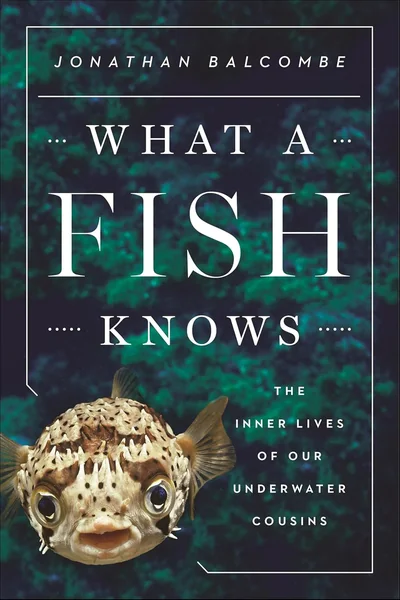
- Readers who responded to The Hidden Life of Trees tend to gravitate toward books that treat the natural world's hidden complexity with both scientific seriousness and literary warmth. Ed Yong's An Immense World explores how animal senses reveal hidden realms of perception — a comparable exercise in making the non-human interior life feel vivid and real. Jonathan Balcombe's What a Fish Knows undertakes a similar project for fish, arguing that their inner lives are far richer than assumed. Also closely related is Suzanne Simard's Finding the Mother Tree, whose afterword already appears in Wohlleben's volume — Simard's own account of mycorrhizal network research is the direct scientific companion to his argument. Merlin Sheldrake's Entangled Life, which maps the role of fungi in connecting and sustaining living systems, and Robin Wall Kimmerer's Braiding Sweetgrass, which weaves Indigenous plant knowledge with botanical science, round out a shelf of books that share Wohlleben's conviction that the natural world has a social and communicative life worth attending to.
- Who should read this?
- The Hidden Life of Trees is designed for the general reader with a curiosity about the natural world — anyone who has walked through a forest and wondered what is happening beneath the canopy and between the roots. Its chapter-by-chapter structure, accessible prose, and vivid analogies suit readers who enjoy popular science that is emotionally engaging as well as informative, and those drawn to writers like Robin Wall Kimmerer or Robert Macfarlane will find Wohlleben operating in a recognizable register. It is not aimed at specialists: readers seeking a rigorously technical or academically qualified treatment of forest ecology may find the book's metaphor-driven style too popular in register. It also serves as the ideal starting point for readers new to Wohlleben, as it is the first entry in his three-volume Mysteries of Nature series.
- About Peter Wohlleben
- Peter Wohlleben is a German forester and author who writes on ecological themes in popular language and has controversially argued for plant sentience.
- What are the main themes?
- At the heart of the book is the argument that forests are social networks governed by interdependence, mutual aid, and communication — not merely collections of individual organisms competing for resources. Wohlleben explores tree communication via underground fungal channels, the nurturing of offspring by parent trees, resource-sharing with sick or weakened neighbors, and the transmission of chemical warnings against insect threats. Running beneath these specific claims is a larger theme about the limits of human perception: that the natural world is performing complex, socially meaningful activity that most people walk past without noticing. The chapter titles — 'Friendships,' 'Social Security,' 'Tree School,' 'United We Stand, Divided We Fall' — signal that Wohlleben is also engaged in a deliberate act of reframing, asking readers to see the forest through a social and almost ethical lens.
- Where to start with Wohlleben?
- The Hidden Life of Trees is the explicit starting point: it is the first entry in Wohlleben's three-volume Mysteries of Nature series, and its chapter structure and accessible analogies make it the most approachable introduction to his thinking. Readers who find the framework compelling — that non-human living systems have social and communicative lives worth attending to — can follow it with The Inner Life of Animals, the second volume, which applies the same lens to the animal world.
Summarize this book
Follow up
Synthesized from verified book data & published reviews · How we review
Press Enter to ask. Answers come from our editorial Q&A — start typing to see related questions.
Age & Reading Level
Recommended age
Adult
Reading level
Adult
who it suits
Skip if you want a rigorously technical or academically qualified treatment of forest ecology rather than an accessible, metaphor-driven popular-science account.
Editorial Review
Peter Wohlleben's The Hidden Life of Trees, originally published in Germany as Das geheime Leben der Bäume and released in English by Greystone Books in 2016, makes a quietly revolutionary argument: that forests are social networks, and that trees communicate, nurture their young, share resources with the sick, and warn one another of danger. A New York Times, Washington Post, and Wall Street Journal bestseller, it is one of the defining works of popular nature science of the past decade, and its reach has only grown since its first English-language edition.
Read the Full ReviewBooks like The Hidden Life of Trees
Curated picks for readers who enjoyed The Hidden Life of Trees, with our reasoning for each match.
If you liked The Hidden Life of Trees