8 Books on the New Science of Nature: Reviewed & Ranked

7 books

Women in Science: 50 Fearless Pioneers Who Changed the World by Rachel Ignotofsky
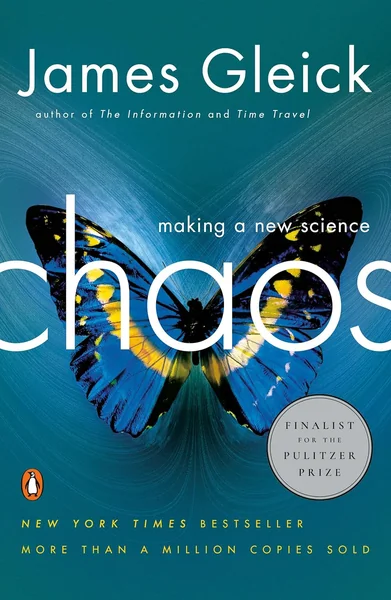
Chaos: Making a New Science by James Gleick
The Laws of Human Nature – International Bestseller on Psychology, Behavior & Human Nature by Robert Greene
Science Book, The: Everything You Need to Know About the World by National Geographic
Outlive: The Science and Art of Longevity by Peter Attia MD
The Science of Cooking: Every Question Answered to Perfect Your Cooking (The by Dr. Stuart Farrimond
The Mysteries of the Universe: Discover the best-kept secrets of space (DK Children's by Will Gater
Science & Nature

8 Books on the New Science of Nature: Reviewed & Ranked

Curated recommendations for general readers

7 Books
4.1 Avg
Updated Jun 7, 2026

Science has never been more accessible — or more contested. Whether you're searching for honest takes on the new science of a lost art like breathing, or looking for visual deep-dives into the cosmos, the challenge isn't finding science books: it's knowing which ones are worth your time.

This list brings together eight titles that span biology, physics, cooking, longevity, and space — curated for general readers who want substance without the jargon overload. We've included honest assessments of each book, including where authors overreach or oversimplify. Notably, Breath: The New Science of a Lost Art by James Nestor appears here with a candid look at the pseudoscience concerns some reviewers have raised — because you deserve a full picture before you buy.

From pioneering women who shaped modern science to the hidden mathematics of chaos, these books reward the curious, the skeptical, and the genuinely wonder-struck alike.

#1
Women in Science: 50 Fearless Pioneers Who Changed the World by Rachel Ignotofsky by Rachel Ignotofsky - book cover
Women in Science: 50 Fearless Pioneers Who Changed the World by Rachel Ignotofsky

by Rachel Ignotofsky

4.2/5

Rachel Ignotofsky's Women in Science does something deceptively simple: it makes you realize how many names you should have known all along. Each of the 50 profiles feels like meeting someone remarkable at a party rather than memorizing a textbook entry — you get the person, not just the achievement. Ignotofsky's graphic design background shows in every spread, where illustration and biography work together rather than one merely decorating the other. For parents and educators frustrated by how rarely women appear in standard science curricula, this is the most practical single fix available. It pairs naturally with *Good Night Stories for Rebel Girls* in spirit, but goes deeper into actual scientific contribution. That said, the short-form format means no story gets full depth — readers hungry for more will need to follow up with individual biographies.
"Specific enough to teach, vivid enough to inspire."
Middle School
Level: Intermediate
#2
Chaos: Making a New Science by James Gleick by James Gleick - book cover
Chaos: Making a New Science by James Gleick

by James Gleick

4.5/5

Nearly four decades old and still the best way in. James Gleick's Chaos did for chaos theory what *A Brief History of Time* did for cosmology — it made a genuinely difficult idea feel not just understandable but urgent. What makes it endure is Gleick's insistence on the human story: scientists like Edward Lorenz stumbling onto discoveries that quietly dismantled centuries of Newtonian certainty. This isn't a book that summarizes chaos theory so much as one that recreates the feeling of realizing the universe operates differently than everyone assumed. Readers with no mathematics background will follow it without trouble. Those hoping for equations or technical depth will need to look elsewhere — but that's a feature, not a flaw, for most general readers. If you've ever been curious about why weather forecasts fail, why coastlines are impossible to measure exactly, or what "the butterfly effect" actually means, this is where to start.
"Gleick doesn't just explain chaos theory, he makes you feel the moment scientists realized the universe was stranger than Newton promised."
Adult / High School
Level: Advanced
#3
The Laws of Human Nature – International Bestseller on Psychology, Behavior & Human Nature by Robert Greene by Robert Greene - book cover
The Laws of Human Nature – International Bestseller on Psychology, Behavior & Human Nature by Robert Greene

by Robert Greene

3.5/5

Robert Greene has built a career turning history into a mirror for human behavior, and The Laws of Human Nature might be his most ambitious attempt yet. Where his earlier books felt almost ruthlessly tactical, this one is more genuinely curious about why people do what they do — examining figures like Napoleon and Lincoln not to extract tricks, but to illuminate patterns that show up everywhere, including in ourselves. The historical case studies are what make abstract psychology stick: narcissism or emotional self-deception become far more vivid when you're watching them play out in a 19th-century general's decisions rather than reading a clinical definition. That said, this is a long book, and Greene's analytical tone can feel relentless over 600+ pages. If you're hoping for a breezy read or find the "strategic advantage" framing off-putting, this probably isn't your entry point into psychology. But for readers willing to engage actively, it rewards the effort.
"A dense but rewarding guide — Greene's historical lens makes abstract psychology memorable."
N/A
Level: N/A
#4
Science Book, The: Everything You Need to Know About the World by National Geographic by National Geographic - book cover
Science Book, The: Everything You Need to Know About the World by National Geographic

by National Geographic

4.0/5

Not every science reader wants to start with a textbook. The Science Book by National Geographic is built for the curious browser — someone who might spend twenty minutes on cellular biology, then flip forward to black holes, then double back to chemistry because an infographic caught their eye. National Geographic's visual storytelling is the real engine here, transforming genuinely difficult concepts into photographs, diagrams, and illustrations that make the intimidating feel approachable. The thematic rather than linear structure is a genuine strength: you don't need to "earn" your way to the interesting stuff. The honest caveat is that breadth is the whole point, which means depth is always sacrificed. Anyone looking for rigorous treatment of any single discipline will outgrow this quickly. But as an entry point — especially for visual learners who've bounced off drier science writing — it's a reliable and honest introduction to how the physical world works.
"A reliable entry point into science for the visually minded — broad, accessible, and honest about its own limits."
N/A
Level: N/A
#5
Outlive: The Science and Art of Longevity by Peter Attia MD by Peter Attia MD - book cover
Outlive: The Science and Art of Longevity by Peter Attia MD

by Peter Attia MD

4.2/5

Most longevity books promise a lot and deliver very little. Outlive by Peter Attia MD is a different animal. Attia — trained at Stanford and Johns Hopkins — approaches aging the way a good physician approaches a complex patient: methodically, honestly, and without pretending the evidence is cleaner than it is. What separates this from typical wellness books is Attia's willingness to sit with uncertainty rather than paper over it with confident prescriptions. His four pillars — exercise, nutrition, sleep, and emotional health — aren't presented as a miracle protocol but as an integrated system, and his exercise section in particular is unusually specific about the *why* behind different training approaches. The nutritional guidance is refreshingly undogmatic, examining multiple strategies through the lens of metabolic research rather than advocating for any single diet. Fair warning: this is a genuinely demanding read. The clinical depth that makes it trustworthy also makes it dense, and readers wanting a simple checklist will find it frustrating. Come prepared to think, not just highlight.
"The rare health book that earns its ambition — Attia's clinical rigor distinguishes it from the wellness noise."
N/A
Level: N/A
#6
The Science of Cooking: Every Question Answered to Perfect Your Cooking (The by Dr. Stuart Farrimond by Dr. Stuart Farrimond - book cover
The Science of Cooking: Every Question Answered to Perfect Your Cooking (The by Dr. Stuart Farrimond

by Dr. Stuart Farrimond

4.2/5

Ever wondered why your hollandaise breaks, your steak turns grey, or your bread comes out dense as a brick? The Science of Cooking by Dr. Stuart Farrimond answers those questions with genuine chemistry rather than vague advice. Unlike most cookbooks that just tell you what to do, Farrimond explains the actual mechanics — protein denaturation, the Maillard reaction, how emulsions hold together (and why they don't). It's the rare book that turns kitchen failures into learning opportunities rather than sources of frustration. The diagrams and charts make abstract concepts surprisingly graspable, and the structure works both as cover-to-cover reading and a quick reference when something goes wrong mid-recipe. That said, this isn't light reading — casual cooks who just want dinner on the table may find the depth more than they bargained for. If you're the kind of person who actually wants to understand your craft, though, this is indispensable.
"A rare cooking-science book that earns its keep by connecting chemistry directly to kitchen failures — and explaining how to fix them."
Adult
Level: Advanced
#7
The Mysteries of the Universe: Discover the best-kept secrets of space (DK Children's by Will Gater by Will Gater - book cover
The Mysteries of the Universe: Discover the best-kept secrets of space (DK Children's by Will Gater

by Will Gater

4.2/5

Space is almost impossible to make feel real to young readers — the distances are too vast, the concepts too strange. Will Gater pulls it off. The Mysteries of the Universe takes a clever approach: instead of presenting astronomy as a settled collection of facts, it frames the cosmos as a series of puzzles still waiting to be cracked. That framing matters, because it tells kids that curiosity is the point, not just memorization. The photography alone justifies a place on the shelf, but the writing earns its keep too — accurate without being clinical, and genuinely exciting without oversimplifying. Gater moves from our solar system outward to distant galaxies at a pace that feels manageable rather than overwhelming. A few topics could go deeper, and advanced young readers may occasionally want more, but as an entry point into astronomy this is hard to beat. Best suited for roughly ages 8–13.
"Gater makes the cosmos genuinely exciting without dumbing it down."
Ages 8-13
Level: Intermediate
Final Thoughts

The best science books don't just inform — they change how you see the world. Whether you start with Chaos for its mind-bending ideas, pick up Women in Science as a gift for a young reader, or finally settle the debate around Breath for yourself, each of these titles offers something real and lasting.

Our advice: don't let a single mixed review put you off. Science writing is at its best when it invites debate, and several books on this list do exactly that. Read critically, stay curious, and let the science speak for itself. If one of these titles sparks a deeper interest, that's exactly what a great reading list is supposed to do.

Frequently Asked Questions

This is one of the most searched questions about Breath: The New Science of a Lost Art by James Nestor, and it's a fair one. The book draws on legitimate peer-reviewed research around nasal breathing, CO₂ tolerance, and respiratory health — but critics argue Nestor sometimes extrapolates beyond what the evidence firmly supports. It's best read as a compelling introduction to an underexplored field rather than a definitive medical guide. Pair it with a healthy dose of skepticism and you'll get real value from it.
The Science Book by National Geographic is the most accessible entry point — its visual-first design and broad coverage make it ideal for readers who want an overview of everything from physics to biology without committing to a single topic. Women in Science by Rachel Ignotofsky is another fantastic beginner-friendly pick, especially if you prefer your science served with inspiring human stories.
While Women in Science is often shelved in the children's or young adult section, it genuinely works for readers of all ages. Adults who enjoy illustrated non-fiction, gift-givers, and educators have all embraced it warmly. The biographical profiles are concise but substantive, and Ignotofsky's artwork elevates it well beyond a simple picture book.
Outlive sits toward the rigorous end of the science spectrum on this list. Peter Attia MD doesn't shy away from detailed biochemistry and clinical data, which some readers find demanding. That said, the book is structured clearly enough for motivated non-medical readers. If you're genuinely invested in evidence-based longevity strategies, the effort pays off — just don't expect a light read.
For gifting, you can't go wrong with Women in Science by Rachel Ignotofsky — its beautiful illustrated format makes it a standout on any bookshelf. The Mysteries of the Universe by Will Gater is a brilliant choice for younger recipients or anyone with a love of space. For a more grown-up gift, Chaos by James Gleick is a timeless classic that any intellectually curious reader will appreciate.
Chaos: Making a New Science was first published in 1987 but remains one of the most important popular science books ever written. The core ideas — fractal geometry, sensitivity to initial conditions, the butterfly effect — are as relevant as ever, and Gleick's narrative style holds up beautifully. Some of the specific scientific examples have been refined by later research, but as an introduction to how chaos theory reshaped modern science, it's genuinely irreplaceable.
8 Books on the New Science of Nature: Reviewed & Ranked | LuvemBooks