9 min read
4.6
· 1,486 Amazon ratingsShare This Review
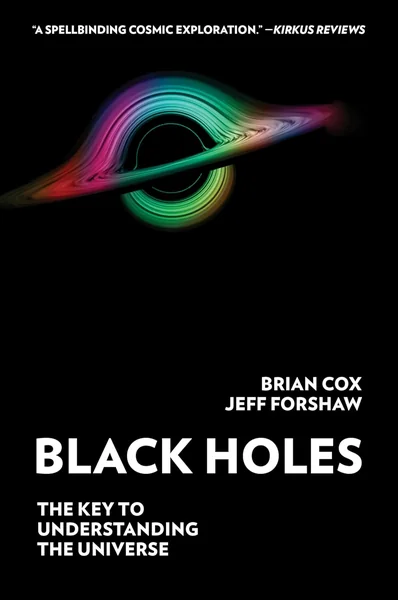
Black Holes: The Key to Understanding the Universe by Brian Cox & Jeff Forshaw Review: A Rigorous, Sweeping Popular-Science Journey
Black Holes: The Key to Understanding the Universe is a popular-science book by particle physicists and University of Manchester professors Brian Cox and Jeff Forshaw — their latest in a long-running collaborative series that includes The Quantum Universe and Universal: A Guide to the Cosmos. The book traces a century of physics from Einstein to Hawking and beyond, arguing that black holes are not merely exotic curiosities but the master key to understanding the deepest structure of reality, and that the collision of general relativity and quantum physics inside them points toward a vision of the universe as a giant quantum computer. Critical coverage calls it "a spellbinding cosmic exploration that resists collapsing under the weight of jargon," and New Scientist praised the authors for having "blazed a clear trail into forbidding territory." Cox is a multiple #1 Sunday Times bestselling author; this review is based on published sources and publicly available reception, not hands-on use of the book.
LuvemBooks Verdict
Best for
Readers already comfortable with popular physics who want to understand why black holes are not merely cosmic spectacles but the key testing ground for reconciling general relativity and quantum mechanics — and who are drawn to the cumulative, argument-driven tradition of Cox and Forshaw's previous collaborations.
Worth it if
You want a structured, expert-led journey from space-time geometry to the black hole information paradox and quantum computing, and you are willing to engage seriously with abstract ideas rather than expecting a gentle introductory survey.
Skip if
Readers seeking a first, gentle encounter with cosmology or astronomy should be cautious — multiple reader accounts note the conceptual demands are steep, and the book is not well-suited as a starter popular-science read.
What readers & critics say
Kirkus Reviews calls it "a spellbinding cosmic exploration that resists collapsing under the weight of jargon," while harperreach.com's retrieved coverage cites New Scientist's praise for the authors having "blazed a clear trail into forbidding territory, from the mathematical structure of space-time all the way to atom bombs, astrophysics and the origin of mass," and critical coverage describing it as "an engaging, ambitious and creative tour of our quantum universe." Reader voices on StoryGraph and personal book blogs acknowledge the book's ambition while confirming that the complexity makes it a challenging rather than casual read.
“A spellbinding cosmic exploration that resists collapsing under the weight of jargon.”
— Kirkus Reviews“Quantum computers will help solve the last mysteries of black holes — the ultimate vindication of research for research's sake.”
— Kirkus ReviewsAsk LuvemBooks
Was this helpful?
- Is it worth reading?
- For readers drawn to serious popular physics — those willing to engage with abstract ideas about space, time, and information — the book delivers real substance. Kirkus Reviews calls it 'a spellbinding cosmic exploration that resists collapsing under the weight of jargon,' and New Scientist praises the authors for making 'forbidding territory' navigable. The key caveat is ambition: because Cox and Forshaw push toward the research frontier rather than settling for surface-level wonder, the conceptual load is steeper than a purely introductory survey, and readers seeking mathematical rigour beyond the narrative level will not find it here either.
- Similar books
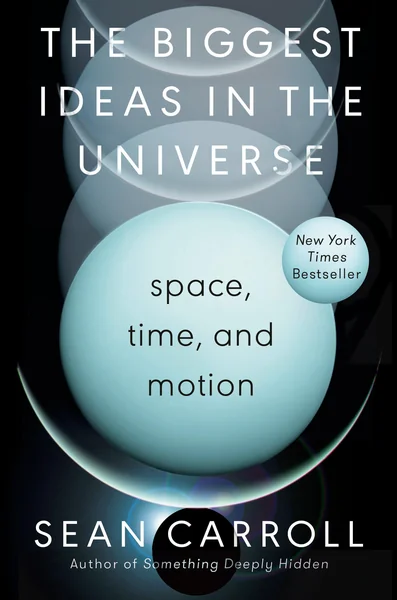
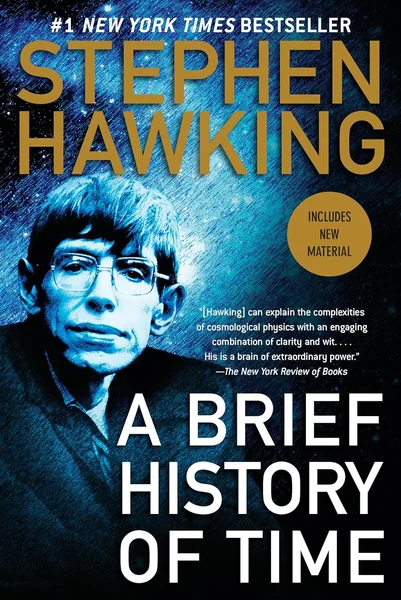
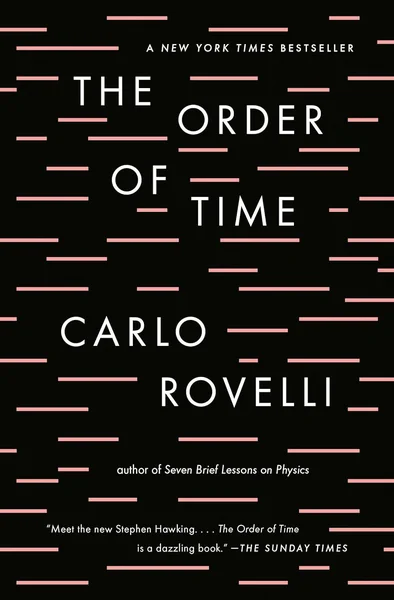
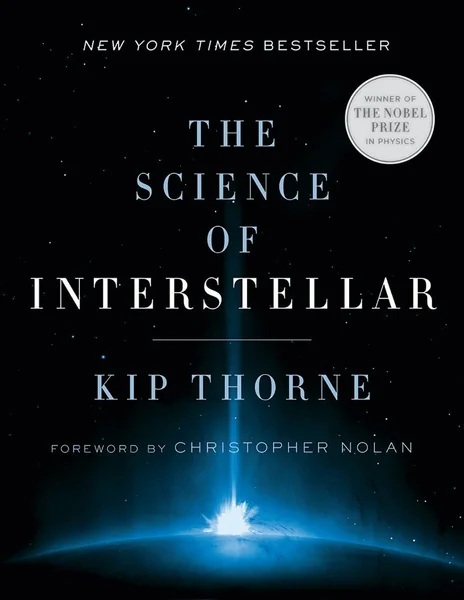
- Readers who enjoy Black Holes: The Key to Understanding the Universe will likely gravitate toward other serious popular-physics works. Stephen Hawking's A Brief History of Time is the canonical predecessor on black holes and cosmology for a general audience. Carlo Rovelli's The Order of Time shares the same tradition of poetic yet rigorous engagement with fundamental physics. Sean Carroll's The Biggest Ideas in the Universe: Space, Time, and Motion is a close contemporary companion for readers wanting deep conceptual clarity without full mathematical formalism. Kip Thorne's The Science of Interstellar offers an accessible but technically grounded look at the same astrophysical territory from one of the field's leading figures.
- Who should read this?
- The book is designed precisely for readers drawn to the tradition of popular physics writing that takes its audience seriously — those who want to understand why black holes matter not just as spectacles but as scientific instruments for probing the deepest laws of nature. It rewards readers who are willing to engage with abstract ideas about space, time, and information and who have at least some prior interest in popular science, even without a technical background. It is not the right first book for readers seeking a gentle, anecdotal introduction to astronomy, nor for specialists seeking mathematical rigour.
- How difficult is it to read?
- The book sits above a purely introductory level. Because it works through genuine physics — space-time geometry, quantum information theory, and the black hole information paradox — readers should be prepared for conceptual demands steeper than a narrative-driven astronomy survey. That said, Kirkus Reviews specifically notes that it 'resists collapsing under the weight of jargon,' and New Scientist praises the authors for making the territory navigable, suggesting the difficulty is managed rather than impenetrable.
- Why are Cox and Forshaw qualified to write this?
- Both authors are active professors of particle physics at the University of Manchester, not merely science communicators. Brian Cox is a Royal Society research fellow and an active researcher on the ATLAS experiment at the Large Hadron Collider in Switzerland, as well as the host of the BBC's widely watched Wonders series and co-presenter of The Infinite Monkey Cage. Jeff Forshaw was awarded the Institute of Physics Maxwell Medal in 1999 for outstanding contributions to theoretical physics. This is their fifth co-authored book, and Cox is a multiple #1 Sunday Times bestselling author — a combination of deep academic expertise and a proven record of public communication.
- What are the book's key themes?
- The book's central themes are the collision of general relativity and quantum mechanics, the nature of black holes as laboratories for testing the deepest laws of physics, and the black hole information paradox. It also develops the provocative theme that quantum computing and black hole physics are 'intimately related,' and builds toward the idea that the universe itself may operate like a giant quantum computer — framing fundamental research as its own vindication rather than a means to practical ends.
Summarize this book
Follow up
Synthesized from verified book data & published reviews · How we review
Press Enter to ask. Answers come from our editorial Q&A — start typing to see related questions.
Age & Reading Level
Recommended age
Adult
Reading level
Adult
Skip if you want a gentle, anecdotal first introduction to astronomy or cosmology with no demanding abstract concepts.
Our Review
What the Book Actually Is and Argues
The Authors' Standing and Their Collaborative Legacy
Scope and Scientific Range
Critical Reception and Accessibility
Who This Book Is For and Where It Challenges
Sources & Further Reading
The key facts and claims in this review are grounded in the retrieved, verified sources listed below.
- Cited in this review
- 1
williamcollinsbooks.co.uk
- 2
kirkusreviews.com
- 3
londonreviewbookshop.co.uk
- Further reading
- 4
netgalley.com
- 5
app.thestorygraph.com
- 6
- 7
- 8
- 9
harpercollins.ca
- 10
barnesandnoble.com
- 11
harpercollins.co.uk
Books like Black Holes
Curated picks for readers who enjoyed Black Holes, with our reasoning for each match.
If you liked Black Holes