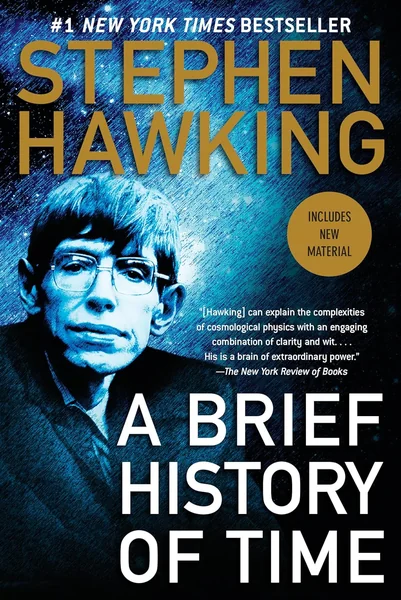
A Brief History of Time
Stephen Hawking traces the universe's origins, structure, and possible fate — from the Big Bang and black holes to the search for a unified theory of everything.
Read our full reviewAt a glance
A Brief History of Time
LuvemBooks Verdict
Best for: Curious non-specialists who want a coherent, single-volume map of cosmology's biggest questions — from the Big Bang to black holes — without needing any mathematical background.
Worth it? Skip it? Read the full verdict →Ask LuvemBooks
Was this helpful?
- Is it worth reading?
- For any reader curious about how physicists think about the universe but unwilling or unable to commit to a textbook, A Brief History of Time remains the entry point of choice more than three decades after its original publication. Its scope — from Aristotle's geocentric model to the search for a theory of everything — is designed to give the non-specialist a coherent map of cosmology's biggest questions. The New York Review of Books praised Hawking's ability to explain cosmological physics with 'an engaging combination of clarity and wit,' and Carl Sagan, in his introduction, called Hawking the worthy successor to Newton and Paul Dirac. The key caveat is that the book's concision means individual topics receive compressed treatment, so readers wanting deeper rigour will need to supplement it with other volumes.
- Similar books
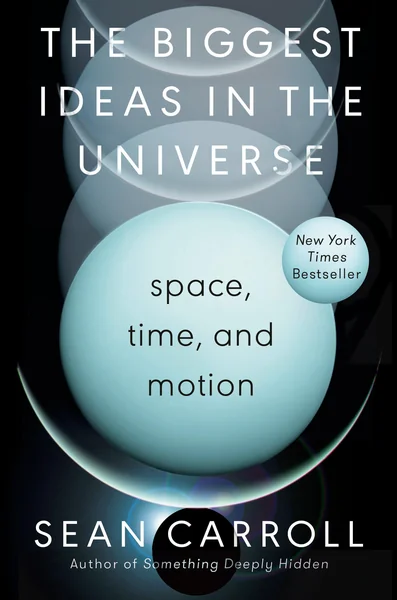
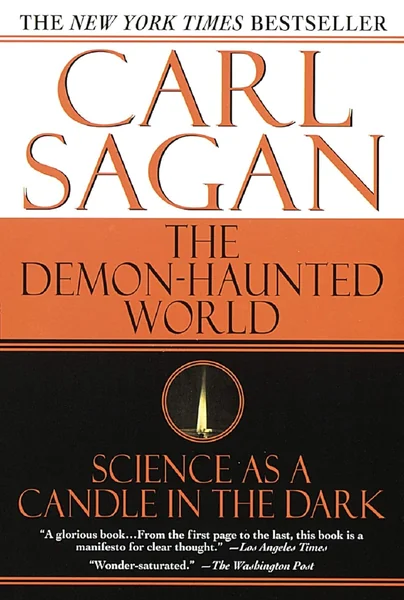
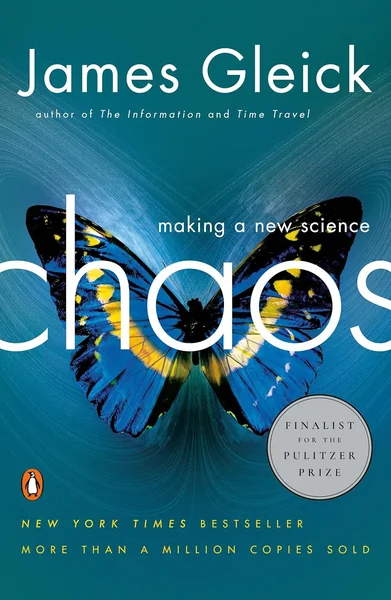
- Readers who enjoyed A Brief History of Time have several strong options nearby. Sean Carroll's The Biggest Ideas in the Universe: Space, Time, and Motion offers a more contemporary take on the same grand themes for readers ready for slightly more rigour. Kip Thorne's The Science of Interstellar dives deeper into black holes, wormholes, and relativistic physics through the lens of the film, making it a natural companion to Hawking's chapters on those subjects. For a broader defence of scientific thinking, Carl Sagan's The Demon-Haunted World: Science as a Candle in the Dark — whose author wrote the celebrated introduction to Hawking's book — is a compelling companion. James Gleick's Chaos: Making a New Science offers a similarly accessible gateway into a major paradigm shift in physics, while Simon Singh's The Simpsons and Their Mathematical Secrets provides a lighter but genuinely illuminating angle on mathematical ideas for readers who appreciated Hawking's wit.
- Who should read this?
- A Brief History of Time is written explicitly for the broadest possible audience — Hawking's deliberate suppression of mathematics and reliance on analogy and narrative makes it the go-to first encounter with cosmology for general readers with no science background. It is ideal for anyone curious about the Big Bang, black holes, quantum mechanics, or the possibility of a unified theory, but who has no intention of working through a physics textbook. Readers who have already moved through popular science literature and want more rigour may find the concise treatment of individual topics — from black hole thermodynamics to wormhole theory — leaves them wanting more, and should consider companion volumes for deeper exploration.
- About Stephen Hawking
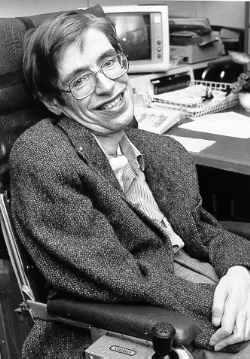
- Stephen William Hawking was an English theoretical astrophysicist, cosmologist, and author who was director of research at the Centre for Theoretical Cosmology at the University of Cambridge.
- Tell me about the adaptation
- A Brief History of Time was adapted into a documentary film in 1991, directed by Errol Morris. The film draws on Hawking's book and his life, blending the cosmological ideas of the text with personal testimony from Hawking and those who knew him. Morris, known for his innovative documentary techniques, brought the same conceptual ambition that made the book a cultural landmark to the screen.
- What's the reading level?
- A Brief History of Time is written for a general adult audience, but its accessibility comes with caveats. Hawking deliberately stripped out mathematics — the text contains only one equation, E=mc² — and relies on analogy and narrative history to convey complex ideas, but a University of Oxford student review still describes it as 'a slightly difficult read.' The challenge lies not in dense prose but in the conceptual leaps required to connect one idea to the next; readers who engage actively rather than passively will get the most from it.
Summarize this book
Follow up
Synthesized from verified book data & published reviews · How we review
Press Enter to ask. Answers come from our editorial Q&A — start typing to see related questions.
Age & Reading Level
Recommended age
Adult
Reading level
Adult
who it suits
Skip if you're looking for deep mathematical rigour or extended technical treatment of any single cosmological topic
Editorial Review
First published in 1988, Stephen Hawking's A Brief History of Time remains one of the most consequential works of popular science ever written, having sold more than 25 million copies in 40 languages and earned a place on Time magazine's list of the 100 best nonfiction books since the publication's founding — a record that speaks for itself.
Read the Full ReviewBooks like A Brief History of Time
Curated picks for readers who enjoyed A Brief History of Time, with our reasoning for each match.
If you liked A Brief History of Time