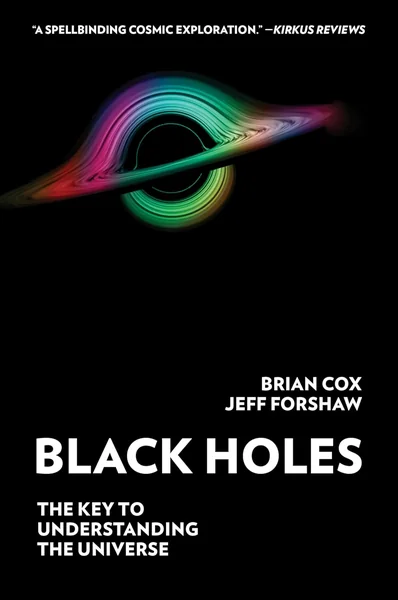
Jeff Forshaw
1
Books ReviewedAsk LuvemBooks about Jeff Forshaw
- Where should I start?
- Start with Black Holes: The Key to Understanding the Universe, the one Jeff Forshaw book we've reviewed. It's co-written with Brian Cox and traces a century of physics from Einstein to Hawking, making it a self-contained entry point that doesn't require any prior reading. It holds a 4.6/5 reader rating from 1,486 Amazon ratings.
- What's their writing style?
- Based on the book we've reviewed, Jeff Forshaw writes rigorous popular science with Brian Cox: they take real research territory — in this case a century of physics from Einstein to Hawking — and build a sustained argument, here that black holes are central to understanding the universe. The approach is that of working physicists writing for general readers, grounded in actual accelerator data and theoretical physics rather than analogy alone.
- Books we've reviewed
- We've reviewed 1 Jeff Forshaw book. Black Holes: The Key to Understanding the Universe (with Brian Cox) traces physics from Einstein to Hawking, arguing that black holes are the key to understanding the universe — it carries a 4.6/5 reader rating from 1,486 Amazon ratings.
- What genre do they write?
- Jeff Forshaw writes popular science in the Science & Nature space, specifically physics and cosmology for general readers. The book we've reviewed, Black Holes: The Key to Understanding the Universe, is a non-fiction tour of modern physics from Einstein to Hawking. Their writing draws directly on their professional work as a particle physicist.
- What should I read after Black Holes?
- If you've finished Black Holes: The Key to Understanding the Universe, a natural next step is the earlier Forshaw–Cox collaboration The Quantum Universe, which turns to quantum mechanics — the field closest to Forshaw's own research in quantum chromodynamics. It's their best-known earlier work together and shares the same scientist-authors writing for general readers.
Who is Jeff Forshaw?
Follow up
Synthesized from verified book data & published reviews · How we review
Press Enter to ask. Answers come from our editorial Q&A — start typing to see related questions.
Authors Like Jeff Forshaw

Stephen Hawking
Stephen William Hawking was an English theoretical astrophysicist, cosmologist, and author who was director of research at the Centre for Theoretical Cosmology at the University of Cambridge.
1 book reviewed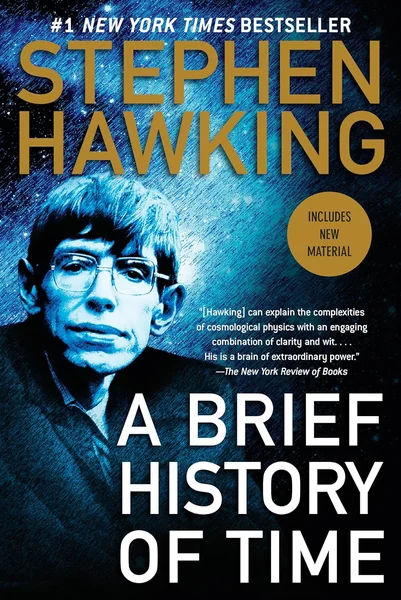

Carlo Rovelli
Carlo Rovelli is an Italian theoretical physicist and writer who has worked in Italy, the United States, France, and Canada.
1 book reviewed

Kip Thorne
Kip Stephen Thorne is an American astrophysicist and author.
1 book reviewed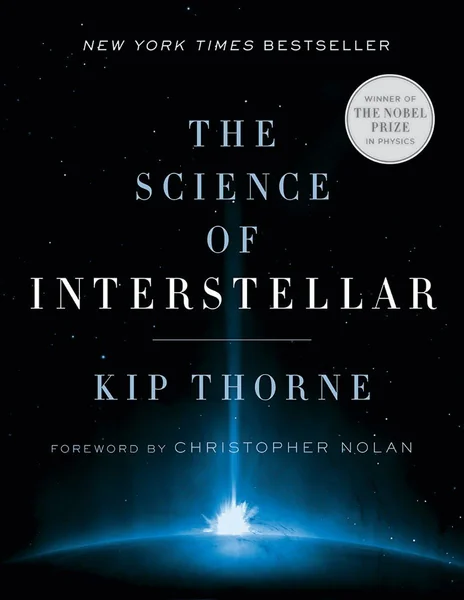
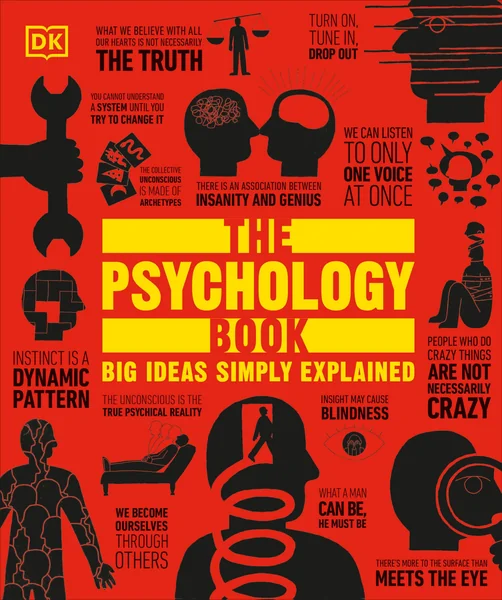
DK

James Gleick
James Gleick is an American author and historian of science whose work has chronicled the cultural impact of modern technology.
1 book reviewed

Brian Cox
Brian Edward Cox is an English physicist and musician.
1 book reviewed