Brian Cox
English
1968 – 2008
Brian Edward Cox is an English physicist and musician. He is a professor of particle physics in the Department of Physics and Astronomy at the University of Manchester and the Royal Society professor for public engagement in science. He is best known to the public as the presenter of science programmes, especially BBC Radio 4's The Infinite Monkey Cage and the Wonders of... series and for popular science books, including Why Does E=mc2? (2009) and The Quantum Universe (2011).
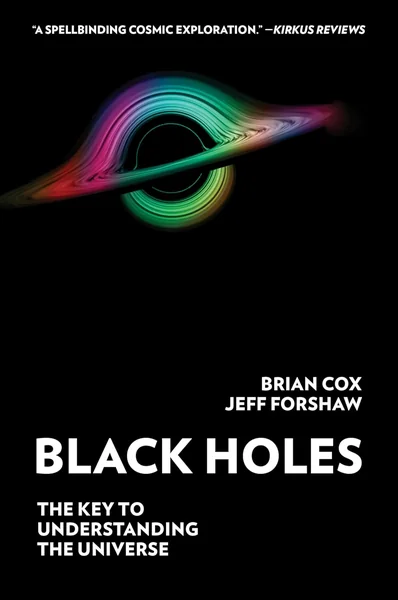
On LuvemBooks, we've reviewed Black Holes.
1
Books ReviewedAsk LuvemBooks about Brian Cox
Brian Cox is an English physicist and musician whose popular-science writing, often co-authored with Jeff Forshaw, makes frontier physics accessible to general readers. We've reviewed 1 book on LuvemBooks: Black Holes: The Key to Understanding the Universe, which traces a century of physics from Einstein to Hawking and beyond, and it holds a reader rating of 4.6/5 from 1,486 Amazon ratings. That book continues a long-running Cox–Forshaw collaboration that includes The Quantum Universe and Universal: A Guide to the Cosmos.
- Where should I start?
- Black Holes: The Key to Understanding the Universe is the natural starting point — it's the one Brian Cox book we've reviewed, and it holds a strong reader rating of 4.6/5 from 1,486 Amazon ratings. Written for general readers, it walks through a century of physics from Einstein to Hawking and beyond, so you don't need a science background to follow it.
- What's their writing style?
- Based on Black Holes: The Key to Understanding the Universe, Cox writes in the classic popular-science mode: taking a big, intimidating subject and grounding it in the history of the ideas themselves. The book is structured as a narrative of discovery, tracing physics from Einstein to Hawking and beyond rather than presenting dry facts. Writing alongside Jeff Forshaw, Cox brings the authority of a working particle physicist while keeping the material approachable.
- Books we've reviewed
- We've reviewed 1 Brian Cox book so far. Black Holes: The Key to Understanding the Universe (with Jeff Forshaw) is a popular-science tour of a century of physics, from Einstein to Hawking and beyond, arguing for the central importance of black holes — readers give it 4.6/5 from 1,486 Amazon ratings.
- What genre do they write?
- On LuvemBooks, Brian Cox's reviewed work sits in Science & Nature — specifically popular science focused on physics and cosmology. Black Holes: The Key to Understanding the Universe is a good example: a general-audience book about one of the most extreme phenomena in the universe.
- What should I read after Black Holes?
- Black Holes: The Key to Understanding the Universe is the only Brian Cox book we've reviewed, so we can't point you to another reviewed title on LuvemBooks yet. Within the same Cox–Forshaw collaboration, the summary of Black Holes notes earlier companion volumes including The Quantum Universe and Universal: A Guide to the Cosmos, which explore related territory in physics and cosmology.
Who is Brian Cox?
Where should I start?
What's their writing style?
Books we've reviewed
What genre do they write?
What should I read after Black Holes?
Who is Brian Cox?
Brian Edward Cox is an English physicist and musician, and a particle physics professor at the University of Manchester. Beyond academia, they write popular-science books, frequently in collaboration with fellow Manchester physicist Jeff Forshaw. Their notable works include Poetry now, and on LuvemBooks we've reviewed their book Black Holes: The Key to Understanding the Universe.
Follow up
What does Brian Cox write about?
Who is Jeff Forshaw?
Synthesized from verified book data & published reviews · How we review
Press Enter to ask. Answers come from our editorial Q&A — start typing to see related questions.
Authors Like Brian Cox

Stephen Hawking
Science & Nature
Stephen Hawking's A Brief History of Time covers foundational black-hole science and Hawking radiation, offering the classic background to Brian Cox's updated physics discussions.
1 book reviewed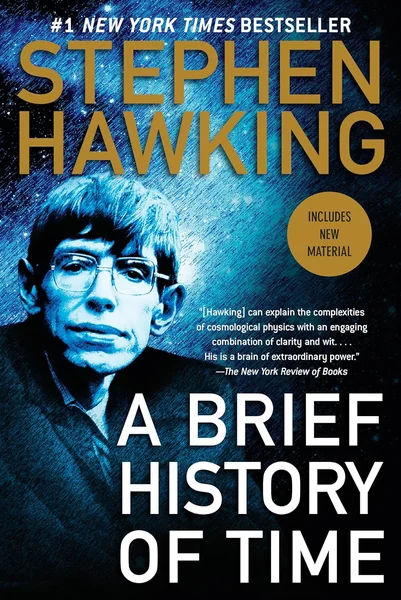

Carlo Rovelli
Science & Nature
Carlo Rovelli's The Order of Time covers the same relativistic territory with physics and wonder, bringing a philosophical, poetic approach across shorter, lyrical chapters.
1 book reviewed

Kip Thorne
Science & Nature
In The Science of Interstellar, Kip Thorne unpacks the real black hole physics and spacetime equations that Brian Cox explains, covering gravitational lensing, time dilation, and tidal forces.
1 book reviewed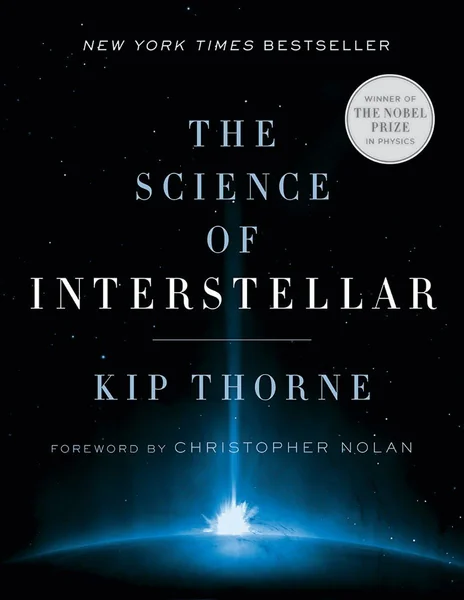
D
DK
Science & Nature
DK's How Space Works provides accessible visual science communication on cosmic topics, detailing subjects like black holes explored by Brian Cox.
2 books reviewed


James Gleick
Science & Nature
James Gleick's Chaos explores deep structural ideas through concrete, observable phenomena, bringing a narrative focus and less formalism to complex scientific concepts.
1 book reviewed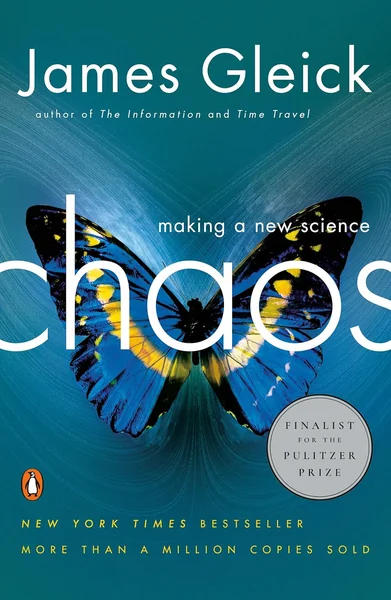

Jeff Forshaw
Science & Nature
Jeff Forshaw explores theoretical physics and the nature of spacetime alongside Cox as co-author of Black Holes.
1 book reviewed