Published

Read Time

8 min read

Reader rating

4.4

· 69 Amazon ratings
reader ratings, not a LuvemBooks score

Reading order

The Horus Heresy

Book 9 of 64 books
  1. Battle for the Abyss book cover
    Before thisBattle for the Abyss2008
  2. Mechanicum book cover
    You're readingMechanicum
  3. Tales of Heresy book cover
    Up nextTales of Heresy2009 · on Amazon
  4. Fallen Angels book cover
    ThenFallen Angels2009
All 64 in order →
Curated & edited by

LuvemBooks Editorial

How we create our reviews →
Share This Review
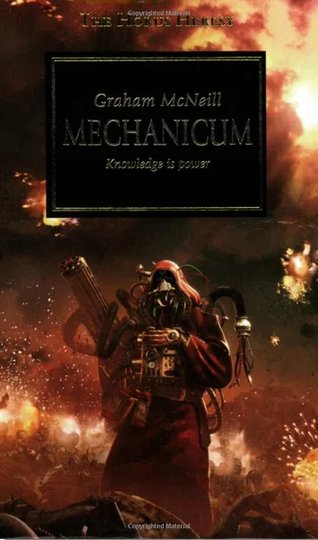
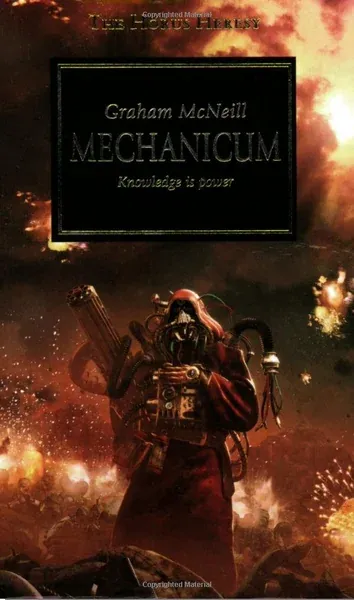
Mechanicum (Horus Heresy) by Graham Mcneill front cover

Our review

Mechanicum by Graham McNeill Review: A Shakespearean Tragedy on the Red Planet

Mechanicum is the ninth book in Graham McNeill's Horus Heresy series, a New York Times bestselling franchise, tracing how Horus's betrayal tears the Mechanicum priesthood apart in a brutal civil war on Mars. It earns attention for shifting the Heresy's lens away from Space Marines and onto the forge-cities and ancient secrets of the Red Planet.

LuvemBooks Verdict

Best for

Readers already invested in the Horus Heresy series who want to see the galaxy-spanning conflict through the lens of institutional collapse — particularly those with an appetite for Adeptus Mechanicus lore, Titan Legion warfare, and the mythological origins of the Dark Mechanicum.

Worth it if

Worth reading if you are following the Horus Heresy series and want to understand how an entire branch of the Imperium's technical priesthood fractures from within, or if stories of ideological and institutional collapse interest you more than straightforward Space Marine action.

Skip if

Skip it if you are new to Warhammer 40,000 or the Horus Heresy, or if you are primarily invested in the primarchs and Space Marine storylines — the dense Martian theology and forge-city politics will feel like a steep, under-signposted detour.

Civilianreader.com called it "a must read for any fan of the Horus Heresy series," praising its grounding in human stories amid the civil war on Mars. Track of Words highlighted it as a book of firsts — the first proper look at Mars and the Mechanicum in the Heresy series, the first depiction of Imperial Knights in Black Library fiction, and the first female-led Heresy novel — noting its strong sense of divided loyalty, while Driftless Area Review described it as "a wonderful continuation of the Horus Heresy, bringing a mix of space battles, ideological debates, and gothic imagery."

Sources: civilianreader.com, trackofwords.com, driftlessareareview.com
4.4from 69 Amazon ratings— reader ratings, not a LuvemBooks score
Buy on Amazon

Age & Reading Level

Recommended age

Adult

Reading level

Adult

Content to know about

large-scale military violence
institutional betrayal and ideological corruption

Best for: Adults — dense lore, political complexity, and Titan-scale warfare suit experienced readers of science fiction and the wider Warhammer 40,000 setting

Skip if you are new to Warhammer 40,000 or the Horus Heresy and want a self-contained, accessible entry point

In This Review
  • What Works & What Doesn't
  • What the Book Is and What Happens
  • Significance Within the Horus Heresy
  • Strengths: Tragedy, Mythology, and the Emperor's Long Game
  • Limitations: Accessibility and Series Dependency
  • Who This Book Is For

What Works & What Doesn't

What Works
  • Fills a unique narrative gap by depicting the Martian civil war and the origins of the Dark Mechanicum, a story no other Horus Heresy entry covers directly
  • Uses Dalia Cythera as a human, outsider viewpoint that grounds the novel's grand-scale institutional collapse
  • The mythological revelation about the Dragon and the Emperor's long-term design adds distinctive depth to the wider Horus Heresy lore
  • Part of the New York Times bestselling Horus Heresy series, praised by Civilianreader.com as a must-read for series fans
What Doesn't
  • Assumes substantial familiarity with Horus Heresy and Warhammer 40,000 lore — newcomers will face a steep, under-explained learning curve
  • Readers focused on the primarchs and Space Marine storylines may find the Martian setting a lateral detour from the series' main arc
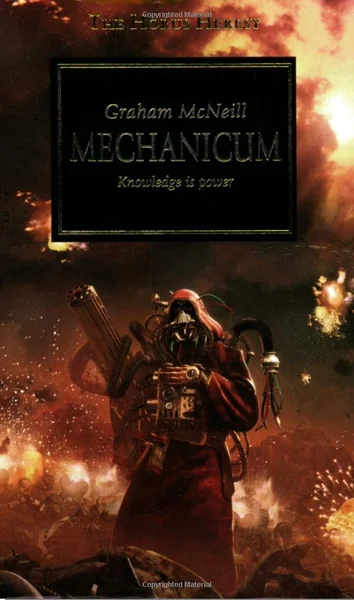
A civil war unlike any other in the Horus Heresy series, Mechanicum delivers the fall of Mars in full tragic scope.
Mechanicum (Horus Heresy) by Graham Mcneill front cover

What the Book Is and What Happens

Mechanicum is the ninth entry in Graham McNeill's contributions to the Horus Heresy series, published by Black Library. Set on Mars — home world of the Mechanicum priesthood — the novel opens as Horus's treachery begins rippling outward through the Imperium. The manufactory-cities of Mars are vital to the war effort, producing the weapons and war engines that fuel the expeditionary fleets crossing the galaxy, and whoever controls the Red Planet controls the material lifeblood of the coming conflict.
The story centres on Dalia Cythera, a Terran transcriber who stands accused of tech-heresy but is spared execution and instead brought to Magma City, the forge-domain of Magos Koriel Zeth. There, Cythera is placed in a team of technical servants and tasked with constructing a cognitive enhancer whose schematics have defeated adepts for centuries. Meanwhile, Fabricator General Kelbor Hal moves toward open allegiance with Horus, splitting the Mechanicum between those who would serve the Emperor and those drawn into what becomes the Dark Mechanicum. Lurking beneath all of this is the revelation that an ancient terror — a being the sources identify as the Dragon, imprisoned on Mars by the Emperor — is intimately tied to the very origins of the Mechanicum itself.

Significance Within the Horus Heresy

Where most Horus Heresy novels follow Space Marines or Imperial commanders, Mechanicum deliberately widens the lens to show the Heresy fracturing an institution rather than an army. Mars is rendered as a world unto itself: a planet of forge-cities, machine-cult politics, and layered industrial mythology. The novel's focus on the origins and fall of the Dark Mechanicum fills in a piece of the larger Heresy tapestry that no other entry addresses directly, tracing the moment an entire branch of the Imperium's technical priesthood turns traitor. Civilianreader.com noted that the book is "an interesting look at how Horus's betrayal split the Mechanicum forces and saw Mars fall into civil war, grounded in some human stories of those who were either at the centre of events or" caught in their wake.

Strengths: Tragedy, Mythology, and the Emperor's Long Game

One of the novel's most discussed strengths is its scale of tragedy. One source described Mechanicum as "a great tragedy in the best Shakespearean mould played out over some 400 pages" — a characterisation that captures how McNeill structures the Martian civil war not as simple villainy but as institutional collapse driven by ambition, faith, and manipulation. The mythological layer deepens this: the revelation that the Dragon was imprisoned on Mars by the Emperor to seed the future Mechanicum casts the Emperor's centuries-long strategy in a new and unsettling light. As that same source observed, the disclosure offers "an almost unbelievable paternal insight towards humanity not alluded to in any other Horus Heresy novel," making Mechanicum distinctive even within the wider series. Cythera functions as the human anchor — an outsider whose ignorance of Martian cult politics mirrors the reader's own, giving the novel a grounded point of view amid its grand-scale events.

Limitations: Accessibility and Series Dependency

The novel's greatest practical limitation is the weight of context it assumes. Mechanicum is the ninth book in a long-running series, and while it shifts setting away from the main Space Marine storyline, it draws on the established politics and lore of the Horus Heresy without extensive recapping. Readers new to Warhammer 40,000 or the Horus Heresy will encounter dense Mechanicum theology, forge-city hierarchy, and Titan Legion politics without much orientation. Those unfamiliar with the broader world-building of the setting — the Emperor's nature, the structure of the Imperium, the significance of the Titan Legions — may find the civil war's stakes harder to feel. Additionally, because Mars sits at a remove from the main fronts of the Heresy, readers primarily invested in the primarchs and Space Marine storylines may find this a lateral rather than a propulsive chapter in the overarching narrative.

Who This Book Is For

Mechanicum is designed for readers already engaged with the Horus Heresy series who want a broader view of the galaxy-spanning conflict. It rewards those with an existing interest in the Adeptus Mechanicus, the Titan Legions, and the forge-world mythology of Warhammer 40,000 — civilianreader.com called it "a must read for any fan of the Horus Heresy series." It also serves readers drawn to stories where institutions and ideologies collapse from within, as opposed to straightforward battlefield narratives. Placed ninth in the series, it functions as a critical expansion of the Heresy's scope, establishing conditions — the rise of the Dark Mechanicum, the fate of Mars — whose consequences echo across the setting's wider lore.

Sources & Further Reading

The key facts and claims in this review are grounded in the retrieved, verified sources listed below.

  1. Cited in this review
  2. 1
  3. Further reading
  4. 2

    Graham McNeill, Wikipedia

  5. 3
  6. 4
  7. 5
  8. 6
  9. 7
  10. 8