BOOKS
Published

Read Time

8 min read

Reader rating

4.7

· 4,779 Amazon ratings
reader ratings, not a LuvemBooks score

Reading order

The Horus Heresy

Book 4 of 64 books
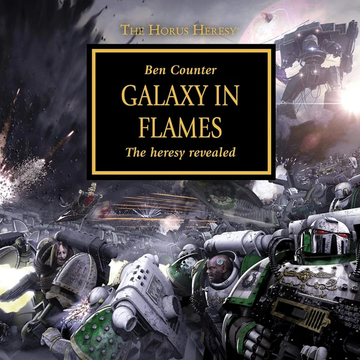
  1. Galaxy in Flames book cover
    Before thisGalaxy in Flames2006
  2. The Flight of the Eisenstein book cover
    You're readingThe Flight of the Eisenstein
  3. Fulgrim book cover
    Up nextFulgrim2007 · on Amazon
  4. Descent of Angels book cover
    ThenDescent of Angels2007 · on Amazon
All 64 in order →
Curated & edited by

LuvemBooks Editorial

How we create our reviews →
Share This Review

Our review

The Flight of the Eisenstein by James Swallow Review: A Tense, Intimate Pivot in the Heresy

The Flight of the Eisenstein is the fourth novel in Black Library's 54-book Horus Heresy series, written by James Swallow and published in 2007. It follows Death Guard Battle-Captain Nathaniel Garro as he seizes the starship Eisenstein to warn the Emperor of Horus's treachery — only to be stranded in the warp with Chaos closing in. Its compact, character-driven focus sets it apart from the sweeping carnage of the books that precede it.

LuvemBooks Verdict

Best for

Horus Heresy series readers who want a tighter, more personal story after the sweeping Legion-scale events of the opening trilogy, and who are invested in the long-term continuity of Warhammer 40,000 lore.

Worth it if

Worth reading if you've worked through the first three Horus Heresy novels and want a claustrophobic, character-focused counterpoint to the epic battles of the opening trilogy, centred on a single loyalist's desperate race to save the Imperium.

Skip if

Skip it if you're new to the Horus Heresy and hoping for a satisfying standalone entry, or if you found Galaxy in Flames' propulsive action exactly what you came for and expect the same momentum to continue.

Jacksbedtimereading.wordpress.com highlighted the novel's "closeness and intimacy" as a defining strength, singling out its tight focus as a deliberate and effective contrast to the broader Heresy. Adventureswithpeps.com called it "one of the most thrilling reads" in the series, though it also noted the book "can have the bad habit of feeling like a dip" for readers riding the wave of the preceding volume; pinsofwar.com took a harder line, judging most of the book as "padding" and finding the characterisation of Garro unconvincing, while conceding the final chapters deliver strong action.

Sources: jacksbedtimereading.wordpress.com, adventureswithpeps.com, pinsofwar.com, mattbyrumwriter.wordpress.com, swordsandspectres.wordpress.com
4.7from 4,779 Amazon ratings— reader ratings, not a LuvemBooks score
Buy on Amazon

Age & Reading Level

Recommended age

Adult

Reading level

Adult

Content to know about

graphic military violence
Chaos corruption and body horror

Skip if you want a fast-paced, large-scale battle epic in the vein of Galaxy in Flames — this is a deliberately slow, claustrophobic survival story.

In This Review
  • What Works & What Doesn't
  • What the Story Is and What Happens in It
  • Place in the Series and Its Structural Role
  • Tone and Narrative Focus
  • Where It Draws Criticism
  • Who the Book Is For

What Works & What Doesn't

What Works
  • Introduces Battle-Captain Nathaniel Garro as a compelling loyalist protagonist in a series dominated by ensemble casts
  • Its intimate, claustrophobic scope — one ship, one mission, one man's conscience — offers a distinct contrast to the broader Legion-level battles of earlier Heresy novels
  • Occupies a structurally crucial position in the series, bridging the Isstvan massacre to its galaxy-wide consequences
  • Accessible, fast-moving prose suited to both established Warhammer readers and genre newcomers willing to start from the series' beginning
What Doesn't
  • Some readers find the central premise stretched thin over its length, with the warp-survival scenario losing urgency before the conclusion
  • Its payoffs are heavily dependent on the three preceding Horus Heresy novels, limiting its appeal as a standalone entry
This review is based on published sources and the book's contents as documented; it does not reflect hands-on use or a personal read.
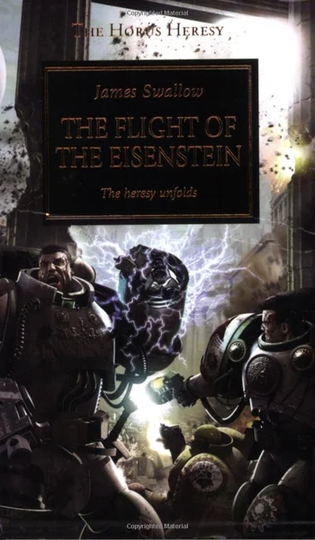
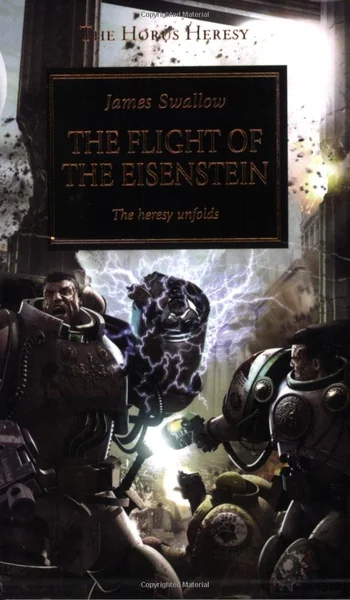
The Flight of the Eisenstein (Horus Heresy) by James Swallow front cover

What the Story Is and What Happens in It

The Flight of the Eisenstein picks up in the immediate aftermath of the Isstvan III massacre, one of the opening acts of the galaxy-spanning civil war that defines the Horus Heresy. Death Guard Battle-Captain Nathaniel Garro, sidelined from the surface slaughter by injury, witnesses the betrayal of loyalist Astartes by their own traitorous brothers. Recognising that Horus has turned against the Emperor, Garro commandeers the frigate Eisenstein and breaks away from the traitor fleet, setting a desperate course for Terra. The ship is damaged by enemy fire and becomes stranded in the warp — the realm of the Chaos powers — forcing Garro and his surviving crew to fight for their lives while carrying intelligence that could determine the fate of the Imperium. The novel thus charts a survival story nested inside a race against time, with the stakes as large as the 40,000 universe gets.
“a cool premise that gets dragged out a couple hundred pages too long”

Place in the Series and Its Structural Role

As the fourth entry in a 54-book saga, The Flight of the Eisenstein occupies a pivotal narrative position. The three books before it — Horus Rising, False Gods, and Galaxy in Flames — establish and then detonate the Heresy; this volume is the first to follow the immediate consequences as they radiate outward. Where Galaxy in Flames delivered the violence of the opening betrayal, The Flight of the Eisenstein tracks what happens next: whether knowledge of the treachery can reach the Emperor in time. As noted at adventureswithpeps.com, that preceding volume "showed the true breakout of the Heresy," and this novel continues directly from those events, making its position in the reading order a meaningful one. It also introduced Nathaniel Garro as a character who would go on to feature in further Horus Heresy works, cementing its importance to the broader continuity.

Tone and Narrative Focus

One quality that distinguishes this book from its immediate predecessors is its intimacy of scale. Rather than panoramic Legion-level warfare, the story contracts around a single ship, a small crew, and one man's mission. The blog jacksbedtimereading.wordpress.com highlighted this "closeness and intimacy of the story" as one of its most notable qualities. The writing style across the Horus Heresy line — including Swallow's contribution here — has been characterised by the same source as fast, accessible, and effective, suited to readers who want to move through the lore at pace rather than wade through dense prose. That tonal shift toward a tighter, more claustrophobic narrative is by design: the Eisenstein's isolation in the warp is both a plot condition and a structural choice that keeps the focus on Garro's resolve.

Where It Draws Criticism

Not every reader finds the pacing equally successful. The critic at eclectictheist.wordpress.com described the novel as "a cool premise that gets dragged out a couple hundred pages too long," suggesting that the central situation — survival in the warp, race to Terra — is stretched beyond its natural tension. This is a recurring concern for readers who come to the book on the momentum of Galaxy in Flames and expect the same propulsive energy. The adventureswithpeps.com review similarly noted that, for readers riding the wave of the Heresy, the book "can have the bad habit of feeling like a dip." These are minority takes rather than a consensus verdict, but they flag a real structural tension: a deliberately slower, more contained story inserted into a series that had, up to that point, been escalating in scale and action.

Who the Book Is For

The Flight of the Eisenstein is designed primarily for readers already invested in the Horus Heresy series. Its context — the significance of Garro's mission, the weight of the Isstvan betrayal, the nature of the forces hunting the Eisenstein — draws full meaning from the volumes that precede it. Readers familiar with Warhammer 40,000 lore will find the Death Guard's pre-corruption portrayal and the early mechanics of Chaos corruption particularly resonant. For those new to the setting, the novel is accessible in prose style, but many of its emotional payoffs are cumulative. As a character study of a loyalist stranded on the wrong side of history, it offers something the earlier, more ensemble-driven Heresy novels do not: a sustained, close focus on a single Astartes conscience navigating an impossible situation.

Sources & Further Reading

The key facts and claims in this review are grounded in the retrieved, verified sources listed below.

  1. Cited in this review
  2. 1
  3. 2
  4. Further reading
  5. 3
  6. 4
  7. 5
  8. 6