BOOKS
Published

Read Time

8 min read

Reader rating

4.6

· 177 Amazon ratings
reader ratings, not a LuvemBooks score

Reading order

The Horus Heresy

Book 7 of 64 books
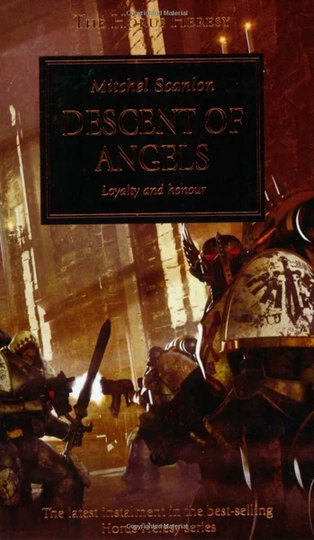
  1. Descent of Angels book cover
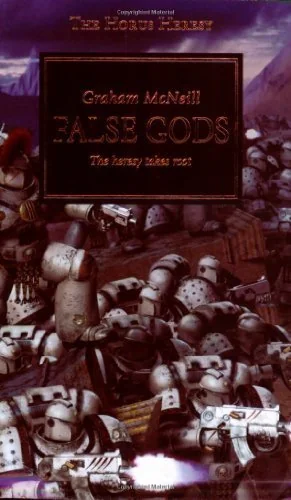
    Before thisDescent of Angels2007
  2. Legion book cover
    You're readingLegion
  3. Battle for the Abyss book cover
    Up nextBattle for the Abyss2008
  4. Mechanicum book cover
    ThenMechanicum2008 · on Amazon
All 64 in order →
Curated & edited by

LuvemBooks Editorial

How we create our reviews →
Share This Review
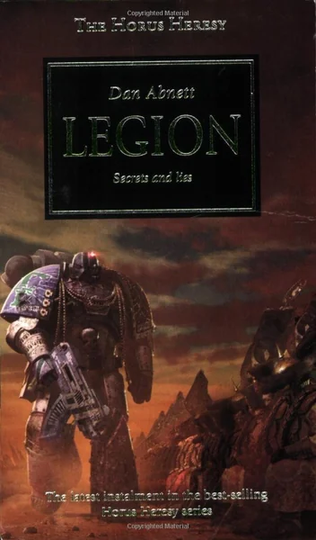
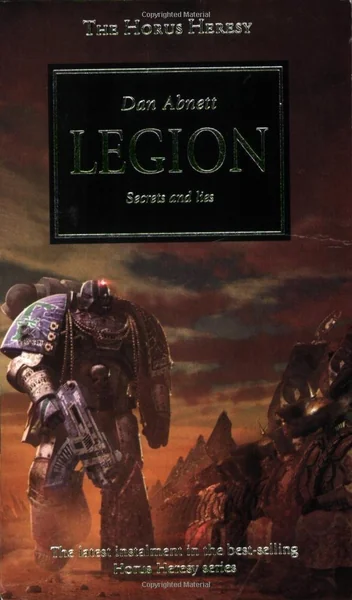
Legion (7) (The Horus Heresy) by Dan Abnett front cover

Our review

Legion (The Horus Heresy, Book 7) by Dan Abnett Review: A Masterclass in Mystery and Misdirection

Legion is the seventh entry in Black Library's Horus Heresy series, written by Dan Abnett, and centres on the enigmatic Alpha Legion and their primarch Alpharius Omegon as a shadowy organisation called the Cabal attempts to sway the Legion's allegiance before the galaxy-spanning civil war erupts. It stands as one of the series' most distinctive instalments, built around deliberate ambiguity rather than straightforward heroics.

LuvemBooks Verdict

Best for

Horus Heresy series readers — especially those who have completed the opening trilogy — who want the most structurally inventive entry in the series and are drawn to mystery-driven military SF built around unreliable perspective and institutional secrecy.

Worth it if

Worth reading if you are already invested in the Horus Heresy series and want a novel that subverts expectations by building genuine dread and fascination around the Alpha Legion through mortal, outsider viewpoint characters rather than the usual Legion-centric deep dive.

Skip if

Skip it if you are new to the Horus Heresy and expect an action-forward, primarch-centred narrative in the mould of earlier volumes — the structural inversions and withheld Alpha Legion perspective only pay off fully for readers who already understand the series' established formula.

Driftlessareareview.com frames Legion as a franchise-reviving effort following the underwhelming previous instalment, crediting Abnett's prolific versatility with restoring momentum to the series and noting his deliberate subversion of the "legion-primarch trope." Bitsandpieces.games echoes this, observing that the decision to keep the Alpha Legion at arm's length — which initially reads as a withholding — ultimately rewards readers, with Abnett's plotting keeping audiences questioning everything they thought they knew long after the final page.

Sources: Driftless Area Review, Bits and Pieces Games
4.6from 177 Amazon ratings— reader ratings, not a LuvemBooks score
Buy on Amazon

Age & Reading Level

Recommended age

Adult

Reading level

Adult

Content to know about

military violence
ideological manipulation

Skip if you want an action-forward, insider look at Space Marine Legion culture with a named Astartes hero at the centre.

In This Review
  • What Works & What Doesn't
  • What the Book Is and What It Does
  • The Alpha Legion and the Subversion of Series Convention
  • Dan Abnett's Craft and Reputation
  • Narrative Structure and Reader Experience
  • Who This Book Is For and Where It Fits

What Works & What Doesn't

What Works
  • Dan Abnett's use of mortal, non-Astartes viewpoint characters gives the Alpha Legion's power and mystery genuine narrative weight
  • Deliberately subverts the established 'legion-primarch trope', making it one of the series' most structurally inventive entries
  • The Cabal's ideological stakes — framing the Alpha Legion as a potential last defence against Chaos — give the novel a thematic depth beyond standard military SF
  • Widely described in fan and community commentary as one of the standout, most re-readable entries in the Horus Heresy series at the time of publication
  • Abnett's credentials across multiple major Black Library series lend the novel a sense of assured pacing and plotting
What Doesn't
  • Readers unfamiliar with the opening Horus Heresy trilogy will lack the context needed to fully appreciate the novel's structural inversions and payoffs
  • The deliberate withholding of a close Alpha Legion or primarch perspective — intentional as it is — may frustrate readers who come expecting the Legion-centric deep dive the series' format typically promises
This review covers the book's contents and published reception; it does not reflect hands-on reading or application of the text.
Legion (7) (The Horus Heresy) by Dan Abnett front cover

What the Book Is and What It Does

Legion occupies the seventh position in the long-running Horus Heresy series published by Black Library (Games Workshop), and it takes a notably different approach from its predecessors. Rather than centring the narrative on a named Space Marine hero, Dan Abnett builds the story around John Grammaticus and other non-Astartes characters — ordinary, mortal figures operating on the fringes of an extraordinary conflict. Through them, readers encounter the Alpha Legion: the newest, most secretive Space Marine Legion in the Imperium, commanded by the primarch Alpharius Omegon. The central situation involves a clandestine organisation known as the Cabal, which is aware of the coming Horus Heresy and believes the Alpha Legion represents the galaxy's last viable defence against the Chaos powers. The Cabal's attempt to confer with Alpharius Omegon and secure the Legion's allegiance forms the novel's propulsive spine.

The Alpha Legion and the Subversion of Series Convention

What separates Legion from earlier Horus Heresy volumes is its deliberate inversion of established formula. As noted across fan and critical commentary, Abnett subverts what readers of the series have come to call the "legion-primarch trope" — the expected deep dive into a Legion's culture through the eyes of its warriors. Instead, the Alpha Legion is rendered as a force of near-total opacity, experienced almost entirely from the outside. The blogger Andy of the Aett, writing from within the Warhammer community, observed that Abnett's technique of centring the narrative on "a 'weakling'" — a mortal viewpoint character rather than a superhuman Space Marine — is one of the true hallmarks of his writing and an effective means of conveying the scale of the setting. This structural choice suits the Alpha Legion's identity as a Legion defined by stealth, misdirection, and information asymmetry.

Dan Abnett's Craft and Reputation

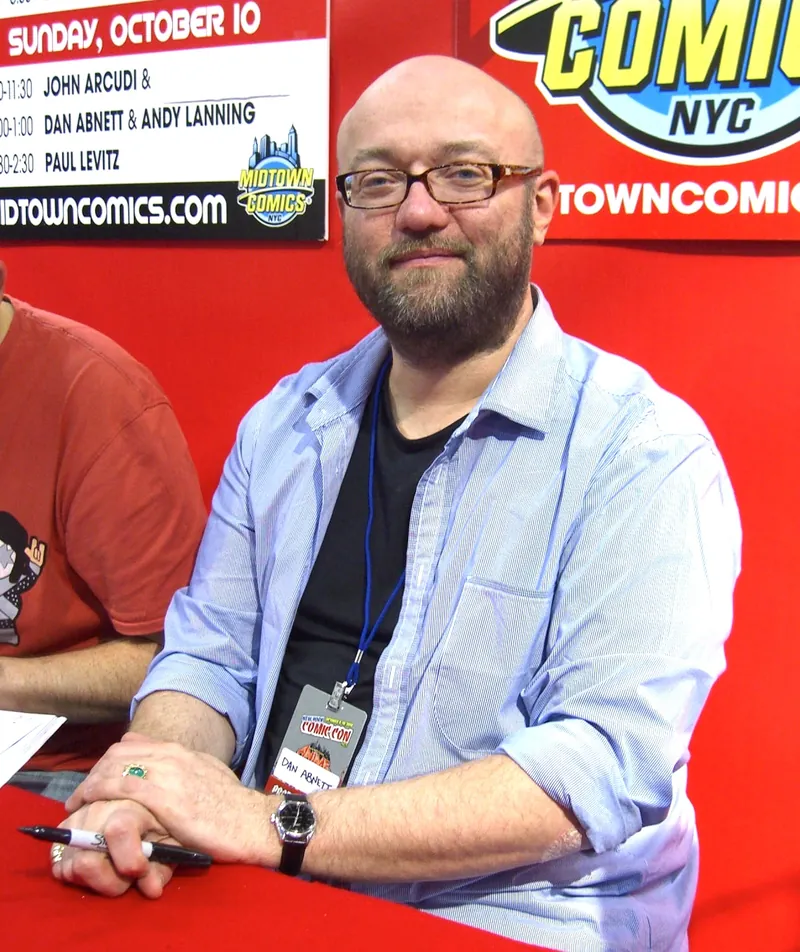
Abnett brings substantial credentials to the project. A seven-times New York Times bestselling author, he is also the writer behind such acclaimed Black Library properties as the Eisenhorn series, the Ravenor series, and the long-running Gaunt's Ghosts saga, as well as work for Marvel and on Doctor Who. The driftlessareareview.com source frames Legion explicitly as a franchise-reviving effort, noting that after the previous volume — Descent of Angels by Mitchel Scanlon, which was characterised as underwhelming — Abnett was uniquely positioned to restore momentum. The assessment holds that Abnett possesses "the rare gift to write well and to write a lot," and Legion is widely regarded as the point at which that gift was most urgently needed in the series.

Narrative Structure and Reader Experience

A recurring observation in reader commentary is that Legion keeps its audience guessing far beyond the final page. The book's plot is constructed to destabilise certainties: once readers understand what the Alpha Legion is, why the Legion made the choices it did, and what the Cabal's stakes truly are, the experience of re-evaluating what came before — in this novel and in the broader series — is described as one of the novel's chief rewards. A community review at andyoftheaett.blogspot.com awarded it nine out of ten, calling it a "stand-out HH tale" and noting a willingness to reread it — a distinction that reviewer had not previously extended to any other Heresy entry. The broader fan consensus, as reflected in the warmongers community commentary cited in that same source, characterised it as a great read and a highlight of the series at that point.

Who This Book Is For and Where It Fits

Legion functions best for readers already familiar with the Horus Heresy series, particularly those who have read the opening trilogy. The deliberate absence of a close Alpha Legion perspective — which on the surface reads as a withholding of expected content — pays dividends only once the reader understands the thematic logic behind it, which means its pleasures are more apparent to those with series context than to newcomers picking it up cold. The novel's preoccupation with unreliable perspective and institutional secrecy will reward readers who enjoy layered, mystery-driven military science fiction, while those expecting the action-forward, Legion-centric approach of earlier volumes may find the pacing and structure unconventional. As a self-contained narrative within a larger tapestry, Legion raises questions that ripple outward through the Horus Heresy for many subsequent books.

Sources & Further Reading

The key facts and claims in this review are grounded in the retrieved, verified sources listed below.

  1. Cited in this review
  2. 1
  3. 2
  4. 3

    openlibrary.org

  5. Further reading
  6. 4
    Dan Abnett — author profileHigh-authority source

    Dan Abnett, Wikipedia

  7. 5
  8. 6
  9. 7
  10. 8