
8 min read
4.6
· 3,760 Amazon ratingsReading order
The Horus Heresy
Book 5 of 64 books
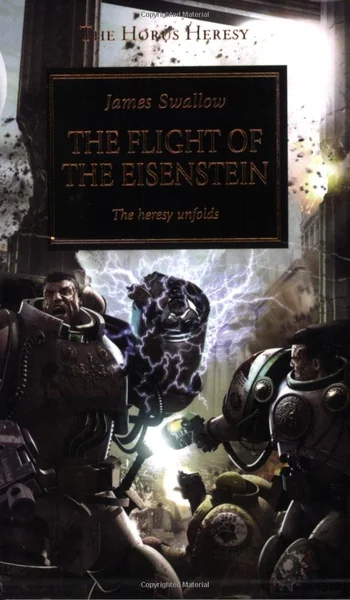
 Before thisThe Flight of the Eisenstein2007
 You're readingFulgrim
 Up nextDescent of Angels2007 · on Amazon
 ThenLegion2008 · on Amazon
Share This Review
Our review
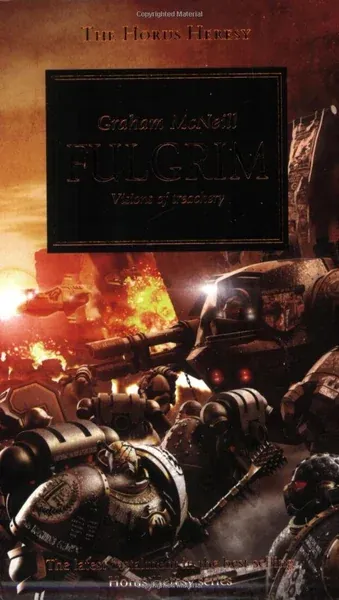
Fulgrim (Horus Heresy) by Graham McNeill Review: A Gripping Tragedy of Corruption and Brotherhood
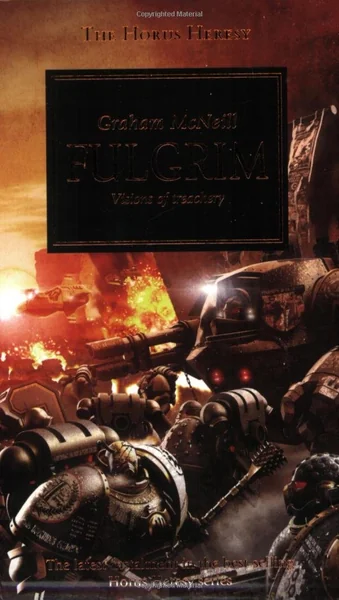
Fulgrim by Graham McNeill is the fifth entry in Black Library's Horus Heresy series, following the Primarch Fulgrim and his Emperor's Children Legion as they descend from a pursuit of artistic perfection into daemonic corruption, culminating in the catastrophic Drop Site Massacre at Isstvan V. It stands as one of the series' most emotionally devastating entries, built around the irreversible fracturing of the brotherhood between Fulgrim and his fellow Primarch Ferrus Manus.
LuvemBooks Verdict
Best for
Warhammer 40,000 readers who have followed the Horus Heresy from the beginning and are drawn to stories of moral descent, corrupted idealism, and fraternal tragedy — particularly those invested in the fates of Fulgrim and Ferrus Manus.
Worth it if
Worth reading if you have read the earlier Horus Heresy volumes and want a tragic, emotionally weighty character study of a Primarch's slow, agonizing fall from noble idealism into daemonic possession, anchored by one of the series' most heartbreaking brotherly relationships.
Skip if
Skip it if you are new to the Horus Heresy and lack the accumulated series context, as the emotional and narrative weight of Fulgrim's corruption and the Drop Site Massacre depends heavily on investment built across the earlier books.
What readers & critics say
Reviewers at adventureswithpeps.com count Fulgrim among their favourite entries in the entire Horus Heresy series, calling the story of Fulgrim and Ferrus Manus "truly a heartbreaking tale," though they note a wish the material had been split across two volumes. The blogger at dave430.wordpress.com highlights McNeill's success in making readers empathise with Fulgrim by grounding the Primarch's love for art and his bond with Ferrus Manus, lending the tragedy genuine emotional force. The reviewer at swordsandspectres.wordpress.com describes it as "a pretty good read" overall, while driftlessareareview.com situates the novel as a parallel and connecting thread to the broader Horus Heresy timeline.
Sources: Adventures with Peps, dave430.wordpress.com, Swords and Spectres, Driftless Area ReviewAge & Reading Level
Recommended age
Ages 16+
Reading level
Adult
3 content notes · who it suits
Content to know about
Best for: Adults / mature 16+ — sustained graphic military violence, daemonic possession, and the psychological unraveling of the protagonist make this unsuitable for younger readers.
Skip if you want a self-contained story or are new to Warhammer 40,000 fiction — the novel's emotional impact is deeply dependent on prior series context.
In This Review
- What Works & What Doesn't
- What the Novel Is and What It Does
- The Emotional Core: Brotherhood and Tragedy
- Fulgrim as a Gray Protagonist
- Structural Ambition and Series Significance
- Genuine Limitations and Who It's For
What Works & What Doesn't
What Works
- Centers on a genuinely compelling tragic arc — the fall of Fulgrim and the Emperor's Children is rendered as a slow, agonizing corruption rather than a sudden turn
- The bond between Primarchs Fulgrim and Ferrus Manus gives the novel emotional weight that reviewers single out as one of its greatest strengths
- Fulgrim functions as a morally complex, gray protagonist whose descent into corruption makes him relatable and compelling, a contrast to more straightforward hero figures in the series
- Serves as a critical structural bridge in the Horus Heresy timeline, bringing readers from the end of Galaxy in Flames all the way to the events of Isstvan V
- McNeill's ambition in scope is matched by an expanded word count, giving the narrative room to develop its characters and themes beyond a standard entry in the series
What Doesn't
- At 512 pages, the novel's single-volume structure means some readers feel the Emperor's Children's fall from grace and the build-up to the Drop Site Massacre are compressed into a span that could have supported two books
- Readers coming to the novel without prior investment in the Horus Heresy series may find the weight of the tragedy diminished without the accumulated context of earlier volumes
What the Novel Is and What It Does
The Emotional Core: Brotherhood and Tragedy
Fulgrim as a Gray Protagonist
Structural Ambition and Series Significance
Genuine Limitations and Who It's For
Frequently Asked Questions
Sources & Further Reading
The key facts and claims in this review are grounded in the retrieved, verified sources listed below.
- Cited in this review
- 1
adventureswithpeps.com
- 2
imperial-archive.com
- Further reading
- 3
Graham McNeill, Wikipedia
- 4
graham-mcneill.com
- 5
wh40k.lexicanum.com
- 6
driftlessareareview.com
Related Reviews
Reviews of books we picked for readers who enjoyed Fulgrim.
Reader Comments
No comments yet
Be the first to share your thoughts!