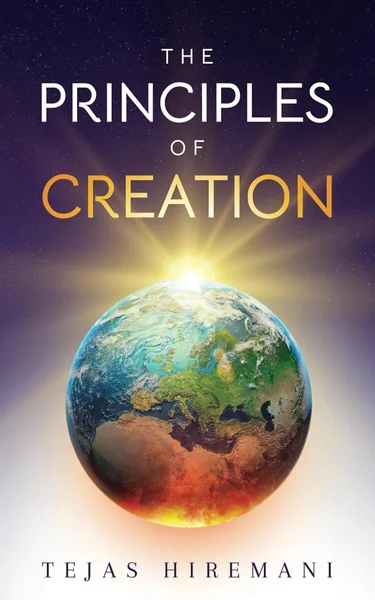
At a glance
LuvemBooks Verdict
Best for: Spiritually curious general readers drawn to classical Indian philosophy — Vedanta, the Bhagavad Gita, the Upanishads — who want a single accessible framework for thinking about consciousness, technology, mortality, and civilizational direction.
Worth it? Skip it? Read the full verdict →Ask LuvemBooks
Was this helpful?
- Is it worth reading?
- For readers drawn to the intersection of ancient spiritual wisdom and contemporary challenges, The Principles of Creation offers a genuinely broad and thought-provoking orientation. Its synthesis of Vedanta, the Bhagavad Gita, and the Upanishads with questions about AI, consciousness, and civilizational futures is an unusual and ambitious combination. The key caveat is scope: at 170 pages across topics as varied as quantum theory, sexual desire, war, diet, and the afterlife, each subject receives introductory rather than in-depth treatment. Readers who prioritize scholarly rigor, citation standards, or extended argumentation in any one of those fields are better warned in advance.
- Similar books
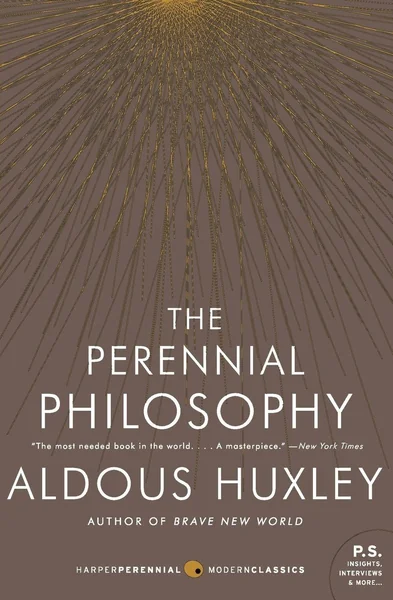
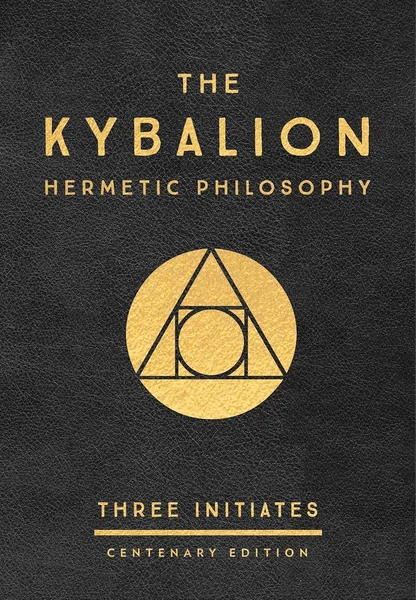
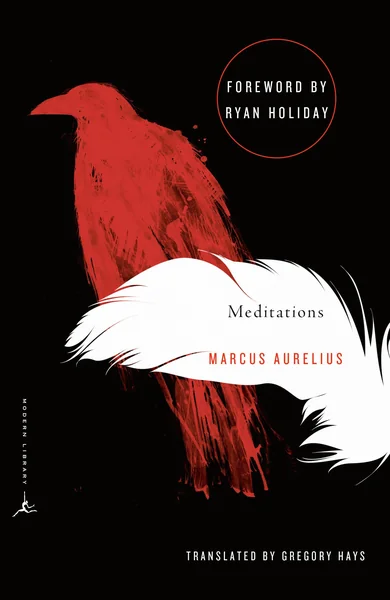
- Readers drawn to The Principles of Creation will find kindred territory in several works. Aldous Huxley's The Perennial Philosophy similarly synthesizes wisdom traditions from across cultures into a unified philosophical framework, while The Kybalion by Three Initiates offers another codified set of universal principles for understanding existence. For readers interested in the intersection of meaning, mortality, and purpose, Viktor E. Frankl's Man's Search for Meaning and Marcus Aurelius's Meditations both ground philosophical principles in lived application — Frankl through the lens of psychoanalysis and survival, Aurelius through Stoic self-examination. C. S. Lewis's The Four Loves explores one of the central themes Hiremani addresses — love — with comparable philosophical depth and accessibility.
- Who should read this?
- The Principles of Creation is aimed squarely at readers curious about how classical Indian philosophical traditions — Vedanta, the Bhagavad Gita, and the Upanishads — might speak to modern questions about technology, consciousness, and civilizational direction. Its publisher frames it as offering 'a holistic understanding of our existence through which readers can embrace their untold potential,' positioning it for a general rather than specialist audience. Readers who value integrative thinking across ancient scripture, modern science, and speculative futures, and who are comfortable with a sweeping rather than narrowly focused scope, represent its natural readership. Those who prefer deep expertise in a single discipline — philosophy of mind, quantum physics, or comparative religion — may find the treatment necessarily introductory.
- What are the main themes?
- The book's seven named principles — spirit, freedom, karma, dharma, purpose, mortality, and truth — form its thematic spine, each treated as an immutable law governing existence from cosmic origins to contemporary life. Beyond these, Hiremani explores the origins of love, the roots of conflict and frameworks for lasting peace, the nature of sexual desire, consciousness and quantum theory, the question of life after death, and the promise and peril of artificial intelligence. A unifying tension runs throughout: the contrast between the boundless possibilities of technological and spiritual advancement and the danger of civilizational decline, with the current age framed as a pivotal crossroads. The classical insight that 'all creations provide a window into the soul of the creator' anchors the book's argument that self-understanding and understanding the universe are inseparable.
- Does being self-published affect quality?
- Hiremani self-published The Principles of Creation, meaning it has not passed through the editorial and peer-review channels that specialist academic or major trade nonfiction typically undergoes. For readers who prioritize scholarly citation apparatus, extended argument, or formal peer review, that context is worth noting. The book is plainly designed for personal reflection and broad spiritual orientation rather than academic debate, and its Amazon UK listing characterizes it as 'a rewarding read for those seeking to expand their spiritual and intellectual horizons' — a framing consistent with accessible inspirational nonfiction rather than academic publishing.
- How is the book structured?
- The Principles of Creation is organized around seven core principles — spirit, freedom, karma, dharma, purpose, mortality, and truth — which serve as the book's primary structural framework. It is described as allowing readers to begin either with the principles themselves or to approach the material in an alternative sequence, suggesting a flexible, non-linear design intended to accommodate different reading styles and entry points. At 170 pages, the book maintains a compact format despite covering an exceptionally wide range of subjects, from ancient scripture to AI and quantum consciousness.
Summarize this book
Follow up
Synthesized from verified book data & published reviews · How we review
Press Enter to ask. Answers come from our editorial Q&A — start typing to see related questions.
Age & Reading Level
Recommended age
Adult
Reading level
Adult
who it suits
Skip if you're seeking rigorous academic or peer-reviewed scholarship on philosophy of mind, quantum physics, or comparative religion
Editorial Review
The Principles of Creation by Tejas Hiremani is a self-published spiritual nonfiction work that distills seven timeless principles — spirit, freedom, karma, dharma, purpose, mortality, and truth — into a unified framework intended to guide readers from inner peace to broader questions of humanity's technological and civilizational future.
Read the Full ReviewBooks like The Principles of Creation
Curated picks for readers who enjoyed The Principles of Creation, with our reasoning for each match.
If you liked The Principles of Creation