At a glance
LuvemBooks Verdict
Best for: Policy thinkers, technologists, educators, and curious general readers who want a concise, provocative entry point into the human-AI relationship rather than a comprehensive technical or academic treatment.
Worth it? Skip it? Read the full verdict →Ask LuvemBooks
Was this helpful?
- Is it worth reading?
- For readers who want a pointed, accessible entry into AI-and-humanity discourse without committing to a lengthy volume, The Fog and the Clearing delivers real value: its tightly scoped premise, distinctive "orange paper" format, and conceptual economy make it a structural argument in itself — the compact form mirrors the clarity it advocates. The caveat is significant, however: at 46 pages and independently published without editorial vetting, the work cannot offer rigorous sourcing, extended case studies, or engagement with existing AI scholarship. Those seeking a comprehensive or technically grounded treatment will find it insufficient for those ambitions and should look beyond this slim volume.
- Similar books
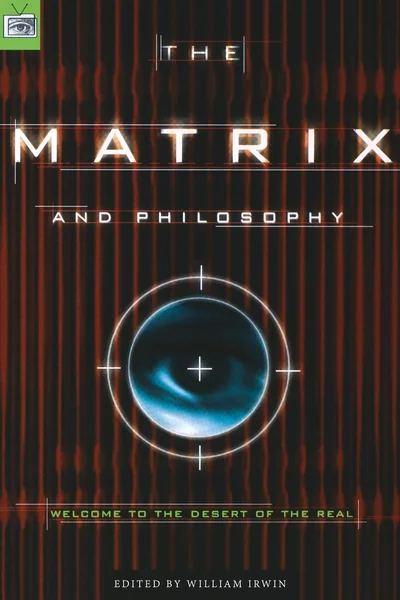
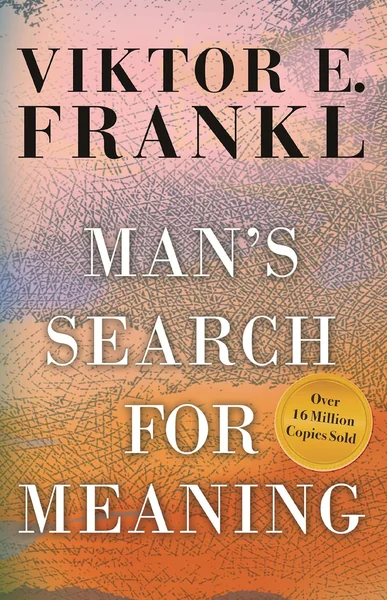
- Readers drawn to The Fog and the Clearing's philosophical inquiry into human identity and meaning may find resonance in Viktor E. Frankl's Man's Search for Meaning, a foundational short-form work on what defines humanity under pressure. For philosophy made accessible to general readers, Alain De Botton's The Consolations of Philosophy and Simon Blackburn's Think: A Compelling Introduction to Philosophy offer welcoming entry points. William Irwin's The Matrix and Philosophy explores the intersection of technology, reality, and human identity through a popular-culture lens, making it a natural companion for Cianciolo's AI-focused meditation. Marcus Aurelius's Meditations similarly demonstrates the enduring power of short-form philosophical reflection.
- Who should read this?
- The Fog and the Clearing is best suited to general readers, policy thinkers, technologists, and educators who want a pointed, accessible entry into the AI-and-humanity conversation without committing to a lengthy or highly technical volume. Its short-form, essay-style format also appeals to readers who engage with ideas through provocations and conversation-starters — those who encounter AI questions in their daily and professional lives and want a focused philosophical reframe rather than a comprehensive survey. Readers who require rigorous academic sourcing, peer-reviewed authority, or extended case studies are the least well-served by this format.
- What are the main themes?
- The central theme of The Fog and the Clearing is the relationship between human identity ("HooMan") and artificial intelligence ("Ai") in an era when AI increasingly shapes human life. Cianciolo structures this around a movement from "The Fog" — confusion, uncertainty, and obscurity about AI's role — toward "The Clearing," a clearer or more harmonious way of understanding or coexisting with artificial intelligence. The stylized spelling of "HooMan" signals a deliberate reexamination of what it means to be human, while the "orange paper" format itself enacts the theme of hybrid identity: the book occupies a space between established forms just as its subject occupies a space between human and machine.
- What makes the format unusual?
- The "orange paper" designation is the work's most distinctive formal choice: it positions The Fog and the Clearing in a hybrid space between a formal academic white paper and a personal manifesto, refusing the dry neutrality of the former and the wholly personal voice of the latter. At 46 pages, it is far shorter than a conventional nonfiction book, and Cianciolo published it independently in March 2026 without the editorial infrastructure of a major press. This combination of short length, invented format, and independent publication makes it genuinely unlike most books in the AI or philosophy space — and those formal choices are themselves a structural argument about how to approach its subject.
- What are the book's limitations?
- The most significant limitation of The Fog and the Clearing is the one built into its format: at 46 pages, the work cannot deliver the extended argumentation, rigorous sourcing, or case studies that a fuller treatment of AI and human identity would require. Readers expecting engagement with existing AI scholarship or a technically grounded analysis will find the format insufficient for those ambitions. Additionally, independent publication without institutional or editorial vetting means the full burden of authority and credibility rests on the text itself — a consideration for readers who weight external validation when assessing a work's claims.
Summarize this book
Follow up
Synthesized from verified book data & published reviews · How we review
Press Enter to ask. Answers come from our editorial Q&A — start typing to see related questions.
Age & Reading Level
Recommended age
Adult
Reading level
Adult
who it suits
Skip if you're looking for a technically rigorous, academically sourced, or comprehensively argued treatment of artificial intelligence and human identity.
Editorial Review
Marc Cianciolo's independently published paperback The Fog and the Clearing: HooMan / Ai — An Orange Paper is a concise, essay-style work that engages with the relationship between human identity and artificial intelligence, framed through the dual lens suggested by its subtitle.
Read the Full ReviewBooks like The Fog and the Clearing
Curated picks for readers who enjoyed The Fog and the Clearing, with our reasoning for each match.
If you liked The Fog and the Clearing