At a glance
Meditations
LuvemBooks Verdict
Best for: Readers drawn to practical Stoic philosophy who want an authentic, unguarded window into ancient self-examination — particularly those who prefer wisdom literature they can dip into repeatedly over a linear philosophical argument.
Worth it? Skip it? Read the full verdict →Ask LuvemBooks
Was this helpful?
- Is it worth reading?
- For readers interested in Stoic philosophy, self-discipline, or ancient wisdom, Meditations is a strong recommendation — a documented national bestseller with a centuries-spanning readership that has included Theodore Roosevelt, who carried it on his post-presidential Amazon expedition alongside Epictetus's Enchiridion, and Chinese leader Wen Jiabao, who has reread it on countless occasions. Gregory Hays's translation preserves the original's directness and simplicity, and Ryan Holiday's foreword makes the bridge to contemporary Stoic practice explicit. The key caveat is structural: readers expecting a conventional philosophical treatise with a cumulative argument will be frustrated; those willing to engage with it as a collection of discrete, repeatable reflections will find it uniquely rewarding.
- Similar books
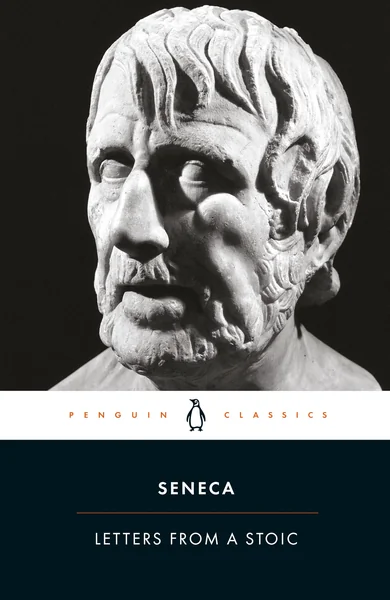
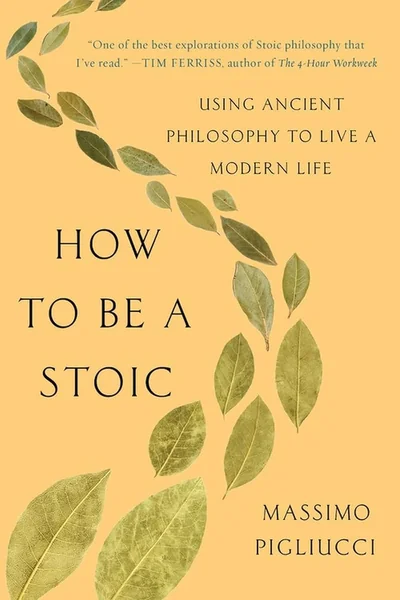
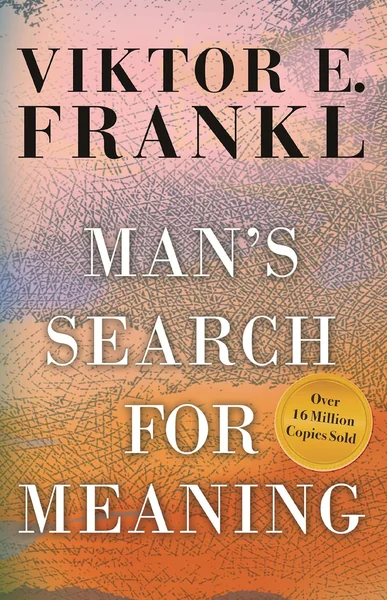
- Readers who connect with Meditations are well served by several curated titles on LuvemBooks. Seneca's Letters from a Stoic offers a similarly intimate window into ancient Stoic thought, this time through personal correspondence. Ryan Holiday and Stephen Hanselman's The Daily Stoic builds directly on the Aurelius tradition, presenting Stoic wisdom in a structured daily-reading format — and Holiday's foreword to this very edition makes that connection explicit. Massimo Pigliucci's How to Be a Stoic bridges ancient philosophy and modern life for readers who want more systematic grounding in the tradition. For those drawn to Meditations' preoccupation with meaning and mortality, Viktor E. Frankl's Man's Search for Meaning and Alain De Botton's The Consolations of Philosophy are natural companions.
- Who should read this?
- Meditations is best suited to adult readers with an interest in philosophy, self-improvement, history, or ancient thought — particularly those drawn to practical wisdom on self-discipline, mortality, and what it means to lead a meaningful life. It has an especially strong appeal for readers already curious about Stoicism, as well as those who find value in reflective, non-linear texts they can return to repeatedly rather than read once for a payoff. Readers who need a structured argument, a narrative arc, or a glossary of philosophical terms should approach with adjusted expectations, ideally supplementing the text with additional context on Stoic concepts.
- About Marcus Aurelius
- Marcus Aurelius (April 26, 121 CE – March 17, 180 CE) was a Roman Emperor who reigned from 161–180 CE, born into a wealthy patrician family in Rome. Raised by his mother and paternal grandfather after his father's death, he is best known for Meditations, a series of private writings on Stoic philosophy that remain a key source for understanding ancient Stoicism.
- What are the main themes?
- Wikipedia's summary of Meditations identifies two dominant themes: the importance of analyzing one's own judgments — of self and others — and developing a cosmic perspective; and the discipline of maintaining focus and resisting distraction. LitCharts expands this to include philosophy and living well, relationships and civic life, nature and the gods, and mortality and dying well. Throughout, Aurelius returns to the idea that everything proceeds from nature and will in time return to it, and that the rational human faculty — not external fortune — is the only reliable compass through a chaotic world.
- Which edition should I get?
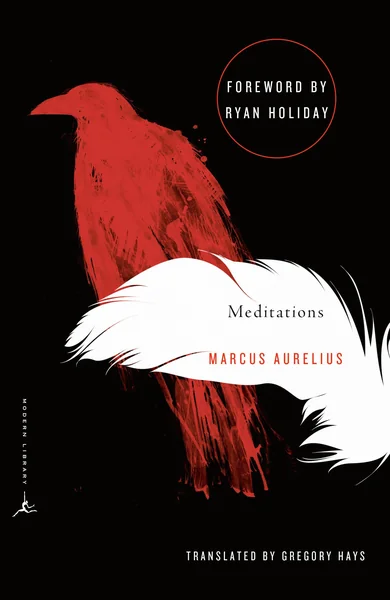
- The Modern Library edition featuring Gregory Hays's translation is widely recognized as the modern standard for rendering Aurelius's direct, simplified Stoic prose in English, and it is the edition under review here. Published in 2003, it adds a foreword by Ryan Holiday — the #1 New York Times bestselling author of The Obstacle Is the Way — that explicitly connects the ancient text to contemporary Stoic practice. For most readers, especially those new to Aurelius or Stoicism, this edition is the recommended starting point.
Summarize this book
Follow up
Synthesized from verified book data & published reviews · How we review
Press Enter to ask. Answers come from our editorial Q&A — start typing to see related questions.
Age & Reading Level
Recommended age
Adult
Reading level
Adult
who it suits
Skip if you want a structured philosophical argument with a cumulative thesis and systematic development of ideas.
Editorial Review
The Modern Library edition of Meditations — featuring Gregory Hays's translation and a foreword by Ryan Holiday — brings one of the most enduring works of Stoic philosophy to contemporary readers in a form that is both scholarly and accessible. Written as private journals by Roman Emperor Marcus Aurelius during the years 170–180 CE, the twelve books were never intended for publication, yet they have become, as Daily Stoic notes, one of the most influential philosophy books in the history of the world.…
Read the Full ReviewBooks like Meditations
Curated picks for readers who enjoyed Meditations, with our reasoning for each match.
If you liked Meditations