At a glance
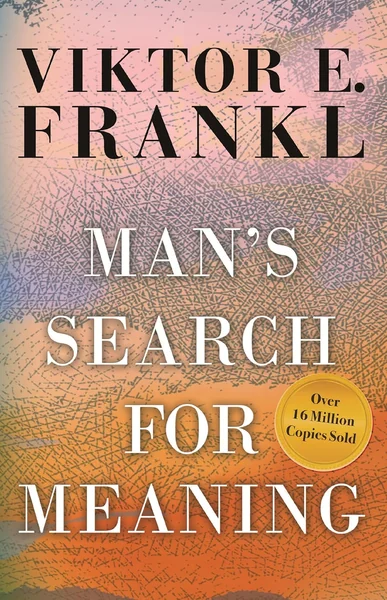
Man's Search for Meaning
LuvemBooks Verdict
Best for: Readers navigating personal crisis, grief, or existential uncertainty who want a serious, non-prescriptive framework for understanding suffering — and who are equally drawn to psychology, existential philosophy, and Holocaust testimony.
Worth it? Skip it? Read the full verdict →Ask LuvemBooks
Was this helpful?
- Is it worth reading?
- For readers drawn to questions of resilience, purpose, and the psychological dimensions of extreme suffering, Man's Search for Meaning remains a genuinely formative work. Scholar Sarah Bakewell has called it 'an incredibly powerful and moving example of what existentialist thought can actually be for in real life,' and its influence — over 10 million copies sold, 24 languages, named among the ten most influential books in the United States — reflects not just sales but sustained cultural penetration. The key caveat is that readers should engage with the serious scholarly criticisms alongside the text: Richard Middleton-Kaplan, Lawrence L. Langer, and psychiatrist Thomas Szasz have all raised pointed objections to Frankl's framing and the moral implications of his core argument that these are not fringe objections to be dismissed.
- Similar books
- Readers drawn to Man's Search for Meaning often find meaningful companion reads across philosophy, existential thought, and first-person reflections on mortality. Marcus Aurelius's Meditations offers a similarly personal engagement with endurance and the search for inner meaning through Stoic philosophy. Seneca's Letters from a Stoic covers comparable existential ground — how to live purposefully in the face of suffering and death — with an epistolary intimacy that echoes Frankl's directness. Alain de Botton's The Consolations of Philosophy makes philosophical ideas about suffering and purpose accessible to a general reader, much as Frankl's compressed format does. Beyond the LuvemBooks catalogue, Elie Wiesel's Night provides a harrowing Holocaust testimony that contextualises the world Frankl describes, while Ernest Becker's The Denial of Death engages philosophically with mortality in ways that complement logotherapy's central concerns.
- Who should read this?
- Man's Search for Meaning speaks most directly to readers in psychology, philosophy, and existential theology, as well as those navigating personal crisis who are drawn to serious, non-prescriptive frameworks for understanding suffering. It rewards readers willing to hold both the power of Frankl's testimony and the weight of the scholarly criticisms in mind simultaneously — it is not a comfort read but a challenging one. Those seeking a comprehensive historical account of the Nazi concentration camps or a full clinical manual for logotherapy should know the book is deliberately compressed; its strength lies in the synthesis of memoir and theory, not in the depth of either individually.
- About Viktor E. Frankl
- Viktor E. Frankl (March 26, 1905 – September 2, 1997) was an Austrian psychiatrist and psychotherapist born in Vienna, Austria. He developed logotherapy, known as the 'Third Viennese School of Psychotherapy,' a psychological approach centered on the importance of meaning in life. He is best known as the author of Man's Search for Meaning, a first-hand account of his experiences in Nazi concentration camps.
- Tell me about the adaptation
- The current wave of renewed attention for Man's Search for Meaning centres on its young adult adaptation, which reimagines Frankl's original memoir and logotherapy introduction for a teen audience. The adaptation is aimed at making the book's ideas about finding meaning through hardship accessible to younger readers navigating anxiety and uncertainty — a context in which Frankl's non-prescriptive framework has proven particularly resonant. The core ideas of the original are preserved, but the format and framing are calibrated for readers who may not yet have the historical or psychological background the original assumes.
- What are the main themes?
- The book's central themes are meaning, suffering, resilience, and the freedom of human response even under extreme constraint. Frankl draws on the Nietzschean insight that one who has a 'why' can bear almost any 'how,' and builds logotherapy around the claim that meaning can be found through three avenues: completing a task or creative work, loving another person, and choosing one's attitude toward unavoidable suffering. The book also engages, implicitly and explicitly, with the ethics of survival testimony — a dimension sharpened by the scholarly critiques from figures such as Lawrence L. Langer — raising questions about how Holocaust experience can and cannot be used to construct universal psychological principles.
Summarize this book
Follow up
Synthesized from verified book data & published reviews · How we review
Press Enter to ask. Answers come from our editorial Q&A — start typing to see related questions.
Age & Reading Level
Recommended age
Ages 16+
Reading level
Adult
3 content notes · who it suits
Content to know about
Best for: Adults / mature 16+ — the book's Holocaust testimony, including Frankl's account of conditions at Auschwitz, and its engagement with survival, psychological trauma, and mass death, requires significant emotional and intellectual maturity.
Skip if you're looking for a comprehensive historical account of the Holocaust or a full clinical manual for logotherapy rather than a compressed synthesis of both.
Editorial Review
Viktor Frankl's Man's Search for Meaning is a landmark memoir and psychological treatise, first published in 1946, that draws on Frankl's survival of Nazi concentration camps — including Auschwitz — to articulate logotherapy, a theory holding that the primary human drive is the pursuit of meaning rather than pleasure or power. Named among "the ten most influential books in the United States" in a survey conducted by the Book-of-the-Month Club and the Library of Congress, and translated into 24 languages with over 10 million copies sold by the time of Frankl's death in 1997, the book remains one of the most widely read works in existential psychology.…
Read the Full ReviewBooks like Man's Search for Meaning
Curated picks for readers who enjoyed Man's Search for Meaning, with our reasoning for each match.
If you liked Man's Search for Meaning