At a glance
About the Author
DK2 books reviewed
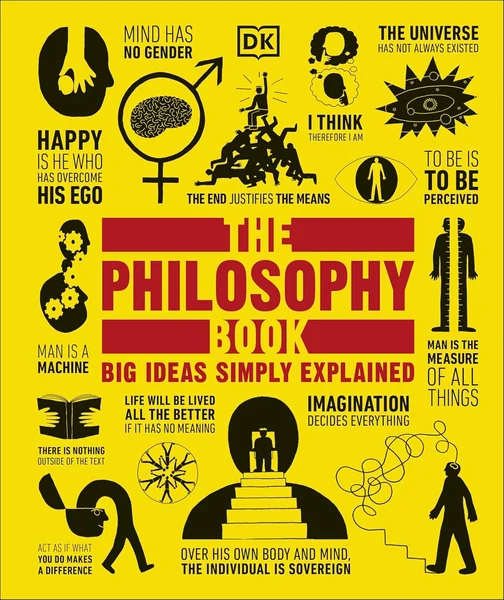
The Philosophy Book
(DK Big Ideas)
by DK
LuvemBooks Verdict
Best for: Curious general readers — students encountering philosophy for the first time, self-directed adult learners, and librarians building reference collections — who want a single, navigable volume covering the full arc of Western and Eastern philosophical thought with strong visual support and biographical context.
Worth it? Skip it? Read the full verdict →Preview the book
Ask LuvemBooks
Was this helpful?
- Is it worth reading?
- For curious general readers, self-directed adult learners, students encountering philosophy for the first time, and librarians building reference collections, The Philosophy Book is a dependable and genuinely well-regarded one-stop introduction. VOYA called it 'an excellent addition to a general philosophy collection,' and School critics praised its 'graphically lively' presentation. The honest caveat is that the format is tuned for breadth and entry-level clarity — readers seeking extended analytical argument on individual thinkers will need to supplement it with dedicated single-philosopher studies.
- Similar books
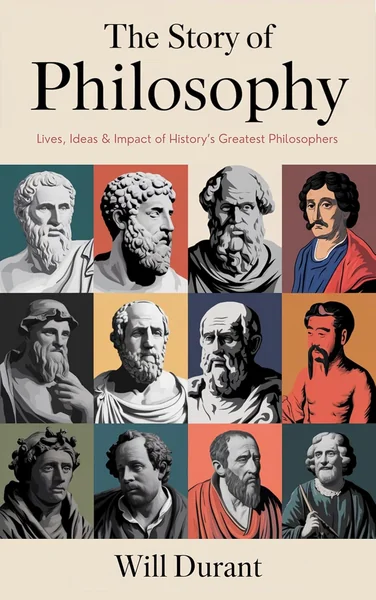
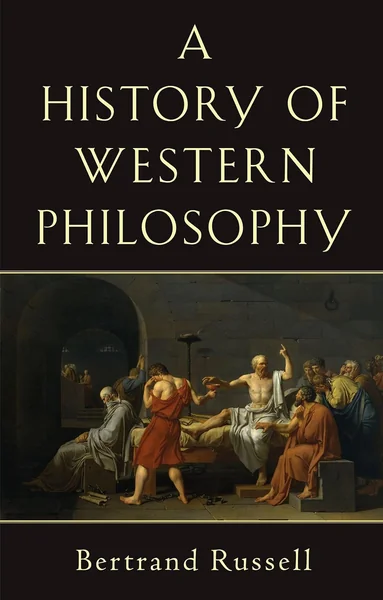
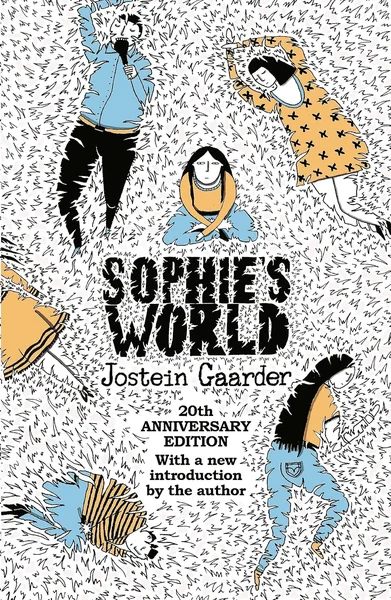
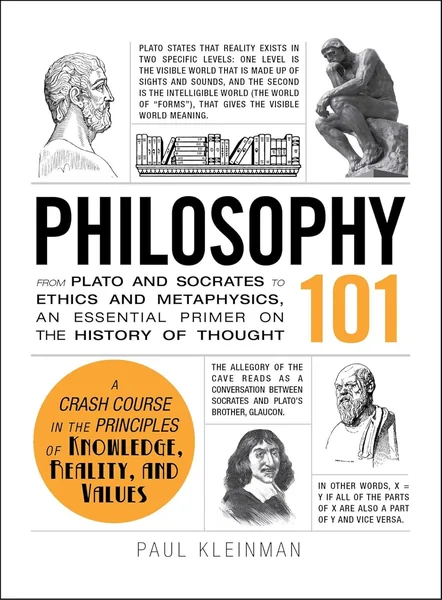
- Readers who enjoy The Philosophy Book have several strong options depending on how they prefer to engage with philosophy. Philosophy 101: From Plato by Paul Kleinman offers another accessible entry-level survey, while Will Durant's The Story of Philosophy provides a more narrative-driven, prose-rich tour through the great thinkers. Bertrand Russell's The History of Western Philosophy is the classic single-volume survey for those ready for more sustained argumentation. For a gentler, story-based introduction, Jostein Gaarder's Sophie's World weaves the history of philosophy into a coming-of-age novel, and Simon Blackburn's Think: A Compelling Introduction to Philosophy offers a thematic rather than biographical approach for readers wanting more analytical depth.
- Who should read this?
- The book's range of endorsements — from VOYA (a youth-library journal) to the MIT Press Bookstore — signals that it functions across a wide readership band. Primary audiences include students encountering philosophy for the first time, self-directed adult learners wanting a reliable orientating reference, and librarians or educators building general-interest collections. It is less suited to academic philosophers or readers who already have a solid grounding and are looking for analytical rigour rather than breadth.
- What's the reading level?
- The book is written for a general adult audience, and DK's design intention is explicitly accessibility without sacrifice of substance — entries use clear explanations, visual support, and biography boxes to make abstract concepts navigable for readers with no prior philosophy background. VOYA's endorsement and School critics' positive coverage both confirm that the text works for younger adult and secondary-level readers as well. Those already comfortable with academic prose will find the format straightforward; the challenge, where it exists, lies in the ideas themselves rather than the language used to present them.
- How does this compare to DK's Psychology Book?
- Both The Philosophy Book and The Psychology Book: Big Ideas Simply Explained belong to DK's award-winning Big Ideas series and share the same defining design approach: modular entries, bold visuals, biography boxes, and pull-out quotes that make a complex discipline accessible to general readers. The key difference is subject matter — philosophy spans metaphysics, ethics, and the fundamental questions of existence across more than 2,000 years, while the psychology title focuses on the history and major ideas of that discipline. Readers who appreciate one volume's format are likely to find the other equally rewarding.
- Is this a coffee-table book or a serious reference?
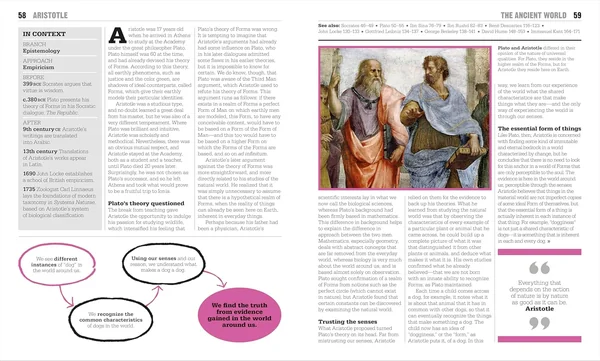
- It is both — and the tension between those descriptions is the most useful thing to understand about it. School critics described the presentation as 'graphically lively,' noting colour reproductions, framed pull quotes, photos, and a variety of fonts, which gives it the visual appeal of a browsable coffee-table volume. At the same time, the MIT Press Bookstore notes that each of the more than one hundred philosophers is presented in a 'succinct, yet highly readable, format' that highlights 'the impact of each philosopher on his society and how it affected the development of subsequent ideas' — making it a substantive and dependable reference work. The visual design serves the ideas rather than replacing them.
Summarize this book
Follow up
Synthesized from verified book data & published reviews · How we review
Press Enter to ask. Answers come from our editorial Q&A — start typing to see related questions.
Age & Reading Level
Recommended age
Adult
Reading level
Adult
who it suits
Skip if you want sustained philosophical argumentation or in-depth analysis of individual thinkers rather than an accessible entry-level survey.
Editorial Review
The Philosophy Book (DK Big Ideas), now in a fully revised and updated second edition published by DK in September 2024, is a comprehensive reference guide that walks readers through more than 2,000 years of philosophical thought — from ancient Greece and China to contemporary thinkers — using clear explanations, bold visuals, biography boxes, and pull-out quotes to make the discipline's most demanding ideas accessible to a general audience.
Read the Full ReviewBooks like The Philosophy Book
Curated picks for readers who enjoyed The Philosophy Book, with our reasoning for each match.
If you liked The Philosophy Book