
8 min read
4.6
· 4,007 Amazon ratingsShare This Review

The Philosophy Book (DK Big Ideas) by DK Review: A Sweeping Visual Guide to Human Thought
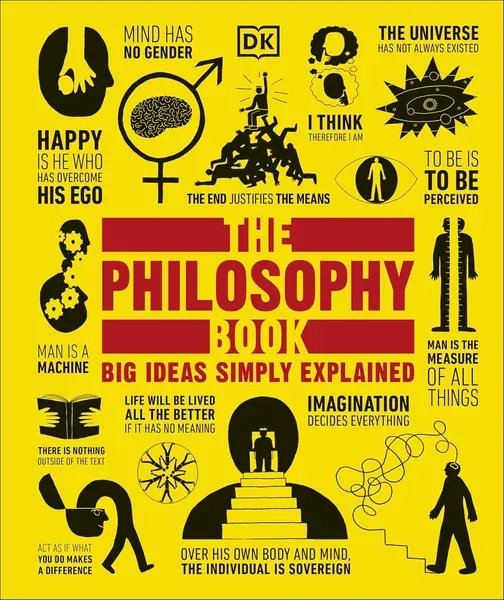
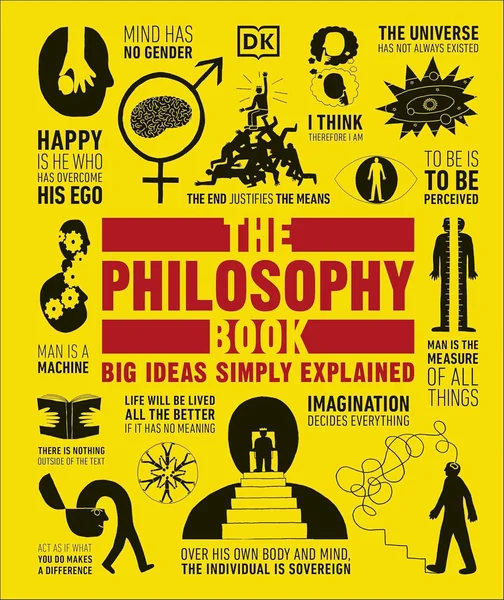
The Philosophy Book (DK Big Ideas), now in a fully revised and updated second edition published by DK in September 2024, is a comprehensive reference guide that walks readers through more than 2,000 years of philosophical thought — from ancient Greece and China to contemporary thinkers — using clear explanations, bold visuals, biography boxes, and pull-out quotes to make the discipline's most demanding ideas accessible to a general audience.

 Tap to enlarge
LuvemBooks Verdict
Best for
Curious general readers — students encountering philosophy for the first time, self-directed adult learners, and librarians building reference collections — who want a single, navigable volume covering the full arc of Western and Eastern philosophical thought with strong visual support and biographical context.
Worth it if
You want a comprehensively updated, visually rich one-stop introduction to over a hundred philosophers and two millennia of ideas that rewards both cover-to-cover reading and targeted dipping-in by thinker or topic.
Skip if
You're looking for sustained analytical depth on individual philosophers or prefer traditional sustained-prose argumentation — this format is optimised for breadth and accessible entry-level orientation, not extended critical analysis.
What readers & critics say
Voice of Youth Advocates (VOYA), as quoted on penguinbookshop.com, called it "an excellent addition to a general philosophy collection," while barnesandnoble.com relays School critical coverage's description of the presentation as "graphically lively," featuring "color reproductions, colorfully framed pull quotes, photos, and a variety of fonts." Spiritualityandpractice.com highlights the "Idea Openers" — quotations from each idea's major proponent — as one of the book's best learning devices, and spoiledmilks.com describes it as "a nice, hardback survey of philosophical thought from 700 BC to the present day."
Sources: Penguin Bookshop (VOYA quote), Barnes & Noble (School Library Journal quote), Spirituality & Practice, Spoiled MilksAge & Reading Level
Recommended age
Adult
Reading level
Adult
who it suits
Skip if you want sustained philosophical argumentation or in-depth analysis of individual thinkers rather than an accessible entry-level survey.
In This Review
- What Works & What Doesn't
- What the Book Actually Is and Covers
- Its Place in the Big Ideas Series and Its Reach
- Core Strengths: Clarity, Structure, and Visual Design
- Reception and Who the Book Serves
- Genuine Limitations to Consider
What Works & What Doesn't
What Works
- Covers more than one hundred philosophers spanning ancient Greece and China through contemporary thinkers, making it one of the most comprehensive single-volume introductory philosophy references available
- Part of DK's award-winning, multimillion-copy Big Ideas series, with an established track record of making complex subjects accessible
- Second edition fully revised and updated to reflect developments in the field over the last five to ten years, ensuring contemporary voices are included
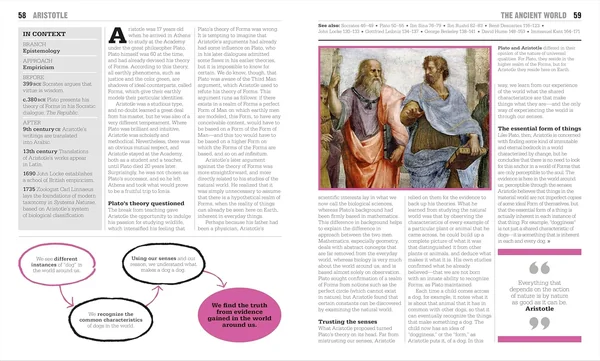
- Biography and context boxes situate each philosopher's ideas within their historical, cultural, and social moment, helping readers trace the evolution of ideas across eras
- Praised by School critical coverage for its graphically lively presentation and by VOYA as an excellent addition to a general philosophy collection
What Doesn't
- The entry-by-entry format, while ideal for breadth and accessibility, compresses each philosopher's ideas into bounded summaries — readers seeking extended analytical depth on individual thinkers will need to look beyond this volume
- The modular, visually driven structure is optimized for browsing and reference use; readers who prefer sustained prose argumentation may find the rhythm of the format a departure from traditional philosophy reading
What the Book Actually Is and Covers
Its Place in the Big Ideas Series and Its Reach
Core Strengths: Clarity, Structure, and Visual Design
Reception and Who the Book Serves
Genuine Limitations to Consider
Frequently Asked Questions
Sources & Further Reading
The key facts and claims in this review are grounded in the retrieved, verified sources listed below.
- Cited in this review
- 1
penguinrandomhouse.com
- 2
spiritualityandpractice.com
- Further reading
- 3
mitpressbookstore.mit.edu
- 4
- 5
- 6
byrdsbooks.com
- 7
antoineonline.com
- 8
- 9
Related Reviews
Reviews of books we picked for readers who enjoyed The Philosophy Book.



Reader Comments
No comments yet
Be the first to share your thoughts!