At a glance
LuvemBooks Verdict
Best for: Philosophy-curious readers who want a rigorous, multi-perspective introduction to Western philosophical traditions — epistemology, metaphysics, ethics, existentialism — organised around a film they already know and care about.
Worth it? Skip it? Read the full verdict →Ask LuvemBooks
Was this helpful?
- Is it worth reading?
- For readers who want rigorous philosophical engagement with a landmark film, the collection delivers genuine breadth — essays range across ancient Greek philosophy, early-modern skepticism, German idealism, existentialism, and contemporary philosophy of mind, all organized around a shared cultural text. The scholarly apparatus of bibliographical references and a full index further distinguishes it from lighter pop-philosophy titles, making it a meaningful resource for undergraduate philosophy courses or self-directed study. The caveat is that the anthology format produces uneven depth across contributors, and essays on Kant or technical philosophy-of-mind debates may prove more demanding than the pop-culture framing suggests.
- Similar books
- Readers who enjoy this volume's approach of using pop culture as a gateway to serious philosophy will find natural companions in the same series: The Simpsons and Philosophy: The D'oh! of Homer and Seinfeld and Philosophy: A Book about Everything and Nothing, both edited or originated by Irwin, follow the same format. For those drawn to the underlying philosophical traditions the anthology surveys, Plato's The Republic — the direct source of the allegory of the cave that anchors the collection — is an essential primary text. Readers wanting a more accessible single-author introduction to the Western philosophical canon might turn to Simon Blackburn's Think: A Compelling Introduction to Philosophy or Jostein Gaarder's Sophie's World, while Alain de Botton's The Consolations of Philosophy offers a more narrative, reader-friendly approach to the same tradition.
- Who should read this?
- The collection is best suited to undergraduate philosophy students, self-directed readers with some prior philosophical background, and fans of the original 1999 film who want more than surface-level engagement with its ideas. Its multi-contributor format covering epistemology, metaphysics, ethics, existentialism, and philosophy of mind also makes it a practical resource for courses that pair popular culture with formal philosophical inquiry. Readers seeking a single unified argument or a casual fan guide to the franchise will find the anthology's episodic structure and exclusive focus on the first film a poor fit.
- About William Irwin
- William Irwin is Professor of Philosophy at King's College in Wilkes-Barre, Pennsylvania. He is best known for originating the 'philosophy and popular culture' book genre with Seinfeld and Philosophy: A Book about Everything and Nothing in 1999 and The Simpsons and Philosophy: The D'oh! of Homer in 2001.
- What are the main philosophical themes?
- The anthology ranges across epistemology (can we know the world is real?), metaphysics (what is the nature of the Matrix and its simulated reality?), ethics and morality, philosophy of mind, existentialism, and nihilism. Specific contributions address Cartesian skepticism via Descartes' evil demon, Platonic allegory, Kantian ethics, Sartrean bad faith and existential authenticity — with Jennifer L. McMahon connecting the film directly to Sartre's Nausea — as well as fate and foreknowledge, and debates about materialism and the status of the subject.
- How does this compare to Irwin's other books?
- All three of Irwin's volumes reviewed by LuvemBooks — Seinfeld and Philosophy, The Simpsons and Philosophy, and The Matrix and Philosophy — share the same foundational format: academic philosophers contributing original essays that use a beloved pop-culture text as an entry point into formal philosophical inquiry. The Matrix volume may be the most philosophically ambitious of the three, given the film's direct engagement with simulation theory, skepticism, and metaphysics — themes that map more naturally onto rigorous academic philosophy than the comedic contexts of Seinfeld or The Simpsons. All three are part of Open Court's Popular Culture and Philosophy series that Irwin helped establish.
Summarize this book

The Matrix and Philosophy: Welcome to the Desert of the Real (Popular Culture by William Irwin
4.6
/ 5
Edited by William Irwin and published by Open Court in 2002, this anthology marshals a team of academic philosophers to probe the deepest questions raised by the Wachowskis' landmark film — from Cartesian skepticism and Platonic allegory to questions of mind, matter, fate, and existential authenticity — making it a substantial entry point for readers who want rigorous philosophical engagement with popular cinema.
View on LuvemBooks →

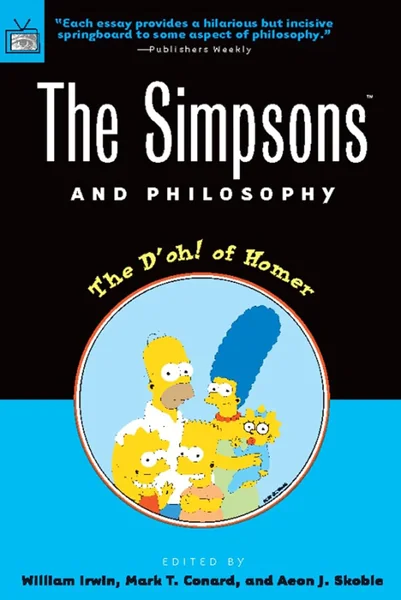
The Simpsons and Philosophy: The D'oh! of Homer (Popular Culture by
4.6
/ 5
This non-fiction essay collection from Open Court uses The Simpsons as a lens for serious philosophical inquiry, drawing on eighteen academic contributors to explore ethics, religion, pleasure, and Western thought — and has sold over 203,000 copies to become the bestselling volume in Open Court's Popular Culture and Philosophy series.
View on LuvemBooks →
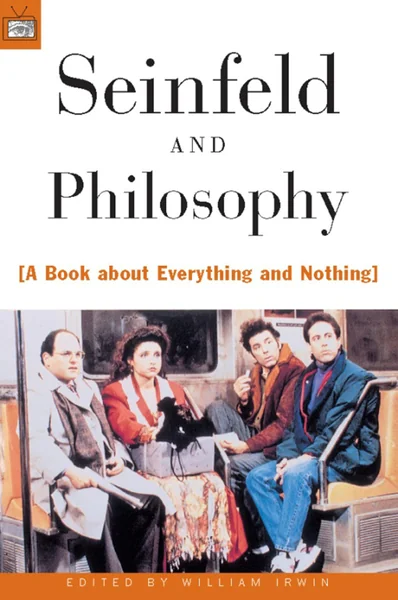
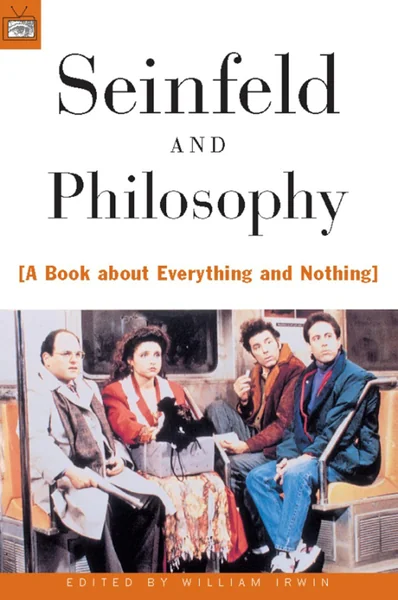
Seinfeld and Philosophy: A Book about Everything and Nothing by William Irwin
4.4
/ 5
Edited by William Irwin and published by Open Court in 1999 as part of the Popular Culture and Philosophy series, this essay collection uses the characters and situations of Seinfeld to introduce readers to enduring philosophical questions — covering Socratic ethics, Aristotelian virtue, Kierkegaardian stages, and everyday moral dilemmas through the lens of one of television's most iconic sitcoms.
View on LuvemBooks →
Follow up
Synthesized from verified book data & published reviews · How we review
Press Enter to ask. Answers come from our editorial Q&A — start typing to see related questions.
Age & Reading Level
Recommended age
Adult
Reading level
Adult
who it suits
Skip if you want a single unified philosophical argument or a fan guide that covers the full Matrix franchise.
Editorial Review
Edited by William Irwin and published by Open Court in 2002, this anthology marshals a team of academic philosophers to probe the deepest questions raised by the Wachowskis' landmark film — from Cartesian skepticism and Platonic allegory to questions of mind, matter, fate, and existential authenticity — making it a substantial entry point for readers who want rigorous philosophical engagement with popular cinema.
Read the Full ReviewBooks like The Matrix and Philosophy
Curated picks for readers who enjoyed The Matrix and Philosophy, with our reasoning for each match.
If you liked The Matrix and Philosophy