William Irwin
3
Books ReviewedAsk LuvemBooks about William Irwin
- Where should I start?
- The Simpsons and Philosophy: The D'oh! of Homer is the strongest starting point for most readers. It uses one of the most widely watched and culturally familiar television series as its lens, which lowers the barrier to entry considerably — you don't need prior philosophy knowledge to follow along. It shares the highest Amazon reader rating among the reviewed titles (4.6/5 from 171 ratings), and its range of contributors means you'll encounter multiple philosophical traditions rather than a single narrow perspective. If you're already comfortable with philosophy, The Matrix and Philosophy offers a more concentrated argument and a film with unusually dense philosophical scaffolding built in.
- What's their writing style?
- Irwin's books are edited anthologies rather than single-author works, so the voice varies by contributor — but as editor, he consistently selects essays that prioritize clarity over jargon, making genuine philosophical argument accessible without dumbing it down. The technique across all three reviewed volumes is the same: take a specific scene, character, or plot point from the source material and use it as a concrete anchor for exploring an abstract philosophical concept. The result reads more like a smart cultural-studies essay than a textbook, which is precisely what makes the series work for non-specialist readers.
- Books we've reviewed
- We've reviewed three of William Irwin's books on LuvemBooks. The Simpsons and Philosophy: The D'oh! of Homer (4.6/5, 171 ratings) uses Springfield's residents to range across ethics, metaphysics, and political philosophy. The Matrix and Philosophy: Welcome to the Desert of the Real (4.6/5, 133 ratings) drills into questions of reality and free will anchored to the Wachowskis' film. Seinfeld and Philosophy: A Book about Everything and Nothing (4.4/5, 151 ratings) — the book that started the genre — examines everyday moral questions through the lens of Jerry, George, Elaine, and Kramer.
- How do his books compare?
- All three reviewed titles share the same anthology format and the same foundational idea — that pop culture is a legitimate philosophical text — but they differ meaningfully in scope and emphasis. Seinfeld and Philosophy is the most ethically focused, using the show's famously petty moral dilemmas to explore questions about duty, virtue, and how to live. The Simpsons and Philosophy is the broadest, touching on political philosophy, feminism, Eastern philosophy, and more. The Matrix and Philosophy is the most metaphysically concentrated, spending significant time on simulation theory, the nature of reality, and what it means to have free will — topics the film itself was built to raise.
- What genre does William Irwin write?
- Irwin's reviewed books fall under Philosophy & Religion, but they occupy a specific and unusual niche within that category: edited anthologies that apply philosophical analysis to mainstream pop culture. The format was genuinely new when Seinfeld and Philosophy appeared in 1999, and it has since spawned dozens of imitators across publishing. Readers who enjoy popular philosophy — works that make rigorous ideas accessible without sacrificing intellectual substance — tend to find Irwin's series a natural fit.
- What should I read after The Simpsons and Philosophy?
- After The Simpsons and Philosophy, the most natural next step within Irwin's reviewed work is The Matrix and Philosophy — it deepens the philosophical engagement, particularly around metaphysics and epistemology, and the Wachowskis' film is dense enough with philosophical allusion that the essays feel especially well-earned. If you'd prefer something lighter in tone, Seinfeld and Philosophy circles back to everyday ethics and is a comfortable companion read rather than a step up in complexity.
Who is William Irwin?

The Simpsons and Philosophy: The D'oh! of Homer (Popular Culture by
4.6
/ 5
This non-fiction essay collection from Open Court uses The Simpsons as a lens for serious philosophical inquiry, drawing on eighteen academic contributors to explore ethics, religion, pleasure, and Western thought — and has sold over 203,000 copies to become the bestselling volume in Open Court's Popular Culture and Philosophy series.
View on LuvemBooks →
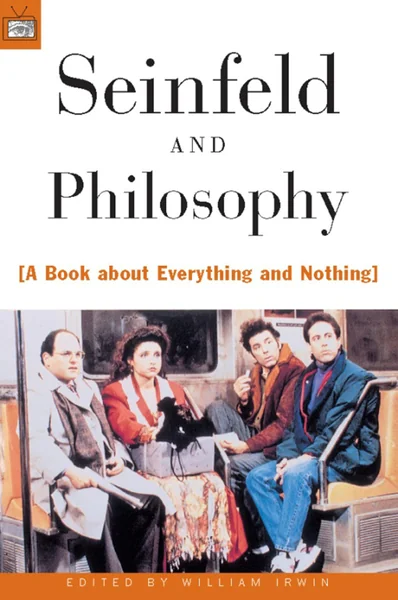
Seinfeld and Philosophy: A Book about Everything and Nothing by William Irwin
4.4
/ 5
Edited by William Irwin and published by Open Court in 1999 as part of the Popular Culture and Philosophy series, this essay collection uses the characters and situations of Seinfeld to introduce readers to enduring philosophical questions — covering Socratic ethics, Aristotelian virtue, Kierkegaardian stages, and everyday moral dilemmas through the lens of one of television's most iconic sitcoms.
View on LuvemBooks →
Follow up
Synthesized from verified book data & published reviews · How we review
Press Enter to ask. Answers come from our editorial Q&A — start typing to see related questions.
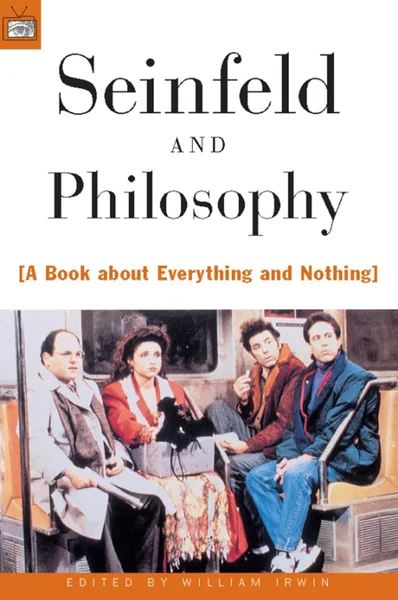
Seinfeld and Philosophy: A Book about Everything and Nothing by William Irwin
4.4/5
Edited by William Irwin and published by Open Court in 1999 as part of the Popular Culture and Philosophy series, this essay collection uses the characters and situations of Seinfeld to introduce readers to enduring philosophical questions — covering Socratic ethics, Aristotelian virtue, Kierkegaardian stages, and everyday moral dilemmas through the lens of one of television's most iconic sitcoms.
Reviewed Mar 23, 2026

The Matrix and Philosophy: Welcome to the Desert of the Real (Popular Culture by William Irwin
4.6/5
Edited by William Irwin and published by Open Court in 2002, this anthology marshals a team of academic philosophers to probe the deepest questions raised by the Wachowskis' landmark film — from Cartesian skepticism and Platonic allegory to questions of mind, matter, fate, and existential authenticity — making it a substantial entry point for readers who want rigorous philosophical engagement with popular cinema.
Reviewed Apr 19, 2026
The Simpsons and Philosophy: The D'oh! of Homer (Popular Culture by
4.6/5
This non-fiction essay collection from Open Court uses The Simpsons as a lens for serious philosophical inquiry, drawing on eighteen academic contributors to explore ethics, religion, pleasure, and Western thought — and has sold over 203,000 copies to become the bestselling volume in Open Court's Popular Culture and Philosophy series.
Reviewed Mar 11, 2026
Authors Like William Irwin

Jonathan Haidt
Jonathan David Haidt is an American social psychologist and author.
3 books reviewed



Aldous Huxley
Aldous Leonard Huxley was an English writer and philosopher.
3 books reviewed

Terry Pratchett
Beloved British fantasy author of the Discworld series, known for his satirical wit and having sold over 85 million books worldwide.
4 books reviewed


Paul Kleinman
Paul Kleinman was born in New York City, New York, and grew up in White Plains, New York. He graduated from the University of Wisconsin in 2009 with degrees in Art and Communication Arts: Radio, Television and Film. He is the author of works including *Philosophy 101: From Plato and Socrates to Ethics and Metaphysics, an Essential Primer on the History of Thought*.
2 books reviewed


James Madison
James Madison, the pen name of Charles Aronstein (August 27, 1870 – March 27, 1943), was an American theatre manager, writer, and publisher, best known for writing and publishing the periodical *Madison's Budget*.
1 book reviewed

J. D. Salinger
Jerome David Salinger was an American author best known for his 1951 novel The Catcher in the Rye.
1 book reviewed