At a glance

LuvemBooks Verdict
Best for: Readers already invested in Elizabeth Strout's Amgash/Crosby, Maine universe — particularly fans of Olive Kitteridge, Lucy Barton, or Bob Burgess — who will find the long-awaited convergence of these characters a genuine and emotionally weighty literary event.
Worth it? Skip it? Read the full verdict →Ask LuvemBooks
Was this helpful?
- Is it worth reading?
- For readers attuned to Strout's register — quiet, restrained, morally serious — Tell Me Everything delivers on its considerable accolades. People called it a 'stunner'; the San Francisco Chronicle described it as 'a generous, compassionate novel about the human need for connection, understanding and love'; and Oprah Daily praised it as 'intricately wrought yet effortlessly realized, both suspenseful and meditative.' The key caveat is that the murder investigation never functions as a thriller, and the novel deliberately withholds conventional resolution — its power is inseparable from that restraint.
- Similar books
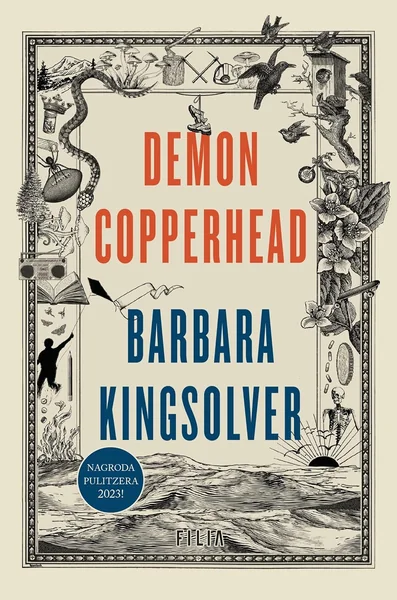
- Readers drawn to Tell Me Everything will likely respond to other novels that use close observation of ordinary life to illuminate moral and emotional depth. Barbara Kingsolver's Demon Copperhead shares Strout's investment in community, hardship, and the weight of unrecorded lives, though with a more propulsive narrative drive. Olga Tokarczuk's Flights similarly prizes accumulation and meaning over conventional plot, offering a fragmented meditation on human connection that rewards patient readers. Within Strout's own world, Olive Kitteridge, Olive Again, and My Name Is Lucy Barton are the most direct companions — the prior books whose characters converge here for the first time. Marilynne Robinson's Gilead and Housekeeping occupy a comparable literary space: American, spare, and quietly devastating.
- Who should read this?
- Tell Me Everything is best suited to devoted readers of literary fiction who value mood, restraint, and emotional resonance over plot momentum. Fans of Strout's earlier Amgash/Crosby books — particularly Olive Kitteridge, Olive Again, My Name Is Lucy Barton, and Oh William! — will find the reunion of Lucy Barton, Olive Kitteridge, and Bob Burgess a genuine literary event. Readers new to Strout can enter here, per Oprah Daily's assessment, though they will encounter the character reunions as introductions rather than long-awaited meetings. Those seeking conventional crime-fiction momentum or tidy resolution should look elsewhere.
- About Elizabeth Strout
- Elizabeth Strout is an American novelist and author.
- What are the main themes?
- Tell Me Everything circles around memory, meaning, and the value of lives that go unrecorded. Olive's concept of 'unrecorded lives' — the idea that telling stories about forgotten acquaintances reanimates those lives and gives them meaning — is the novel's philosophical spine. Alongside this runs an exploration of human connection and its costs: Bob Burgess's friendship with Lucy Barton, Lucy's afternoons with Olive, and the moral questions raised by defending a lonely, isolated man accused of killing his mother all ask, in different registers, what it means to be known by another person. The San Francisco Chronicle captured this as 'a generous, compassionate novel about the human need for connection, understanding and love, and the damage that occurs when those things are denied.'
- Where should I start with Elizabeth Strout?
- For readers new to Strout's Amgash/Crosby world, the Pulitzer Prize–winning Olive Kitteridge is the most natural starting point — it introduces the coastal Maine setting and the character whose first meeting with Lucy Barton is the emotional centerpiece of Tell Me Everything. My Name Is Lucy Barton serves as the other essential entry point for readers drawn to Lucy's perspective and voice. Oprah Daily notes, however, that Tell Me Everything itself is accessible enough for newcomers to enter the world directly without feeling lost.
Summarize this book
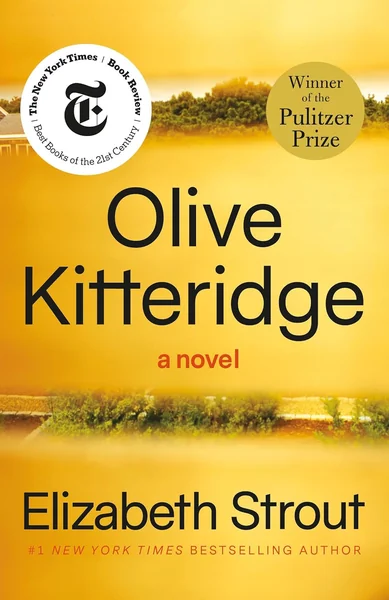
Olive Kitteridge by Elizabeth Strout
4.2
/ 5
Elizabeth Strout's Olive Kitteridge is a structurally inventive work of fiction — thirteen interrelated but narratively discontinuous stories set in the fictional coastal Maine town of Crosby — held together by one of American literature's most indelible characters. Winner of the 2009 Pulitzer Prize for Fiction and a finalist for the 2008 National Book Critics Circle Award, it was named a Best Book of 2008 by a wide range of publications including People, USA Today, The Atlantic, The Washington Post Book World, and the Chicago Tribune, among others. Strout's novel in stories offers, as the publisher's synopsis frames it, "profound insights into the human condition — its conflicts, its tragedies and joys, and the endurance it requires."
View on LuvemBooks →
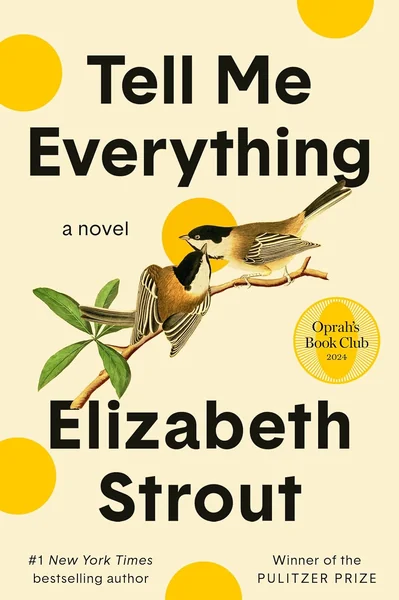
Tell Me Everything: Oprah's Book Club: A Novel by Elizabeth Strout
4.3
/ 5
Tell Me Everything is a New York Times bestseller, an Oprah's Book Club pick, and a Women's Prize for Fiction shortlistee in which Pulitzer Prize–winning author Elizabeth Strout reunites readers with Lucy Barton, Olive Kitteridge, and Bob Burgess in autumn-drenched Crosby, Maine — weaving a murder investigation, a profound new friendship, and meditations on memory and meaning into what the publisher describes as Strout operating at the height of her powers.
View on LuvemBooks →
Follow up
Synthesized from verified book data & published reviews · How we review
Press Enter to ask. Answers come from our editorial Q&A — start typing to see related questions.
Age & Reading Level
Recommended age
Adult
Reading level
Adult
3 content notes · who it suits
Content to know about
Skip if you want a plot-driven crime thriller with a conventional investigation and resolution.
Editorial Review
Tell Me Everything is a New York Times bestseller, an Oprah's Book Club pick, and a Women's Prize for Fiction shortlistee in which Pulitzer Prize–winning author Elizabeth Strout reunites readers with Lucy Barton, Olive Kitteridge, and Bob Burgess in autumn-drenched Crosby, Maine — weaving a murder investigation, a profound new friendship, and meditations on memory and meaning into what the publisher describes as Strout operating at the height of her powers.
Read the Full ReviewBooks like Tell Me Everything
Curated picks for readers who enjoyed Tell Me Everything, with our reasoning for each match.
More by Elizabeth Strout
If you liked Tell Me Everything