9 min read
4.4
· 28,168 Amazon ratingsShare This Review

Our review
Olive, Again
Olive, Again: A Novel by Elizabeth Strout Review: A Luminous, Compassionate Return to Crosby, Maine
Olive, Again is a New York Times bestseller and Oprah's Book Club pick in which Elizabeth Strout returns to the coastal Maine town of Crosby and its unforgettable protagonist, Olive Kitteridge, through 13 interrelated short stories that chart aging, grief, loneliness, regret, and flickering hope. A sequel to Strout's Pulitzer Prize–winning Olive Kitteridge, it was named a best book of the year by Time and Vogue, and earned praise from reviewers as "beautifully written and alive with compassion, at times almost unbearably poignant."
LuvemBooks Verdict
Best for
Readers who loved Olive Kitteridge and want to follow its prickly, deeply human protagonist into late life through Strout's precise, plainspoken prose and mosaic storytelling.
Worth it if
You value emotionally honest, character-driven fiction that finds grief, grace, and complexity in the unremarkable moments of ordinary lives — especially if you're already familiar with Olive's world.
Skip if
You prefer propulsive, continuous narrative arcs, or aren't in the right headspace for a consistently sober emotional register centred on aging, regret, and mortality.
What readers & critics say
Critical reception was emphatic and widespread: The Guardian praised the novel's exploration of grief, loneliness, and familial torment, while NPR called Strout "a master of the story cycle form" who has "pretty much out-Winesburged" Sherwood Anderson with her cumulative portrait of Crosby, Maine. Bookmarks Reviews described it as "a perfect novel: as compelling and unsettling as anything Strout has written," and The London Magazine confirmed it as the work of "a superlative talent operating at the height of her powers."
“A master of the story cycle form, Strout has pretty much out-Winesburged Anderson with her cumulative, time-lapse portrait of Crosby, Maine.”
— NPRAsk LuvemBooks
Was this helpful?
- Is it worth reading?
- For readers drawn to precise, plainspoken literary prose and character studies that locate grief and grace in the unremarkable moments of ordinary lives, Olive, Again is fully worth it — critics at The Washington Post, The Guardian, Kirkus Reviews, and Publishers Weekly all responded with enthusiasm, and Zadie Smith captured the novel's particular alchemy by noting that Strout 'managed to make me love this strange woman I'd never met.' Joan Frank at The Washington Post called it 'arguably better than the original,' writing that its sentences, in 'simplest words and clearest order,' nevertheless 'hammer home some of the most complex human rawness you'll ever read.' The main caveat is structural and tonal: the episodic, mosaic format offers limited narrative momentum, and the book's sustained focus on aging, regret, and mortality makes for a consistently sober emotional register — readers who come expecting plot-driven propulsion or emotional uplift may find the experience requires adjustment.
- Similar books
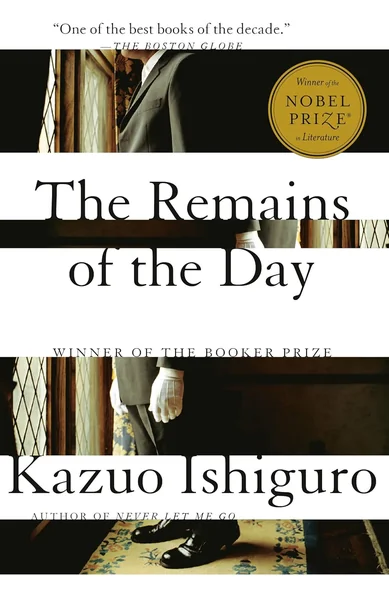
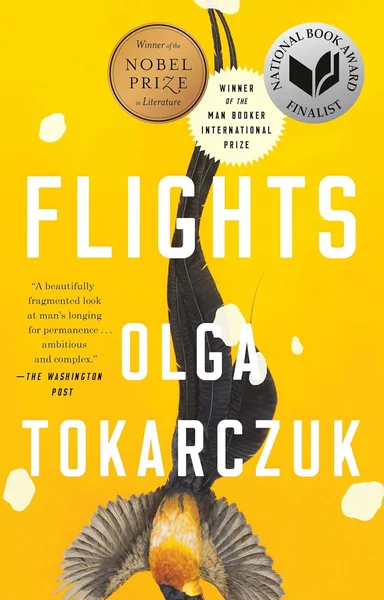
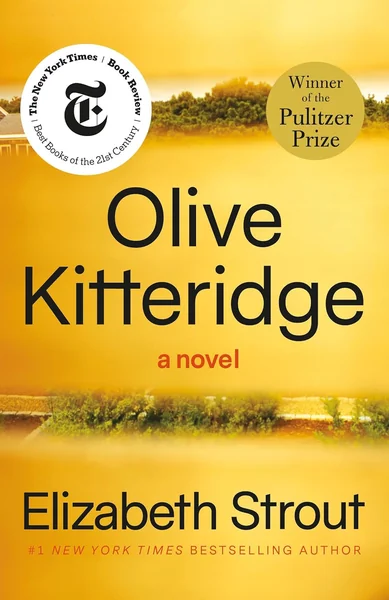
- Readers who respond to Olive, Again's mosaic structure and its quiet excavation of ordinary lives will find much to admire in the curated selections below. Olive Kitteridge — Strout's Pulitzer Prize–winning original — is the essential companion read, establishing the Crosby world and Olive's history. Kazuo Ishiguro's The Remains of the Day shares Olive, Again's preoccupation with regret, late-life reckoning, and the emotional costs of repression, rendered in equally precise, restrained prose. Olga Tokarczuk's Flights and Margaret Atwood's The Blind Assassin both employ fragmented, non-linear structures that reward readers comfortable with mosaic storytelling over conventional plot arcs. Barbara Kingsolver's Demon Copperhead, another Pulitzer Prize winner, speaks to Strout's gift for rooting complex human experience in specific, vividly rendered communities.
- Who should read this?
- Olive, Again is best suited to readers of literary fiction who prize precise, plainspoken prose and character studies that find grief and grace in the unremarkable moments of ordinary lives. Fans of the original Olive Kitteridge will find the sequel's continued portrait of Olive both earned and illuminating, while readers of Kazuo Ishiguro or other writers who work in quiet, accumulative emotional registers will feel at home. Those coming to the book for the first time should know that it is a novel-in-stories — 13 episodically structured tales rather than a continuous narrative — and that its sustained focus on aging, loneliness, regret, and mortality makes for a consistently sober reading experience.
- About Elizabeth Strout
- Elizabeth Strout is an American novelist and author.
- Tell me about the adaptation
- While Olive, Again itself has not been adapted as of this writing, its predecessor Olive Kitteridge was adapted into a critically acclaimed HBO limited series that won the Emmy Award for Outstanding Limited Series, with Frances McDormand starring as Olive in a performance that became a defining portrayal of the character. The cultural footprint of that adaptation — a substantial one — is part of what made returning to Olive in a sequel a genuine risk for Strout, and part of what made the sequel's warm critical reception so notable.
- Is it a good book club pick?
- Olive, Again is an excellent book club selection. Its 13 interrelated stories generate individual discussion anchors — from Jack Kennison's reckoning with his estranged gay daughter and the death of his wife, to a nurse's disclosure of a long-held secret, to the story 'Helped,' which features a moving exchange about faith and loss — while the overarching themes of aging, family estrangement, regret, and resilience provide rich common ground across the group. Its selection for Oprah's Book Club in November 2019 and its widespread critical acclaim from outlets including The Washington Post, The Guardian, Kirkus Reviews, and Publishers Weekly make it a well-supported, substantive choice.
- Where should I start with Elizabeth Strout?
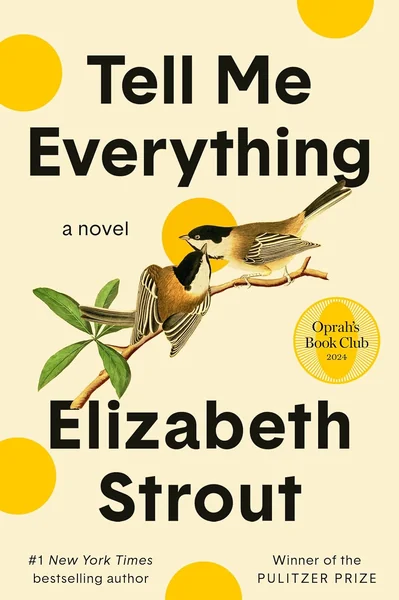
- For readers new to Elizabeth Strout, Olive Kitteridge is the essential starting point: it won the 2009 Pulitzer Prize for Fiction, introduced Olive and the coastal Maine town of Crosby, and was later adapted into an Emmy Award–winning HBO limited series starring Frances McDormand. Olive, Again is formally the second in a two-book series and rewards familiarity with Olive's history and the Crosby world — reading the original first makes the sequel's deepening of those relationships considerably more resonant. LuvemBooks has also reviewed Tell Me Everything: Oprah's Book Club: A Novel and The Things We Never Say: A Novel for readers who want to explore further.
Summarize this book
Follow up
Synthesized from verified book data & published reviews · How we review
What would you like to know about Olive, Again?
Answers come from our editorial notes on this book. If we haven't covered something, we'll say so.
Readers often ask
Our Review
We review the evidence: published critics, reader verdicts and BookTube reviews, gathered and weighed with AI assistance and edited by LuvemBooks, rather than one reader's first-hand take.
What the Book Is and How It's Structured
The Significance of the Sequel
Craft and Critical Reception
Thematic Preoccupations
Who This Book Is For — and Where It Demands the Most
Sources & Further Reading
The key facts and claims in this review are grounded in the retrieved, verified sources listed below.
- Cited in this review
- 1
penguinrandomhouse.com
- 2
barnesandnoble.com
- 3
- Further reading
- 4
Elizabeth Strout, LuvemBooks
- 5
en.wikipedia.org
- 6
- 7
elizabethstrout.com
- 8
fictionwritersreview.com
- 9
- 10
thelondonmagazine.org
- 11
- 12
sanfranciscobookreview.com
- 13
oldfirehousebooks.com
Age & Reading Level
Recommended age
Adult
3 content notes · who it suits
Content to know about
Skip if You're looking for plot-driven fiction or an emotionally uplifting read — Olive, Again's mosaic structure and sustained focus on regret, loneliness, and mortality offer accumulative quiet weight rather than narrative momentum or tonal relief.
Reader reviews
Be one of the first readers to answer.
Read it? Was it right for you?
Books like Olive, Again
Curated picks for readers who enjoyed Olive, Again, with our reasoning for each match.
More by Elizabeth Strout
If you liked Olive, Again