Flights
A fragmentary novel by Polish Nobel laureate Olga Tokarczuk, weaving together stories of travel, the human body, and figures in perpetual motion across time and geography.
Read our full reviewAt a glance
Be one of the first readers to answer.
Read it? Was it right for you?
Flights
LuvemBooks Verdict
Best for: Readers already at home with essayistic, fragmentary fiction — fans of W. G. Sebald, Milan Kundera, or Rachel Cusk's Outline trilogy — who want an intellectually wide-ranging, formally inventive work on travel, the body, and impermanence.
Worth it? Skip it? Read the full verdict →Ask LuvemBooks
Was this helpful?
- Is it worth reading?
- For readers open to essayistic, non-linear fiction, Flights represents a genuinely exceptional achievement. It won the Man Booker International Prize in 2018 — the first time the award went to a Polish author — and had already won Poland's Nike Award in 2008, reflecting remarkable recognition across two literary cultures. Kirkus Reviews calls it 'a welcome introduction to a major author and a pleasure for fans of contemporary European literature,' while critics have described it as 'extraordinary' and 'a passionate and enchantingly discursive plea for meaningful connectedness.' The caveat comes from The New Yorker's James Wood, who notes that the recursive return to its themes risks 'mobility becoming an abstraction' and can produce 'a certain fixity' — a genuine limitation worth weighing.
- Similar books
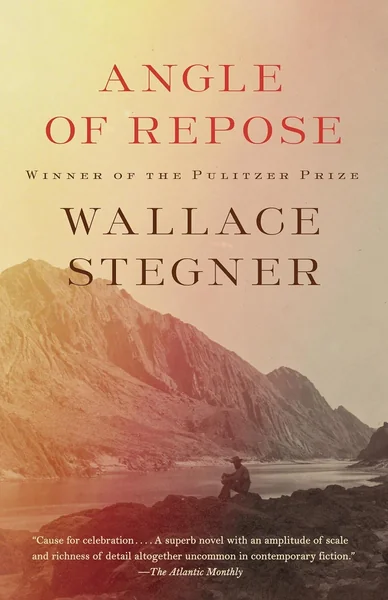
- Readers drawn to Flights will find close company in several works curated below. W. G. Sebald's The Rings of Saturn is the most frequently cited parallel — both books blend essayistic digression, cultural history, and melancholy travel narrative into forms that resist easy genre classification. Kazuo Ishiguro's The Unconsoled shares Flights' commitment to a deeply interior, reality-bending narrative logic that rewards patience. Tokarczuk's own The Books of Jacob extends her historical and philosophical ambitions on an even grander scale for readers wanting more of the same sensibility. For those interested in fragmentary, memory-driven prose with a strong sense of place, Primo Levi's The Periodic Table offers a similarly hybrid structure of autobiography and meditation. Elizabeth Strout's Tell Me Everything and Wallace Stegner's Angle of Repose — both in the LuvemBooks catalogue — represent different but complementary paths: Strout for readers who responded to Flights' coolly evasive narrative voice, and Stegner for those drawn to its layered, multi-generational storytelling.
- Who should read this?
- Flights is best suited to readers already comfortable with essayistic, non-linear fiction — those who have read and enjoyed W. G. Sebald, Milan Kundera, or László Krasznahorkai will be on familiar ground. Its intellectual breadth, drawing on Tokarczuk's backgrounds as fiction writer, essayist, and psychologist, makes it particularly rewarding for readers interested in the intersection of travel, philosophy, and the human body. Kirkus Reviews positions it as ideal for 'fans of contemporary European literature,' and Parul Sehgal's comparison of the narrator to Rachel Cusk's heroine in the Outline trilogy suggests it will also appeal to readers who enjoyed Cusk's coolly evasive, essayistic mode. It is a more challenging proposition — though not an impossible one — for readers whose primary appetite is for plot-driven or character-centred fiction.
- What are the main themes?
- The New Yorker's James Wood identifies mobility and curiosity as the book's two governing themes, twining through both its fictional and non-fictional strands. Travel is not treated romantically but philosophically — the animating idea, drawn from the bieguni sect of Old Believers, is that constant motion is the only defence against evil. Alongside travel, the human body in its fragility, preservation, and decay is a persistent preoccupation: the anatomist Philip Verheyen investigating the achilles tendon, Ludwika Jędrzejewicz transporting Chopin's preserved heart, a doctor presenting on silicone plastication. Critics have also emphasised the book's meditation on connectedness — described as 'a passionate and enchantingly discursive plea for meaningful connectedness' — suggesting that despite its celebration of movement, the book is ultimately about what people reach for across distance.
- Why did it win the Man Booker International Prize?
- The Man Booker International Prize judges, chaired by Lisa Appignanesi, awarded the 2018 prize to Flights and Jennifer Croft's translation — the first time the prize went to a Polish author. Appignanesi described Tokarczuk as 'a writer of wonderful wit, imagination, and literary panache,' a formulation that captures how the judges balanced formal ambition with readerly pleasure. The prize is awarded jointly to author and translator, making the recognition of Croft's English translation explicit. The win followed the book's Nike Award in Poland in 2008, meaning Flights had already been recognised as a major work in its original language before reaching the English-speaking world.
- Where should I start with Tokarczuk?
- Kirkus Reviews explicitly calls Flights 'a welcome introduction to a major author,' positioning it as the natural entry point for English-language readers. Its hybrid form — weaving fiction, memoir, philosophy, and cultural anthropology — gives a broad sense of Tokarczuk's intellectual range in a single volume, and Jennifer Croft's prize-winning translation is widely praised. Readers who want a more conventional narrative structure before tackling Flights might consider Drive Your Plow Over the Bones of the Dead (also translated by Croft's collaborator Antonia Lloyd-Jones), a more plot-driven — if still philosophically charged — crime novel. The Books of Jacob, Tokarczuk's most ambitious work, is best approached after readers have already encountered her characteristic mode.
Summarize this book
Follow up
Synthesized from verified book data & published reviews · How we review
What would you like to know about Flights?
Answers come from our editorial notes on this book. If we haven't covered something, we'll say so.
Readers often ask
Editorial Review
Flights — originally published in Polish as Bieguni in 2007 and translated into English by Jennifer Croft — is a fragmentary novel by Olga Tokarczuk that won the Man Booker International Prize in 2018, the first time a Polish author received the award. Structured as 116 short pieces narrated by a nameless female traveller, the book weaves fiction, memoir, philosophical digression, and cultural anthropology into a sustained meditation on travel, mobility, and the human body.…
Read the Full ReviewReader reviews
No reader reviews yet
Read it? Be the first to say what you thought.
Books like Flights
Curated picks for readers who enjoyed Flights, with our reasoning for each match.
More by Olga Tokarczuk


If you liked Flights