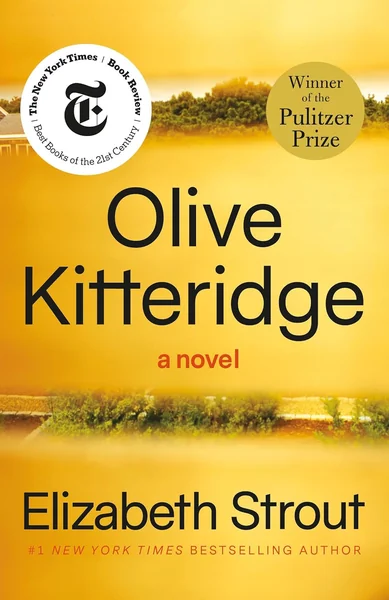
At a glance

Olive Kitteridge
LuvemBooks Verdict
Best for: Readers of character-driven American literary realism who are drawn to compressed, scene-level emotional weight and don't require a single sustained plot — particularly those who appreciate linked-story cycles in the tradition of Sherwood Anderson or Alice Munro.
Worth it? Skip it? Read the full verdict →Ask LuvemBooks
Was this helpful?
- Is it worth reading?
- For readers of character-driven American realism, Olive Kitteridge stands among the most decorated fiction of its decade — winner of the 2009 Pulitzer Prize for Fiction, a finalist for the 2008 National Book Critics Circle Award, and named a Best Book of 2008 by more than a dozen major outlets including The Atlantic, The Washington Post Book World, and Entertainment Weekly. The title character is widely regarded as a rare literary creation: "so vital, so funny, so exasperating and yet so winning" that she commands attention even in peripheral appearances. The key caveat is structural — the book offers no conventional novelistic closure, and its emotional payoff is accumulated rather than delivered directly, which will not suit every reader.
- Similar books
- Readers drawn to Olive Kitteridge may find much to appreciate in the curated titles below. Strout's own Tell Me Everything continues her exploration of interconnected lives and realist emotional precision. Olga Tokarczuk's Flights shares Olive Kitteridge's formally inventive, fragmented architecture — short, linked pieces that accumulate into something larger than any individual section. Wallace Stegner's Angle of Repose offers a similarly weighty portrait of American life and character across time, while Barbara Kingsolver's Demon Copperhead demonstrates the same ambition to render a specific American community with depth and moral seriousness. Olive, Again, Strout's own sequel to Olive Kitteridge, is also a natural next read for those wanting to spend more time with Olive herself.
- Who should read this?
- Olive Kitteridge is most squarely aimed at readers of character-driven, realist American fiction — particularly those who find the weight of an entire life compressed into a single scene or exchange more satisfying than conventional plot momentum. The book's range of accolades, from The Atlantic and Salon to People and Entertainment Weekly, signals that it rewards both literary and general readers. Readers who prefer narrative closure, a single sustained plot arc, or emotional warmth delivered directly rather than earned through accumulation are cautioned — the Guardian's note that Strout can run "almost too spare" is a fair warning for those approaching the book with those expectations.
- About Elizabeth Strout
- Elizabeth Strout is an American novelist and author.
- What are the main themes?
- Olive Kitteridge returns repeatedly to the quiet devastation of small-town life — grief, longing, isolation, and the dark comedy of human self-deception. The publisher's synopsis identifies "the human condition — its conflicts, its tragedies and joys, and the endurance it requires" as the book's central concern. Individual stories explore suicide (Kevin Coulson's return to Crosby), marital detachment, aging, and the gap between how people perceive themselves and how they appear to others — a gap Olive herself embodies, given her sharpness about the wider world and her blindness to transformations in those closest to her.
- Tell me about the adaptation
- Olive Kitteridge was adapted into a four-part HBO miniseries in 2014, starring Frances McDormand as Olive and Richard Jenkins as Henry Kitteridge. The production was directed by Lisa Cholodenko and received widespread critical acclaim, winning eight Primetime Emmy Awards — including Outstanding Limited Series — and a Golden Globe for McDormand's performance. The miniseries is generally regarded as a faithful and tonally precise translation of Strout's fragmented, character-driven structure to the screen.
- Where to start with Elizabeth Strout?
- For readers new to Elizabeth Strout, Olive Kitteridge is the most widely recommended entry point — it is the Pulitzer Prize-winning work that established her as a major figure in American literary realism and is entirely self-contained. Readers who finish it and want more can turn to Olive, Again, the direct sequel that continues Olive Kitteridge's story in later life, or to Tell Me Everything, which LuvemBooks has also reviewed.
Summarize this book
Follow up
Synthesized from verified book data & published reviews · How we review
Press Enter to ask. Answers come from our editorial Q&A — start typing to see related questions.
Age & Reading Level
Recommended age
Adult
Reading level
Adult
4 content notes · who it suits
Content to know about
Skip if you prefer a single sustained plot arc with conventional narrative closure and emotional warmth delivered directly.
Editorial Review
Elizabeth Strout's Olive Kitteridge is a structurally inventive work of fiction — thirteen interrelated but narratively discontinuous stories set in the fictional coastal Maine town of Crosby — held together by one of American literature's most indelible characters. Winner of the 2009 Pulitzer Prize for Fiction and a finalist for the 2008 National Book Critics Circle Award, it was named a Best Book of 2008 by a wide range of publications including People, USA Today, The Atlantic, The Washington Post Book World, and the Chicago Tribune, among others.…
Read the Full ReviewBooks like Olive Kitteridge
Curated picks for readers who enjoyed Olive Kitteridge, with our reasoning for each match.
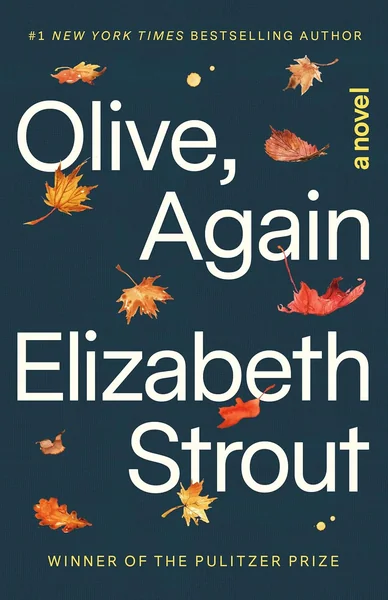
More by Elizabeth Strout
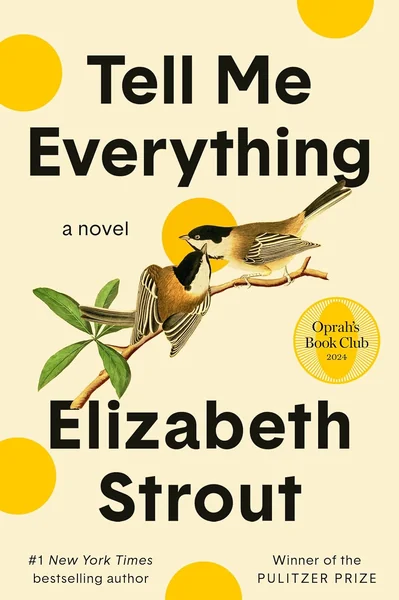
If you liked Olive Kitteridge