Angle of Repose
A wheelchair-bound historian reconstructs his grandmother's 19th-century frontier life through her letters, uncovering the private failures beneath a marriage that endured.
Best for
Readers drawn to dual-timeline American literary fiction who want a sweeping, morally serious novel about Western expansion, marriage, and the way individuals construct meaning from history — and who are prepared to engage critically with the ethical controversy surrounding its source material.
Our full verdict ↓At a glance
Be one of the first readers to answer.
Read it? Was it right for you?
Angle of Repose
LuvemBooks Verdict
Best for: Readers drawn to dual-timeline American literary fiction who want a sweeping, morally serious novel about Western expansion, marriage, and the way individuals construct meaning from history — and who are prepared to engage critically with the ethical controversy surrounding its source material.
Worth it? Skip it? Read the full verdict →Ask LuvemBooks
Was this helpful?
- Is it worth reading?
- For readers prepared for a long, layered, and deliberately paced novel, Angle of Repose operates at what LuvemBooks considers the highest level of American literary fiction. It won the Pulitzer Prize for Fiction in 1972, was ranked #82 on the Modern Library's list of the 100 best English-language novels of the 20th century, and was praised upon publication as both 'the most ambitious and deeply realized' of Stegner's works and 'a major piece of literature.' The Boston Globe called it 'masterful.' The key caveat is the well-documented ethical controversy surrounding Stegner's use of Mary Hallock Foote's actual letters, which remains unresolved and is inseparable from any honest engagement with the novel. Readers attuned to questions of literary appropriation will need to hold that alongside the novel's considerable achievement.
- Similar books
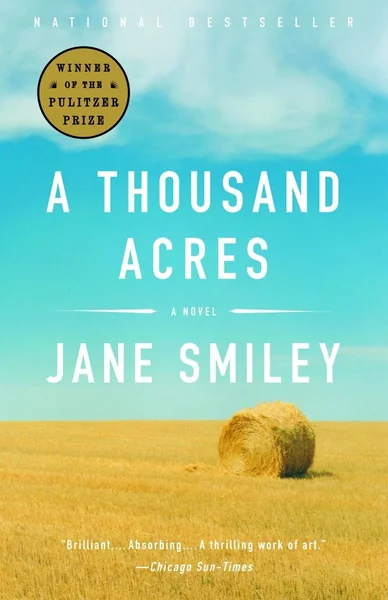
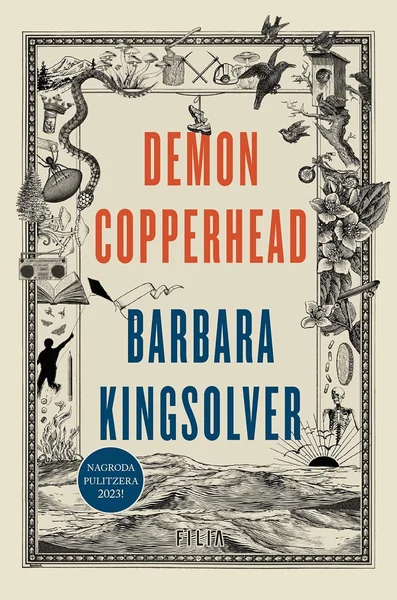
- Readers who respond to Angle of Repose's combination of literary ambition, multigenerational scope, and morally weighted American settings will find strong companions in the curated selections below. Barbara Kingsolver's Demon Copperhead is a Pulitzer Prize–winning novel with serious literary credentials and a sharp engagement with American social reality, offering a different era and geography but a comparable seriousness of purpose. Elizabeth Strout's Tell Me Everything shares the concern with how the present makes sense of the past, rendered through interconnected lives. Among books not currently in the LuvemBooks catalogue, Kent Haruf's Plainsong offers the quiet emotional weight of the American West, while Wallace Stegner's own Crossing to Safety and Jane Smiley's A Thousand Acres — the latter another Pulitzer winner engaging with family fracture and literary legacy — round out a natural reading path.
- Who should read this?
- Angle of Repose is best suited to readers who come to literary fiction prepared for sustained engagement — those drawn to dual-timeline narratives, the literature of the American West, or novels that interrogate how individuals construct meaning from history. Readers interested in unreliable narration as a formal device will find Lyman Ward one of the more carefully constructed examples in the American canon. The novel is equally essential reading for anyone interested in the ethics of literary appropriation and the complex relationship between historical fiction and its real-world sources, given the well-documented controversy over Stegner's use of Mary Hallock Foote's letters. Readers who prefer tightly plotted or emotionally transparent fiction, or who want a narrator who delivers clear interpretive verdicts, are likely to find it frustrating.
- What are the main themes?
- The novel's central themes converge around the question of settlement — where restless people finally come to rest — applied simultaneously to marriage, family, individual ambition, and the broader arc of American Western expansion. Marriage and its fractures are examined through both Susan and Oliver Ward's nineteenth-century frontier life and Lyman Ward's own divorce in the present, with the two timelines illuminating each other. The novel also engages deeply with how individuals construct meaning from history, and with the limits of that construction: Ward narrates selectively, leaves gaps he acknowledges, and ultimately abandons his original ambition of writing a complete account of his grandparents' lives. For contemporary readers, the ethics of literary appropriation — Stegner's use of Mary Hallock Foote's real letters under disputed circumstances — adds a layer of thematic resonance around authorship, gender, and the ownership of personal and creative records.
- How unreliable is the narrator?
- Lyman Ward is one of American fiction's more explicitly compromised narrators. He is a retired historian reconstructing the lives of his grandparents Susan and Oliver Ward from roughly a century's distance, but his own divorce and personal disappointments visibly color his interpretation throughout. According to Wikipedia's account of the novel as cited in the review, Ward 'interprets the story at times and leaves gaps that he points out at other times,' and toward the novel's end he abandons his original ambition of writing a complete account altogether. Some critics, as recorded in Wikipedia's reception summary, felt that Stegner did not make the meaning of Susan Burling Ward's story sufficiently clear to Ward — a critique that goes directly to the question of whether the narrator's unreliability is a richness or a structural gap the novel never fully resolves.
- How does this compare to Stegner's other work?
- Angle of Repose is widely regarded as the capstone of Stegner's career and his most ambitious and deeply realized work. Stegner (1909–1993) also wrote the National Book Award–winning The Spectator Bird and the Commonwealth Club Gold Medal–winning All the Little Live Things, among other novels. Crossing to Safety, his other most celebrated novel, treats similar themes — marriage, friendship, the question of where people finally settle — but on a smaller and more intimate scale, without the dual-timeline architecture or the 672-page scope of Angle of Repose. For readers looking to understand Stegner's range, Angle of Repose represents the fullest expression of his ambitions as a historical and literary novelist.
Summarize this book
Follow up
Synthesized from verified book data & published reviews · How we review
What would you like to know about Angle of Repose?
Answers come from our editorial notes on this book. If we haven't covered something, we'll say so.
Readers often ask
Editorial Review
First published in 1971 and winner of the Pulitzer Prize for Fiction in 1972, Wallace Stegner's Angle of Repose is a structurally ambitious novel that layers a wheelchair-bound historian's present-day reckoning with his own fractured life against a deeply researched portrait of frontier America — and it remains one of the most celebrated works in the American literary canon, ranked #82 on the Modern Library's list of the 100 best English-language novels of the 20th century. Its sweep, its dual-timeline architecture, and the ethical controversy surrounding its source material make it a book that rewards serious engagement — and equally serious scrutiny.
Read the Full ReviewReader reviews
No reader reviews yet
Read it? Be the first to say what you thought.
Books like Angle of Repose
Curated picks for readers who enjoyed Angle of Repose, with our reasoning for each match.
More by Wallace Stegner


If you liked Angle of Repose