BOOKS
Published

Read Time

3 min read

Curated & edited by

LuvemBooks Editorial

How we create our reviews →
Share This Review

Tell Me Everything by Elizabeth Strout Review: A Luminous Reunion of Beloved Characters

The fifth installment in Elizabeth Strout's Amgash series, Tell Me Everything (Random House, 2024) reunites Lucy Barton, Olive Kitteridge, and Bob Burgess in autumnal Crosby, Maine, weaving a murder investigation through meditations on connection, memory, and what any human life amounts to. A New York Times bestseller, an Oprah's Book Club pick, and a Women's Prize for Fiction shortlistee, this novel has earned recognition as a best book of the year from Time, NPR, Vogue, and Parade — a reception that confirms Strout's standing as one of American fiction's most enduring voices.

LuvemBooks Verdict

Best for

Devoted readers of Elizabeth Strout's Amgash series — particularly those who have followed Lucy Barton, Olive Kitteridge, and Bob Burgess across previous volumes — who are ready for a quietly convergent novel where deep conversation and shared interiority, rather than plot momentum, are the main event.

Worth it if

You've traveled with Strout's characters across the earlier books and are drawn to fiction in which mood, hesitation, and the texture of ordinary lives carry more weight than narrative propulsion.

Skip if

You're approaching this as a series entry point or expecting the murder investigation to function as a conventional thriller engine — the crime is kept deliberately at the margins, and the full emotional weight of the character reunions depends heavily on prior familiarity with the series.

What readers & critics say

Kirkus Reviews noted that "Strout's many fans will love this sweet, rambling tale," while also observing that more critical readers may feel it is time for her to move on — a divided but largely warm reception. The novel carries substantial institutional recognition: it is a New York Times bestseller, Oprah's 107th Book Club selection, and was shortlisted for the Women's Prize for Fiction, with best-of-year nods from Time, NPR, Vogue, and Parade, as reported by both kirkusreviews.com and penguinrandomhouse.com.

Strout's many fans will love this sweet, rambling tale. More critical readers may feel it's time for her to move on.

Kirkus Reviews

Oprah said: 'She is an exquisite writer of the human condition, and there's a cast of characters that I know you all are going to love.'

Kirkus Reviews
Sources: Kirkus Reviews, Penguin Random House, Denver Post, Oprah.com
4.3from 28,376 Amazon ratings— reader ratings, not a LuvemBooks score

Look inside the book

Preview the actual pages, via Google Books
In This Review
  • What Works & What Doesn't
  • What the Novel Is and What Happens in It
  • Significance: The Culmination of a Fictional Universe
  • What the Novel Does Well: Voice, Structure, and Emotional Range
  • Genuine Limitations: Entry Points and Expectations
  • Who This Novel Is For

What Works & What Doesn't

What Works
  • Brings together Lucy Barton, Olive Kitteridge, and Bob Burgess for the first time in a single novel — a convergence years in the making across the Amgash series
  • Named a New York Times bestseller, an Oprah's Book Club pick (the 107th selection), and a Women's Prize for Fiction shortlistee, with best-of-year recognition from Time, NPR, Vogue, and Parade
  • The storytelling-within-storytelling structure — Olive and Lucy exchanging 'unrecorded lives' — expands the novel's emotional scope beyond its central cast
  • The Washington Post praised Strout's 'shimmering technique' for capturing how moods govern both private lives and communal spaces
  • People called it a 'stunner'; the publisher describes it as 'brimming with empathy and pathos' — a range of reception that reflects the novel's broad emotional reach
What Doesn't
  • Prior familiarity with the Amgash series is effectively a prerequisite for fully appreciating the character reunions and long-running emotional arcs at the novel's core
  • Readers expecting the murder investigation to drive conventional thriller momentum may find the crime deliberately kept at the margins in favor of mood, conversation, and interiority
Tell Me Everything is a novel with deep roots in an established fictional world, and readers who enter it will find those roots matter — this is Strout at her most interconnected.

What the Novel Is and What Happens in It

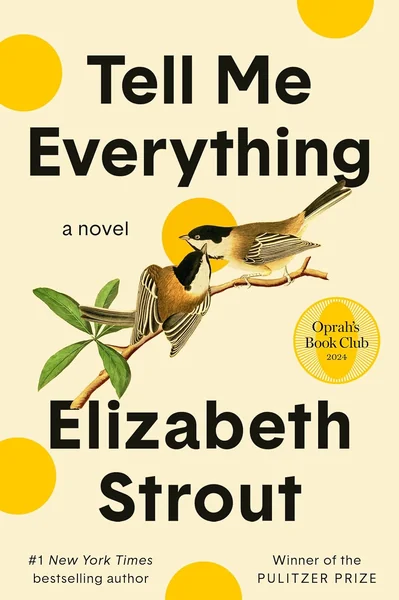
Tell Me Everything: Oprah's Book Club: A Novel by Elizabeth Strout front cover
Set during an autumn in Crosby, Maine, Tell Me Everything operates on two interlocking tracks. On one, town lawyer Bob Burgess finds himself defending a lonely, isolated man accused of killing his own mother — a case that draws the novel's quiet world into contact with violence and moral reckoning. On the other, Bob has fallen into a deep and sustaining friendship with the celebrated writer Lucy Barton, who is living down the road in a house by the sea alongside her ex-husband, William. The two take regular walks and share the texture of their inner lives: fears, regrets, and roads not taken. Meanwhile, Lucy is introduced for the first time to the iconic Olive Kitteridge, now residing in a retirement community on the edge of town. Olive and Lucy spend their afternoons together trading what Olive calls "unrecorded lives" — stories of ordinary people who might otherwise vanish without trace. The central question the novel orbits, articulated by Lucy herself, is: "What does anyone's life mean?"

Significance: The Culmination of a Fictional Universe

Published by Random House in September 2024, this is the fifth book in Strout's Amgash series, and it functions as a convergence point for characters who have populated separate volumes — Olive Kitteridge, My Name Is Lucy Barton, and their respective sequels. The meeting of Lucy Barton and Olive Kitteridge, two of contemporary American fiction's most discussed characters, is the event the series has been building toward. The novel arrives carrying substantial institutional weight: it is a New York Times bestseller, Oprah's 107th Book Club selection, was shortlisted for the Women's Prize for Fiction, and was named a best book of the year by Time, NPR, Vogue, and Parade. People called it a "stunner," while the San Francisco outlet excerpted on the publisher's site described it as "a generous, compassionate novel about the human need for connection, understanding and love, and the damage that occurs when those things are denied."

What the Novel Does Well: Voice, Structure, and Emotional Range

The Washington Post captured something essential about the book's method, calling it a "novel of moods" in which Strout's "shimmering technique" governs both private lives and public spaces. The structure reflects that ambition: a crime investigation that could anchor a conventional thriller is instead held at a deliberate remove, serving as a vehicle for the characters to examine their own moral frameworks rather than to generate plot-level suspense. The storytelling-within-storytelling device — Olive and Lucy narrating "unrecorded lives" to each other — allows Strout to expand the novel's emotional circumference well beyond its named characters, honoring the anonymous and the forgotten. The publisher describes the result as "brimming with empathy and pathos," a characterization reinforced by the breadth of critical outlets that placed it among the year's best.

Genuine Limitations: Entry Points and Expectations

No serious assessment of Tell Me Everything can sidestep the question of prior reading. This is the fifth entry in an interconnected series, and the weight of the Lucy–Olive meeting, the resonance of Bob Burgess's arc, and the emotional stakes of Lucy's life with William all depend substantially on accumulated familiarity with earlier volumes. Readers arriving without that context will encounter fully rendered characters, but the specific pleasures of reunion — and the significance of connections finally made — will register differently. Additionally, readers drawn in by the murder investigation as a narrative engine may find that Strout keeps the crime at the margins of the story's emotional center; the novel is designed around mood, conversation, and interiority rather than procedural momentum, and that is a deliberate artistic choice that will not suit every expectation.

Who This Novel Is For

Tell Me Everything is built for readers who have traveled with Strout's characters across previous books and are prepared for a novel in which human conversation — its hesitations, its generosities, its confessions — is the primary event. The Washington Post's framing of it as a "bucolic fable" and the publisher's description of it as illuminating "the ways in which our relationships keep us afloat" together define the experience the novel is designed to deliver. As Lucy Barton's own words close out the publisher's synopsis: "Love comes in so many different forms, but it is always love." For readers attuned to that frequency, this is Strout — by the publisher's own accounting and by the breadth of critical recognition — operating at the height of her powers.

Sources & Further Reading

The key facts and claims in this review are grounded in the retrieved, verified sources listed below.

  1. Cited in this review
  2. 1
  3. 2
  4. Further reading
  5. 3

    Elizabeth Strout, Wikipedia

  6. 4
  7. 5
  8. 6
  9. 7
  10. 8
  11. 9
  12. 10