At a glance
About the Author
Pip Williams1 book reviewed
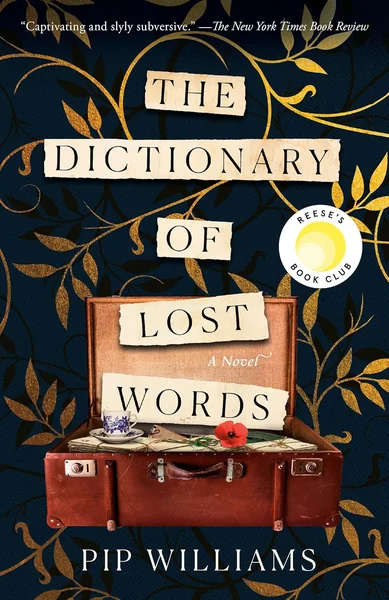
The Dictionary of Lost Words
by Pip Williams
LuvemBooks Verdict
Best for: Readers drawn to character-driven historical fiction with an intellectual backbone — particularly those with an interest in language, literary history, the women's suffrage movement, or the making of the Oxford English Dictionary.
Worth it? Skip it? Read the full verdict →Ask LuvemBooks
Was this helpful?
- Is it worth reading?
- For its intended audience, The Dictionary of Lost Words delivers handsomely. Critics have called it 'a lexicographer's dream of a novel,' 'an imaginative love letter to dictionaries,' and — per The New York Times — 'delightful… a captivating and slyly subversive fictional paean to the real women whose work on the Oxford English Dictionary shaped the language.' Bookreporter notes that Williams 'will convince you of a word's importance in a most lovely and charismatic story,' and fellow author Marie Benedict described it as 'a delight and an education.' The key caveat: those who prefer plot-driven momentum over the immersive, detail-dense pacing of a 19th-century-style novel may find the tempo a challenge.
- Similar books
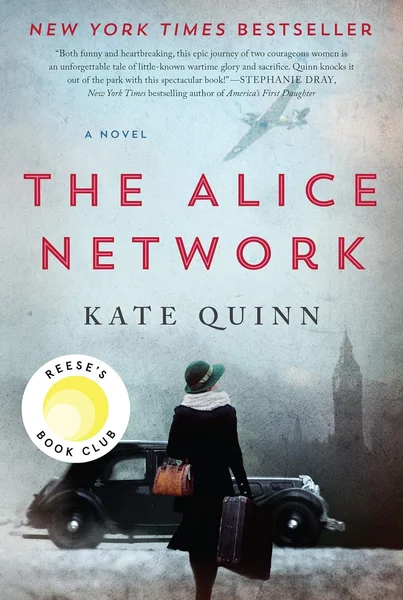
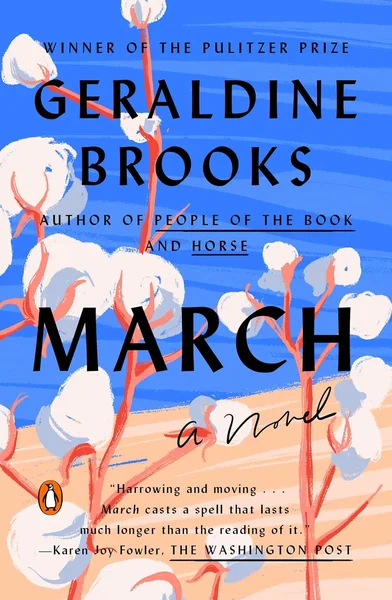
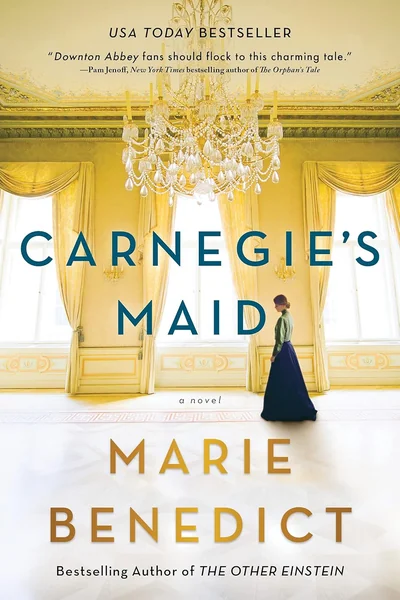
- Readers who enjoy The Dictionary of Lost Words tend to gravitate toward historical fiction that centers women's voices in richly researched period settings. Carnegie's Maid by Marie Benedict — who herself praised Williams's novel — similarly reconstructs the hidden contributions of a woman operating in the shadow of a famous man. The Alice Network by Kate Quinn shares the suffrage-era and wartime backdrop alongside a focus on women whose work went unacknowledged. March by Geraldine Brooks, like Williams's novel, reimagines a familiar history from a perspective the official record left out. Trust by Hernan Diaz is another formally inventive literary novel that interrogates whose version of events gets written down and preserved. All five are rendered on the cards below.
- Who should read this?
- The Dictionary of Lost Words is designed for readers drawn to character-driven historical fiction with an intellectual backbone — those who enjoy novels that, as the review puts it, 'smuggle serious questions about power, gender, and representation into richly detailed period settings.' Readers with a particular interest in language, literary history, or the Edwardian suffrage era are especially well served. Author Susan Wiggs called it 'charming, inventive, and utterly irresistible… the story we all need right now,' a sentiment echoed by its broad bestseller and book-club reception. Those who prefer faster-paced plotting over immersive, detail-dense prose are the one group most likely to find it a mismatch.
- What are the main themes?
- At its core, The Dictionary of Lost Words interrogates who holds the power to define a language — and by extension, to define history itself. The novel argues that the OED's official record reflects a history written by men, and that an entire parallel vocabulary of women's experience was quietly discarded. Woven through this are the interconnected themes of gender and class (the words excluded belong to women and the working class), the politics of knowledge and representation, and the way institutional authority shapes cultural memory. The suffrage movement and the First World War amplify these themes by showing Esme's world in active, violent transformation.
- Is this a good book club pick?
- The Dictionary of Lost Words is a strong book club choice, particularly for groups who enjoy discussing questions of power, representation, and history alongside character-driven storytelling. Its selection for Reese Witherspoon's Book Club — a programme built around communal reading and discussion — signals that the novel's themes translate well into group conversation. The interplay between Esme's personal stakes, the OED's real editorial history, and the suffrage and wartime context gives clubs rich thematic terrain. The novel's deliberately expansive pace also rewards the kind of close, attentive reading that book club formats encourage.
- Is this Pip Williams's only book?
- The review covers The Dictionary of Lost Words as Pip Williams's debut novel. No other works by Williams are discussed in LuvemBooks' coverage, so readers curious about her broader bibliography are encouraged to check a bookseller or library catalogue for her most current titles. The debut's reception — a New York Times bestseller, Reese's Book Club pick, and warm critical response — has given Williams a substantial platform for any subsequent work.
Summarize this book
Follow up
Synthesized from verified book data & published reviews · How we review
Press Enter to ask. Answers come from our editorial Q&A — start typing to see related questions.
Editorial Review
Pip Williams's debut novel, a New York Times bestseller and the first Australian novel selected for Reese Witherspoon's Book Club, weaves a fictional narrative through the real history of the Oxford English Dictionary's creation, centering the women and words that were left out of the official record.
Read the Full ReviewBooks like The Dictionary of Lost Words
Curated picks for readers who enjoyed The Dictionary of Lost Words, with our reasoning for each match.
If you liked The Dictionary of Lost Words