8 min read
4.4
· 23,704 Amazon ratingsShare This Review
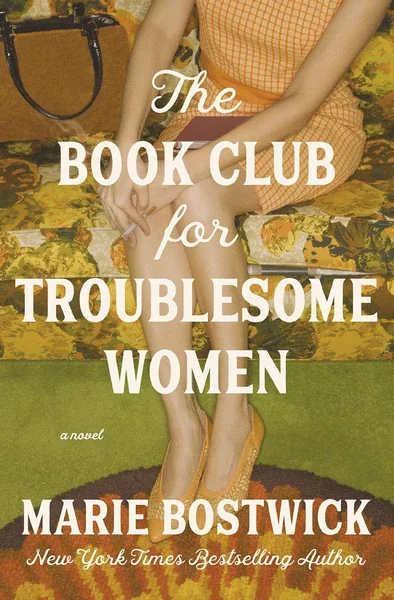
The Book Club for Troublesome Women by Marie Bostwick Review: A Spirited Ode to 1960s Sisterhood
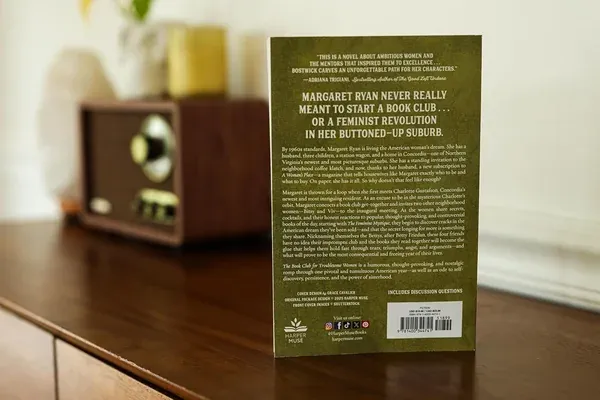
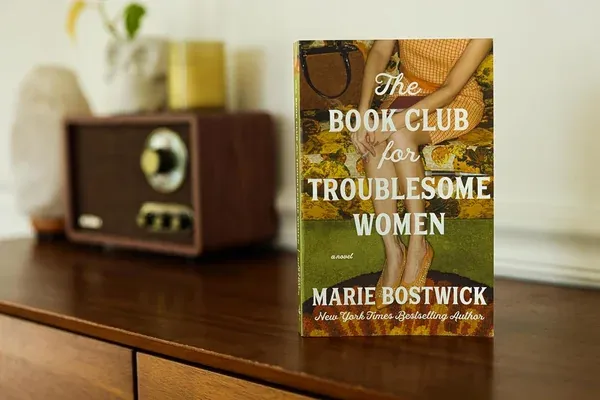
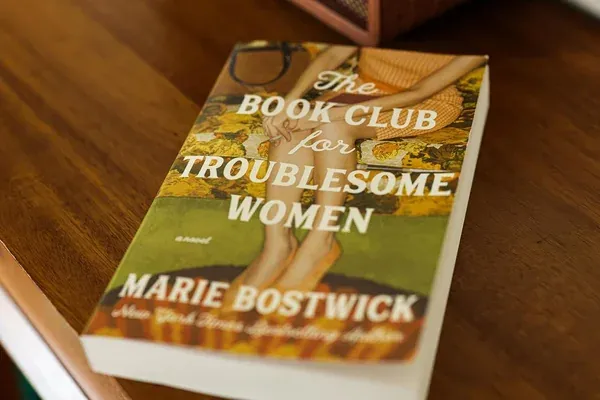
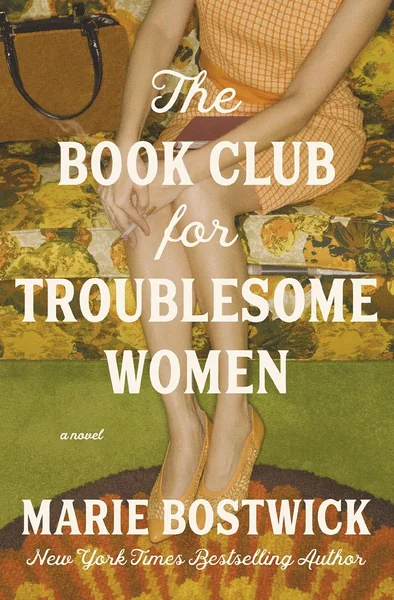
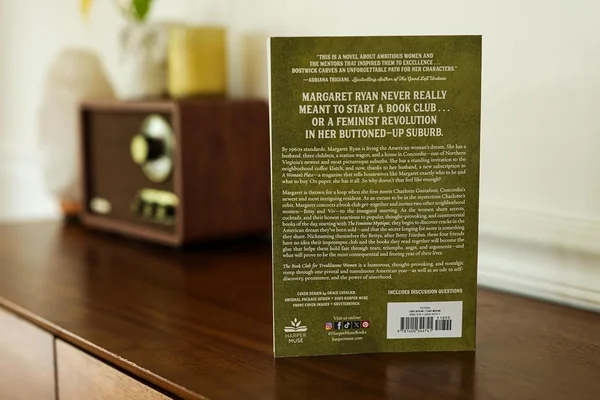
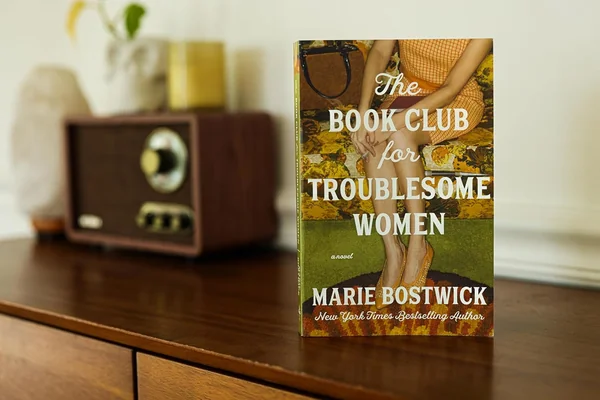
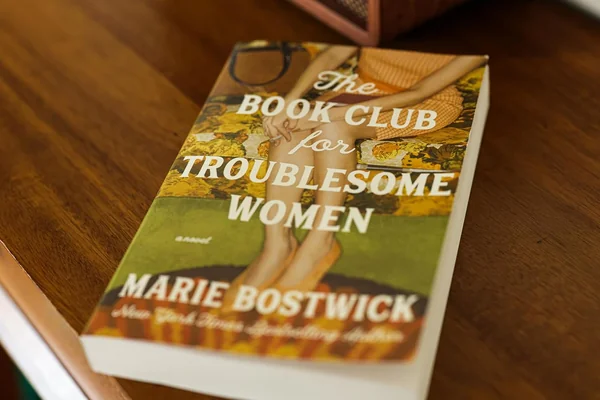
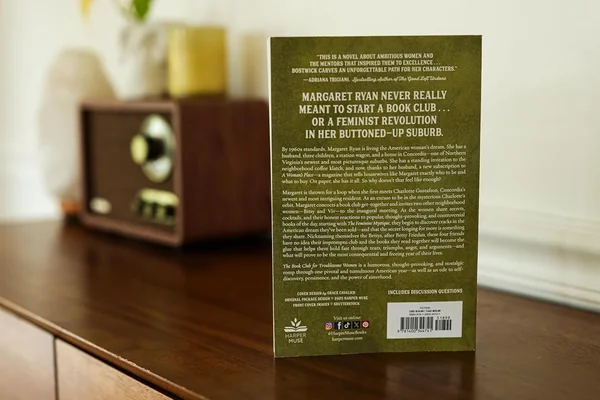
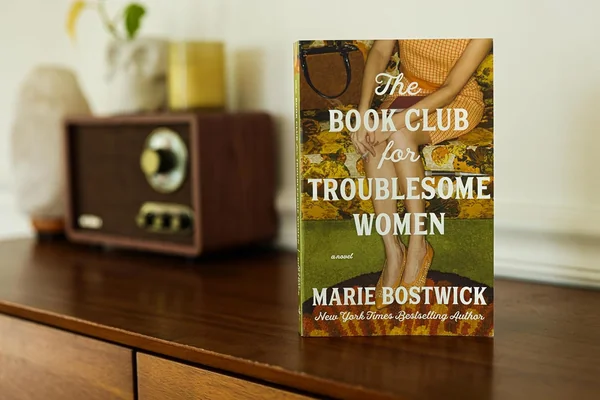
Marie Bostwick's novel follows four women — Margaret, Viv, Bitsy, and Charlotte — whose suburban book club becomes an unlikely engine of feminist awakening when they take up Betty Friedan's The Feminine Mystique, making it a humorous, thought-provoking, and nostalgic work of historical women's fiction published by Harper Muse on April 22, 2025.
 Tap to enlarge
LuvemBooks Verdict
Best for
Readers who love historical women's fiction built around friendship ensembles — particularly fans of mid-century American settings, book-club-within-a-novel structures, and authors like Bonnie Garmus or Kristin Hannah who balance warmth with social critique.
Worth it if
The blend of humor, sisterhood, and period-specific feminist awakening — anchored by The Feminine Mystique as an in-story catalyst — sounds like exactly the kind of affirming, emotionally rich historical fiction you're looking for.
Skip if
Readers who prefer their 1960s history treated with moral ambiguity, darkness, or formal experimentation should look elsewhere — the novel's own publisher describes it as a "nostalgic romp," and that warmth is a feature, not an accident.
What readers & critics say
Kirkus Reviews characterises the novel as "a lively and unabashedly sentimental" but "sugarcoated take on midcentury suburbia," while the Southern Review of Books positions it more favourably as "a feel-good beach read with substance" that "comes at a time when escape is needed without detaching from reality." Dear Author awarded it a B-minus grade. A Library Journal Starred Review (surfaced via booksbywomen.org) calls it "ideal for fans of historical fiction" and compares it to Lessons in Chemistry and The Women. Lesa's Book Critiques, while praising it as "a very good book," notes that Bostwick's unflinching catalogue of 1963's inequities provoked genuine anger in the reviewer — a testament to the novel's historical texture even within its uplifting frame.
“A lively and unabashedly sentimental novel — a sugarcoated take on midcentury suburbia.”
— Kirkus ReviewsPreview the book
Ask LuvemBooks
Was this helpful?
- Is it worth reading?
- For its target audience — fans of uplifting ensemble women's historical fiction, mid-century American settings, and book-club-within-a-novel structures — The Book Club for Troublesome Women delivers on its promise. Its pre-publication momentum (USA Today bestseller, Southern Indie Bestseller, multiple book club selections including Brenda Novak Book Group Pick and Girlfriend Book Club Pick) reflects genuine reader resonance, with early readers praising Bostwick's atmospheric precision in capturing 'the pressure to be perfect, the hidden anxiety' of early 1960s suburbia. The caveat is equally clear: readers who prefer their historical fiction dark, morally ambiguous, or formally inventive will find the novel's warmth and intentional uplift a mismatch.
- Similar books
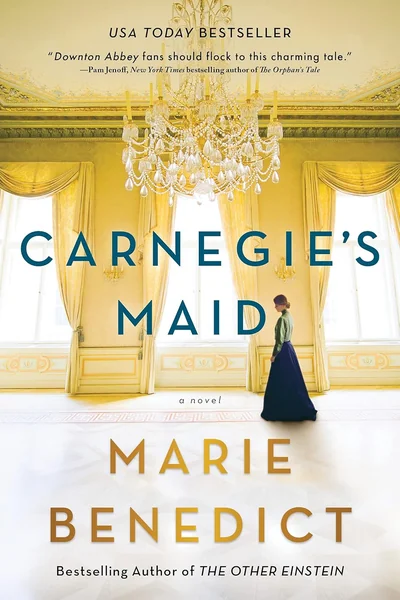
- Readers drawn to The Book Club for Troublesome Women will find strong company in the curated selection below. Lessons in Chemistry by Bonnie Garmus offers a similarly witty, female-led take on early 1960s gender constraints. For historical women's fiction with a strong friendship ensemble, Before We Were Yours by Lisa Wingate and The Four Winds by Kristin Hannah both deliver emotional depth rooted in mid-century American hardship. Carnegie's Maid by Marie Benedict shares the interest in women navigating limited social pathways with intelligence and quiet tenacity. And for a story of women bonding through a shared creative or subversive project, The Secret Sewing Society by Siobhan Curham offers a similarly warm ensemble spirit.
- Who should read this?
- The Book Club for Troublesome Women is clearly designed for readers who love historical women's fiction with a strong friendship ensemble at its core — fans of Bostwick's existing work, readers drawn to mid-century American settings, and anyone who finds a book-club-within-a-novel structure particularly satisfying. The Southern Review of Books describes the novel as arriving 'at a time when escape is needed without detaching from reality,' which captures its tonal ambition well. It is also a natural fit for actual book clubs, having already earned multiple group-read designations.
- What are the main themes?
- At its core, the novel explores feminist awakening in early 1960s America — the gap between the idealized suburban domestic life and the hidden anxiety and ambition beneath it. A key strength noted by the Southern Review of Books is that Bostwick doesn't flatten this into a single, uniform struggle: Viv's confrontation with racial inequity in WWII military service and Margaret's acknowledgment that even available pathways were unequal add texture beyond white suburban feminism. The power of literature to catalyze personal change, the sustaining force of female friendship, and the use of humor to survive constrained circumstances round out the novel's thematic landscape.
- How historically grounded is it?
- Early readers and reviewers praise Bostwick's atmospheric precision, with one noting she 'nailed the atmosphere of early 1960s suburbia — the pressure to be perfect, the hidden anxiety.' The novel's use of Betty Friedan's real 1963 text The Feminine Mystique as an in-story catalyst grounds it in verifiable literary history, and the acknowledgment of racial inequities — including the exclusion of Black women from WWII service — reflects a deliberate effort to represent the period's complexity rather than sanitize it. The Southern Review of Books highlights these period attitudes as 'varied and purposeful.'
- Where should I start with Marie Bostwick?
- With more than twenty works of uplifting contemporary and historical fiction to her name — translated into a dozen languages — Bostwick has a substantial back catalogue, but The Book Club for Troublesome Women is well-suited as an entry point for new readers given its strong pre-publication momentum and broad book club recognition. Readers who enjoy the early 1960s feminist ensemble premise here may also find her earlier contemporary fiction a natural next step, as her signature voice — warmth balanced with substance — is consistent across her career.
Summarize this book
Follow up
Synthesized from verified book data & published reviews · How we review
Press Enter to ask. Answers come from our editorial Q&A — start typing to see related questions.
Age & Reading Level
Recommended age
Adult
Reading level
Adult
2 content notes · who it suits
Content to know about
Skip if you prefer dark, morally ambiguous, or formally experimental historical fiction over warmth and uplift
Our Review
What the Novel Is and What Drives It
Historical Texture and Social Awareness
Tone, Humor, and the Bostwick Voice
Reception and Cultural Resonance
Who This Novel Serves Best — and Where It Has Limits
Sources & Further Reading
The key facts and claims in this review are grounded in the retrieved, verified sources listed below.
- Cited in this review
- 1
mariebostwick.com
- 2
southernreviewofbooks.com
- 3
harpercollinsfocus.com
- Further reading
- 4
- 5
- 6
lesasbookcritiques.com
- 7
Books like The Book Club for Troublesome Women
Curated picks for readers who enjoyed The Book Club for Troublesome Women, with our reasoning for each match.
If you liked The Book Club for Troublesome Women