Share This Review

The New Rules of Lifting for Women by Lou Schuler, Cassandra Forsythe & Alwyn Cosgrove Review: A Research-Backed Case for Women's Strength Training

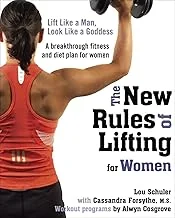
Published by Avery in December 2009, The New Rules of Lifting for Women: Lift Like a Man, Look Like a Goddess brings together fitness journalist Lou Schuler, exercise science and nutrition expert Cassandra Forsythe, and certified strength coach Alwyn Cosgrove to deliver a comprehensive strength, conditioning, and nutrition plan designed to challenge conventional fitness wisdom for women. The book argues directly against the dominance of aerobics-centric workout culture, positioning strength training as the foundational tool for fat loss and a fit, strong body. Endorsed by a credentialed, three-author team, it remains a reference point in the women's fitness space for readers ready to move beyond the cardio-only approach.

LuvemBooks Verdict

Best for

Women ready to commit to a structured, multi-month strength training program who want both the scientific rationale and the practical programming behind lifting heavy — particularly those new to resistance training or coming from an aerobics-first background.

Worth it if

The program is worth it if you want a complete, evidence-informed system — covering six months of lifting, conditioning, and integrated nutrition — and value understanding the physiological why behind the training, not just the what.

Skip if

Skip it if you prefer shorter, modular workout formats, are committed to cardio-based training and unlikely to warm to a strongly anti-aerobics framing, or need the most current exercise science research given the book's December 2009 publication date.

What readers & critics say

Barnes & Noble's product page presents the book as a comprehensive strength, conditioning, and nutrition plan "destined to revolutionize the way women work out," citing the latest studies to back the claim that strength training — not aerobics — is the key to losing fat. A reader blurb surfaced on Better World Books praises Lou Schuler's "expert advice, no-nonsense plans, and sense of humor" as "reassuring, motivating, and entertaining."

Sources: Barnes & Noble, Better World Books
4.4from 1,538 Amazon ratings— reader ratings, not a LuvemBooks score
In This Review
  • What Works & What Doesn't
  • What the Book Actually Is and Argues
  • Credentials and Authorial Authority
  • What the Program Is Built to Do
  • Limitations and Who May Find It Frustrating
  • Who This Book Is For

What Works & What Doesn't

What Works
  • Three-author team combines fitness journalism, academic exercise science and nutrition credentials, and professional program design in one volume
  • Central argument — that strength training, not aerobics, is the primary driver of fat loss and a fit body — is stated directly and supported by research framing rather than anecdote
  • Integrated six-month program covers strength, conditioning, and nutrition as a complete system rather than isolated tips
  • Directly addresses and counters the common fear that heavy lifting will produce an undesirable physique, making it approachable for women new to resistance training
What Doesn't
  • Published in December 2009, meaning the specific research it cites is now over fifteen years old — readers seeking current exercise science literature will need to supplement
  • The book's strongly anti-aerobics stance may alienate readers who incorporate cardio for reasons beyond fat loss, as the framing leaves little room for hybrid approaches
  • The six-month programming commitment is substantial and structured, making it a poor fit for readers who prefer shorter or more modular workout formats
A research-grounded argument that women's fitness has long been pointed in the wrong direction, this book makes its case with a team of credentialed co-authors and a structured program designed to back it up.

What the Book Actually Is and Argues

The New Rules of Lifting for Women is a fitness non-fiction guide — part manifesto, part structured training and nutrition program — co-authored by three specialists with distinct but complementary backgrounds. Lou Schuler, a fitness journalist, provides the book's editorial voice and accessible framing. Cassandra Forsythe, a doctoral candidate in exercise science and nutrition at the University of Connecticut at the time of publication, grounds the nutritional and physiological content. Alwyn Cosgrove, co-owner of Results Fitness in Newhall, California, and a professional member of both the National Academy of Sports Medicine and the American College of Sports Medicine, contributes the programming itself. Together they present what the publisher describes as a comprehensive strength, conditioning, and nutrition plan designed to reshape how women approach exercise.
The book's central argument is direct: strength training — not aerobics — is the key mechanism for losing fat and building a fit, strong body. This is not a subtle reframing but an explicit challenge to the aerobics-first culture that dominated women's fitness for decades. The title itself signals the combative intent: Lift Like a Man, Look Like a Goddess positions heavy, compound lifting as not only appropriate but optimal for women.

Credentials and Authorial Authority

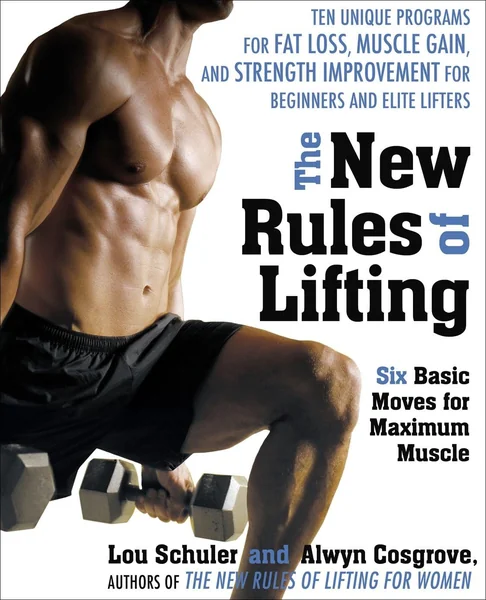
One of the book's distinguishing features is the genuine depth of expertise distributed across its three authors. Cosgrove's program design draws on his professional memberships and his real-world coaching work — he is a frequent contributor to publications including Men's Health and Men's Fitness, and his programming background gives the workout component professional structure. Forsythe's academic grounding in exercise science and nutrition lends the physiological and dietary sections a research orientation that goes beyond anecdote. Schuler, whose earlier book The New Rules of Lifting was primarily aimed at men but attracted significant interest from women, brings editorial clarity to material that could otherwise become technically dense. The three-way collaboration is designed to balance scientific rigor, practical program design, and accessible communication.

What the Program Is Built to Do

The book is structured to deliver a complete system rather than isolated advice. The strength and conditioning component centers on Cosgrove's programming, which is described as a six-month lifting plan. The nutrition guidance is integrated rather than appended — Forsythe's contribution is woven into the program as a complement to the training rather than a separate section to be consulted independently. The book also directly addresses the fear, common among women new to strength training, that lifting heavy will produce an unwanted bulky physique — the publisher's framing explicitly counters this concern, noting that the program's scope does not produce that outcome. A blurb attributed to a reader on Better World Books describes Schuler's approach as offering "expert advice, no-nonsense plans, and sense of humor" that are "reassuring, motivating, and entertaining," suggesting the book's tone was designed to be engaging rather than clinical.

Limitations and Who May Find It Frustrating

The book's greatest strength — its clear, confident argument that women should lift heavy — is also the source of its most notable friction for some readers. The strength of the anti-aerobics position means that readers who are committed to cardio-based training, or who incorporate aerobics for reasons beyond fat loss, may find the framing unnecessarily dismissive of their existing approach. Additionally, because the book was published in December 2009, the specific research citations it draws on are now more than fifteen years old; readers seeking the most current exercise science literature will need to supplement accordingly. The six-month programming commitment is also substantial — readers looking for shorter, more modular workout options will find the book's structure less accommodating of that preference.

Who This Book Is For

The New Rules of Lifting for Women is best suited to women who are ready to commit to a structured, multi-month strength training program and want both the scientific rationale and the practical programming to support it. It is particularly well-matched to readers who have encountered The New Rules of Lifting or Cosgrove's other work and want a program built specifically around women's physiology and goals. Readers drawn to fitness books that explain the why alongside the what — grounded in exercise science and nutritional guidance rather than motivation alone — will find the three-author structure serves that need directly. Those already deeply versed in current strength training research may treat it more as a foundational text than a cutting-edge resource, but as an entry point into evidence-informed lifting for women, it remains a substantive and clearly argued guide.

Sources & Further Reading

The key facts and claims in this review are grounded in the retrieved, verified sources listed below.

  1. Cited in this review
  2. 1
  3. 2
  4. Further reading
  5. 3