Alwyn Cosgrove
2
Books ReviewedAlwyn Cosgrove books in order
5 books; 1 reviewed on LuvemBooks. Dates and covers from Amazon.
 2005Our review →
 2012Results FitnessAmazon ↗
 2015StrongAmazon ↗
 2020Secrets of Successful Program DesignAmazon ↗
 2022Gluteal Amnesia by Dave Tate andAmazon ↗
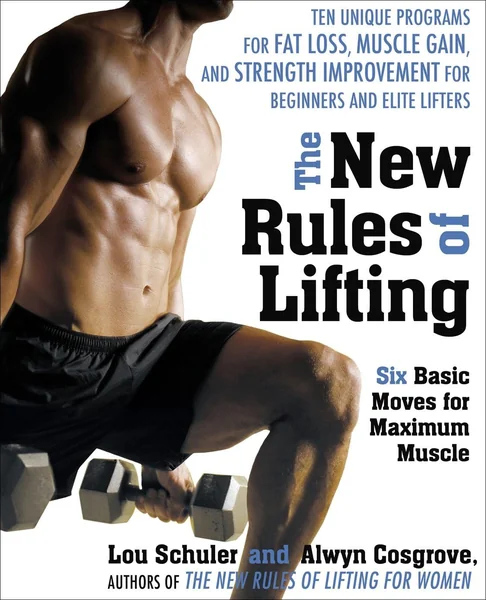
The New Rules of Lifting: Six Basic Moves for Maximum Muscle
4.5/5
reader rating · 364 ratingsThe New Rules of Lifting: Six Basic Moves for Maximum Muscle, by Lou Schuler and Alwyn Cosgrove, builds a year-plus of workouts around six basic movements. One blogger calls it a standout; another sees a beginner primer with weak food lists.
Reviewed Mar 7, 2026
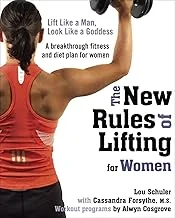
The New Rules of Lifting for Women: Lift Like a Man, Look Like a Goddess
4.4/5
reader rating · 1,537 ratingsA strength, conditioning and nutrition plan for women by Lou Schuler, Cassandra Forsythe and Alwyn Cosgrove, built on the premise that lifting, not aerobics, drives fat loss. Suited to women willing to centre their training on weights.
Reviewed Feb 16, 2026
Ask LuvemBooks about Alwyn Cosgrove
- Where should I start?
- If you're new to Cosgrove's work, The New Rules of Lifting is the natural entry point — it lays out the foundational philosophy of the series and is built around six compound movements that the later books build on. It holds a reader rating of 4.5/5 from 365 Amazon ratings, suggesting it has earned broad, sustained trust rather than just initial enthusiasm. Readers specifically interested in training for women may want to jump straight to The New Rules of Lifting for Women instead, which applies the same framework with programs and context tailored to that audience.
- What's their writing style?
- Cosgrove's books, written in close partnership with Lou Schuler, are direct and program-focused — they spend relatively little time on motivation and get quickly to the practical mechanics of training. A recurring technique across the reviewed titles is leading with the myth or assumption being challenged before presenting the alternative framework, which gives even familiar material a clear argumentative structure. The tone is confident without being preachy, and the programs themselves are laid out with enough detail that readers can use the books as ongoing workout references rather than reading them once and setting them aside.
- Books we've reviewed
- LuvemBooks has reviewed two books by Alwyn Cosgrove. The New Rules of Lifting: Six Basic Moves for Maximum Muscle (with Lou Schuler) is the series foundation, building an entire resistance-training philosophy around a small set of compound movements — it carries a reader rating of 4.5/5 from 365 Amazon ratings. The New Rules of Lifting for Women: Lift Like a Man, Look Like a Goddess (with Lou Schuler and Cassandra Forsythe) applies that same framework to an audience often steered away from heavy lifting, and is the most widely rated of the two with 4.4/5 from 1,538 Amazon ratings.
- How do the books compare?
- Both reviewed titles share the same core philosophy and compound-movement programming approach, so the choice between them is largely about audience framing rather than a fundamental difference in content or quality. The original New Rules of Lifting is written for a general audience and establishes the series' argument against high-rep, machine-based training. The New Rules of Lifting for Women layers on additional context about how and why women are often given different — and less effective — advice, and includes Cassandra Forsythe as a third co-author to address nutrition and physiology questions specific to that audience. Reader ratings for both are nearly identical (4.5 and 4.4 respectively), implying neither significantly outperforms the other in terms of reader satisfaction.
- What genre do they write?
- Both of Cosgrove's reviewed books fall under Health & Wellness, and more specifically within the strength training and fitness programming sub-category. They are practical instructional books rather than memoirs or narrative nonfiction — the emphasis is on structured workout programs supported by explanatory text, rather than storytelling or personal narrative. Readers drawn to evidence-informed fitness instruction, rather than motivational or lifestyle-oriented wellness books, tend to be the core audience.
- What should I read after The New Rules of Lifting?
- After working through The New Rules of Lifting, the most direct next step within the reviewed catalog is The New Rules of Lifting for Women — not because it's gender-restricted reading, but because it extends the series' argument into new territory and includes a fresh set of programs. Beyond the reviewed titles, the series continues with volumes including The New Rules of Lifting for Abs, which targets core training specifically and is cited among Cosgrove's notable works, making it a logical progression for readers who want to go deeper into the series.
Who is Alwyn Cosgrove?
Follow up
Synthesized from verified book data & published reviews · How we review
Press Enter to ask. Answers come from our editorial Q&A — start typing to see related questions.
Authors Like Alwyn Cosgrove
Lou Schuler
Mark Rippetoe
Cassandra Forsythe

Peter Attia

Timothy Ferriss
Kelly Starrett