BOOKS
Published

Read Time

3 min read

Curated & edited by

LuvemBooks Editorial

How we create our reviews →
Share This Review

The Obesity Code by Jason Fung Review: A Provocative Hormonal Case for Weight Loss

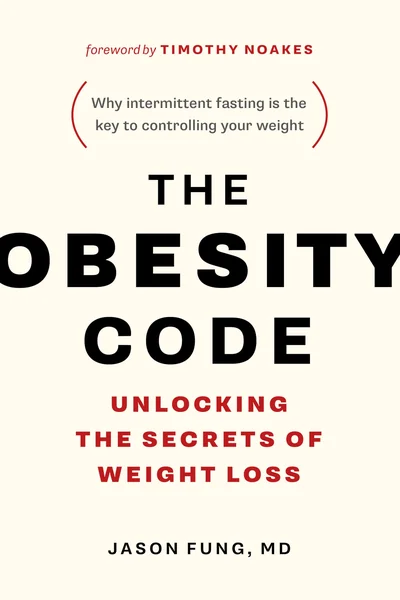
Published by Greystone Books in 2016, The Obesity Code: Unlocking the Secrets of Weight Loss is a science-based non-fiction guide by practicing physician and New York Times-bestselling author Dr. Jason Fung, with a foreword by Timothy Noakes. Fung's central argument rejects the conventional "calories in, calories out" model, proposing instead that obesity is a hormonal disorder driven by persistently high insulin levels and insulin resistance — and that intermittent fasting is a key lever for correcting it. The book is structured across six parts, moving from the history of the obesity epidemic through a dismantling of what Fung calls nutritional "myths," and into his proposed hormonal model and practical framework. It is a landmark title in the low-carbohydrate and intermittent-fasting conversation, though its core thesis sits at the contested edge of nutrition science.

LuvemBooks Verdict

Best for

Motivated general readers who feel let down by conventional dieting advice and want a systematic, physician-authored hormonal framework for understanding weight gain, presented with clinical references but without specialist jargon.

Worth it if

You're willing to follow an extended, multi-part argument — from epidemiological history through to practical guidance — and appreciate a coherent alternative theory of obesity even if it sits outside mainstream scientific consensus.

Skip if

You need a book whose recommendations reflect broad clinical consensus, or you're already familiar with the research literature and want a balanced survey of competing obesity models rather than one persuasively argued position.

What readers & critics say

Diagnosis Diet praises Fung's writing for striking "just the right balance" between clinical rigour and general readability, calling it a crossover success that convinces sceptical physicians without overwhelming lay readers. Red Pen Reviews, however, awards the book a modest scientific accuracy score, finding that its three core claims are poorly supported or exaggerated and that the carbohydrate-insulin model, while real, is a minority view "not well-enough established to warrant the strong claims" Fung makes.

Sources: Diagnosis Diet, Red Pen Reviews
4.6from 37,970 Amazon ratings— reader ratings, not a LuvemBooks score

Look inside the book

Preview the actual pages, via Google Books
In This Review
  • What Works & What Doesn't
  • What the Book Actually Argues
  • Structure and Design Intent
  • Reception and Cultural Standing
  • Where the Science Gets Contested
  • Who This Book Is — and Is Not — For

What Works & What Doesn't

What Works
  • Accessible writing praised for balancing clinical rigor with readability for general audiences (per Diagnosis Diet)
  • Presents a coherent, physician-authored hormonal framework for obesity that goes beyond simplistic 'eat less, move more' advice
  • Six-part structure guides readers methodically from epidemiological history through practical application
  • Includes bibliographical references and an index, supporting its claims with documented sourcing
  • A New York Times bestseller with broad reach, establishing it as a key text in the intermittent-fasting conversation
What Doesn't
  • The carbohydrate-insulin model, while actively debated, represents a minority scientific view that Red Pen Reviews argues is not sufficiently established to support the book's strong claims
  • The book's confident, persuasive tone can make contested hypotheses read as settled consensus, which may mislead readers unfamiliar with the broader research debate
The Obesity Code makes a bold, coherent case that obesity is fundamentally a hormonal problem — one that cannot be solved by counting calories alone — and it does so in a voice accessible enough for general readers while structured around clinical and research evidence.

What the Book Actually Argues

At the heart of The Obesity Code is a single, unambiguous claim: obesity is not primarily a matter of willpower, caloric arithmetic, or dietary fat, but a disorder of persistently high insulin levels and insulin resistance. Dr. Jason Fung, a practicing nephrologist who completed his medical training at the University of Toronto and a fellowship at the University of California, contends that a diet high in carbohydrates and characterized by high eating frequency produces chronically elevated insulin, which in turn drives fat storage and weight gain. This model — broadly aligned with the carbohydrate-insulin model also associated with obesity researcher David Ludwig, MD, PhD — frames conventional nutrition advice as not merely insufficient but fundamentally mistaken. The book opens by challenging that conventional wisdom and then rebuilds the reader's understanding from the ground up, concluding that intermittent fasting is a primary tool for lowering insulin and restoring metabolic balance.

Structure and Design Intent

Greystone Books published the first edition in March 2016, and the book is organized into six distinct parts. The first two parts address how obesity became an epidemic and work to refute what Fung characterizes as entrenched myths — including the idea that dietary fat causes weight gain or that exercise is the central variable in weight management. Parts three and four introduce Fung's "new model" of obesity and examine sociological contributors to the epidemic. The final sections translate the hormonal framework into actionable guidance. The book includes bibliographical references and an index, signaling that it is designed to function as a referenced, evidence-grounded argument rather than a simple diet manual. The publisher describes it as "highly readable and provocative," and its six-part architecture is built to take a general reader through deconstruction and re-education in sequence.

Reception and Cultural Standing

The Obesity Code has become a New York Times bestseller and has been described by its publisher as a landmark book helping millions around the world pursue natural weight loss. The book has drawn praise for the accessibility of Fung's prose: the nutrition-focused outlet Diagnosis Diet notes that his writing style "strikes just the right balance, providing enough rock solid research to convince even the most skeptical physician of his argument, without overwhelming or boring a general audience." That crossover appeal — clinically grounded but genuinely readable — has contributed to its wide reach and its role as a foundational text in the intermittent-fasting conversation. It is the first book in a two-book series under The Obesity Code banner.

Where the Science Gets Contested

The book's greatest strength is also the source of its most substantive criticism. Red Pen Reviews, which subjects nutrition and health books to structured scientific scrutiny, notes that while some researchers accept insulin as a primary driver of obesity, it "is a minority view that is hard to reconcile with the evidence as a whole." The review concludes that the theory is "not well-enough established to warrant the strong claims" Fung makes. In other words, the carbohydrate-insulin model Fung champions is real and actively debated in research circles, but presenting it as settled science overstates its current evidentiary standing. Readers who approach The Obesity Code as a definitive medical consensus rather than as a well-argued, evidence-cited hypothesis may find its confident framing misleading. The book's rhetorical strength — its clarity and persuasiveness — can make its assertions feel more settled than the broader scientific community would endorse.

Who This Book Is — and Is Not — For

The Obesity Code is well suited to readers who feel that conventional dieting advice has failed them and who want a systematic, physician-authored framework for understanding why. Its structure rewards readers willing to follow an extended argument across multiple sections rather than skip to a meal plan. Readers who already follow the research literature on obesity and metabolic health will recognize Fung's thesis as one significant position in an ongoing debate, and they may want to read it alongside sources representing the full range of scientific opinion. Those seeking a book whose recommendations reflect broad clinical consensus may find it a provocative but incomplete picture. For the motivated general reader, however, the book's combination of accessible writing, referenced sourcing, and a coherent alternative theory of weight gain makes it one of the more substantive entries in popular nutrition literature.

Sources & Further Reading

The key facts and claims in this review are grounded in the retrieved, verified sources listed below.

  1. Cited in this review
  2. 1
  3. 2
  4. 3
  5. Further reading
  6. 4
    Jason Fung — author profileHigh-authority source

    Jason Fung, Wikipedia

  7. 5
  8. 6
  9. 7
  10. 8
  11. 9
Related Reviews

Reviews of books we picked for readers who enjoyed The Obesity Code.