
7 min read
4.5
· 365 Amazon ratingsShare This Review
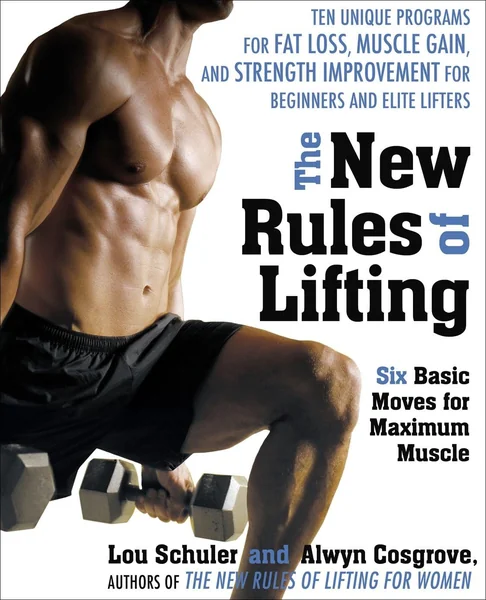
The New Rules of Lifting by Lou Schuler & Alwyn Cosgrove Review: A Science-Backed Strength Training Reset
The New Rules of Lifting: Six Basic Moves for Maximum Muscle by Lou Schuler and Alwyn Cosgrove is a comprehensive fitness book that challenges conventional gym wisdom, anchoring its program in six fundamental movement patterns and the latest exercise science research to help readers build muscle and strength more efficiently.
LuvemBooks Verdict
Best for
Anyone new to structured strength training — or an intermediate lifter ready to move beyond muscle-isolation splits — who wants a research-backed, movement-pattern programme delivered in an unusually readable, humour-laced voice.
Worth it if
You want a coherent, evidence-grounded alternative to traditional bodybuilding splits, with multiple programming phases (Break-In, Fat-Loss, Hypertrophy) that fit realistic time constraints and apply equally to men and women.
Skip if
Highly experienced lifters already fluent in compound-movement programming and periodization, or readers whose primary goal is cardiovascular or endurance performance, will find the framework either familiar or insufficiently focused on their needs.
What readers & critics say
Reviewers at strength-basics.blogspot.com and news.runtowin.com both single out the book's central premise — that training natural movement patterns outperforms muscle-isolation splits — as a genuinely useful reframe, with strength-basics.blogspot.com calling it "one of those good ones" among workout books. Raisedbyturtles.org goes further, crediting Schuler as "one of the straightest shooters in the business" and praising the NROL series as fitness books "you can sit down and read just for the fun of it."
Sources: strength-basics.blogspot.com, raisedbyturtles.org, news.runtowin.comAge & Reading Level
Recommended age
Adult
Reading level
Adult
who it suits
Skip if your primary fitness goal is cardiovascular endurance or endurance sport rather than building strength and muscle.
In This Review
- What Works & What Doesn't
- What the Book Actually Is
- The Central Argument: Movement Over Muscle Isolation
- Strengths: Accessible Science and an Unusually Readable Voice
- Scope and Audience Fit
- Limitations Worth Noting
What Works & What Doesn't
What Works
- Organizes the entire training system around six fundamental movement patterns backed by exercise science research, offering a coherent alternative to traditional muscle-isolation splits
- Lou Schuler's writing voice is widely noted for being humorous, engaging, and accessible, making the book genuinely readable as well as instructional
- Covers multiple programming phases — including Break-In, Fat-Loss, and Hypertrophy tracks — giving readers a structured progression rather than a single static routine
- Directly addresses and debunks common fitness myths, including the misconception that weightlifting causes a bulky physique, making it accessible to women as well as men
- Schuler and Cosgrove's commitment to current exercise science research over training fads gives the recommendations a durable, evidence-grounded foundation
What Doesn't
- Aerobic and endurance training is addressed primarily in the context of fat loss and muscle retention, making the book a limited resource for readers whose main goal is cardiovascular or endurance performance
- Experienced lifters already well-versed in compound movement programming and periodization may find the foundational framework covers familiar territory
What the Book Actually Is
The Central Argument: Movement Over Muscle Isolation
Strengths: Accessible Science and an Unusually Readable Voice
Scope and Audience Fit
Limitations Worth Noting
Frequently Asked Questions
Sources & Further Reading
The key facts and claims in this review are grounded in the retrieved, verified sources listed below.
- Cited in this review
- 1
- Further reading
- 2
- 3
- 4
thriftbooks.com
- 5
- 6
Related Reviews
Reviews of books we picked for readers who enjoyed The New Rules of Lifting.

Reader Comments
No comments yet
Be the first to share your thoughts!