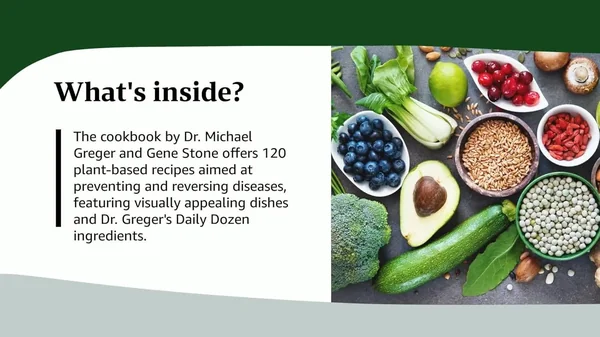
The How Not to Die Cookbook: 100+ Recipes to Help Prevent and Reverse Disease
by Michael Greger and Gene Stone
At a glance
About the Author
Michael Greger and Gene Stone1 book reviewed
The How Not to Die Cookbook
100+ Recipes to Help Prevent and Reverse Disease
by Michael Greger and Gene Stone
LuvemBooks Verdict
Best for: Readers of Michael Greger's How Not to Die who want a structured, science-backed recipe companion to put its whole-food, plant-based dietary recommendations into daily practice.
Worth it? Skip it? Read the full verdict →Ask LuvemBooks
Was this helpful?
- Is it worth reading?
- For readers committed to whole-food, plant-based eating — particularly those who have engaged with How Not to Die and want to put its dietary recommendations into daily practice — The How Not to Die Cookbook delivers genuine value: a structured, science-grounded programme with the credibility of a physician-author and the organisational logic of the Daily Dozen framework. Its transition from peer-reviewed nutritional science to the home kitchen is described as one of the more direct in recent publishing. However, cooks seeking an all-purpose kitchen reference or those who want flavour and culinary creativity at the centre of their cooking will find the clinical, disease-prevention orientation a mismatch.
- Similar books
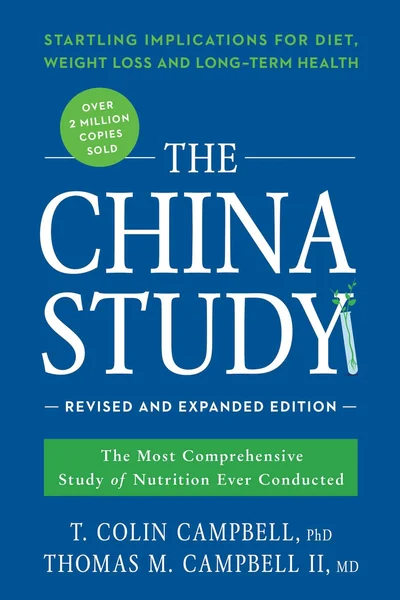
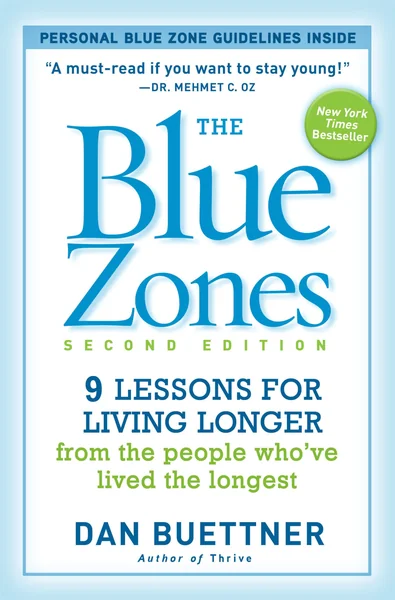
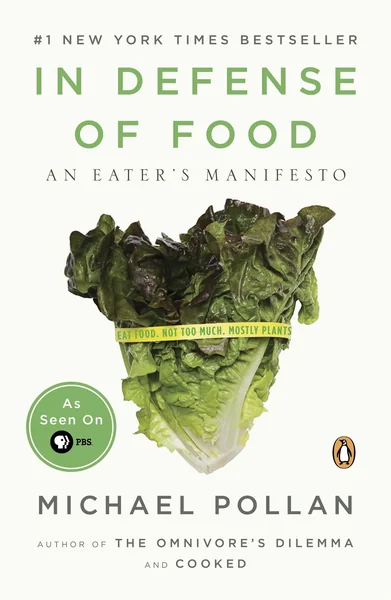
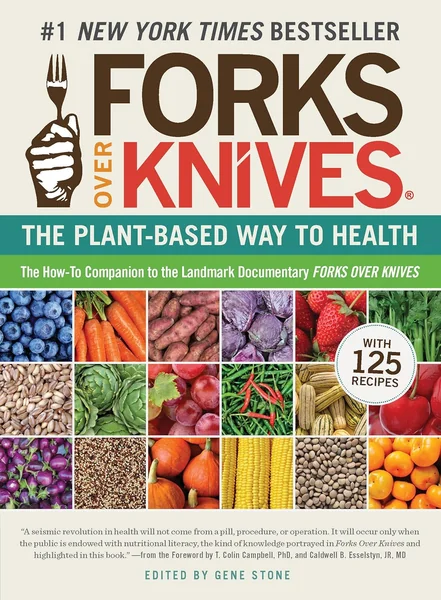
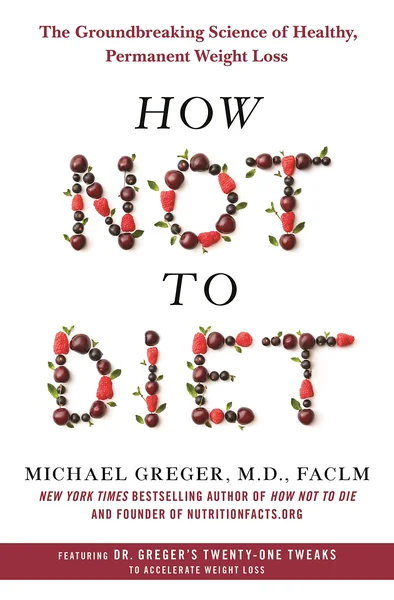
- Readers drawn to The How Not to Die Cookbook will find natural companions in the broader science-backed nutrition space. Greger's own How Not to Diet extends the whole-food, plant-based approach into the science of healthy, permanent weight loss. Gene Stone's Forks Over Knives covers similar plant-based, disease-prevention territory from a different angle. For foundational reading on the science underpinning plant-based diets, The China Study by T. Colin Campbell and Thomas M. Campbell is a landmark reference, while Michael Pollan's In Defense of Food offers a complementary eater's manifesto grounded in food-system thinking. Dan Buettner's The Blue Zones approaches longevity through the dietary and lifestyle patterns of the world's longest-lived populations.
- Who should read this?
- The cookbook is most squarely aimed at two audiences: readers of How Not to Die who want a direct, practical tool for living out its dietary recommendations, and health-focused home cooks who want their recipe choices anchored in nutritional science rather than food trends. Greger's large existing audience at NutritionFacts.org gives the book a ready readership that already trusts his framework. It is also described as an accessible entry point for those seeking to eat more plant-based foods, and as a well-suited gift for health-conscious recipients.
- About Michael Greger and Gene Stone
- Michael Herschel Greger is an American physician, author, and speaker on public health issues, best known for his advocacy of a whole-food, plant-based diet and his opposition to animal-derived food products. Gene Stone is his co-author on this cookbook, as he was on the original How Not to Die.
- What is the Daily Dozen?
- The Daily Dozen is Dr. Greger's checklist of the foods and food groups he identifies — based on the nutritional science literature — as most beneficial to incorporate into daily eating. It serves as the central organisational feature of the cookbook, giving the recipe collection a structural coherence that distinguishes it from anthology-style plant-based cookbooks: readers are guided toward a repeatable daily eating pattern, not simply handed a list of dishes. The framework makes the more than 120 recipes actionable across an entire day — meals, snacks, and beverages — rather than focusing narrowly on dinner.
- How does it compare to How Not to Die?
- How Not to Die is a science-focused text that marshals peer-reviewed evidence for how a whole-food, plant-based diet can help prevent and reverse many leading causes of premature death — it is primarily an argument, backed by research. The How Not to Die Cookbook takes that established framework as its foundation and translates it directly into more than 120 recipes, shifting the emphasis from scientific persuasion to practical kitchen application. The review describes the transition as one of the more direct pipelines from peer-reviewed nutritional science to the home kitchen in recent publishing. Readers who found How Not to Die persuasive will find the cookbook its most natural next step.
Summarize this book
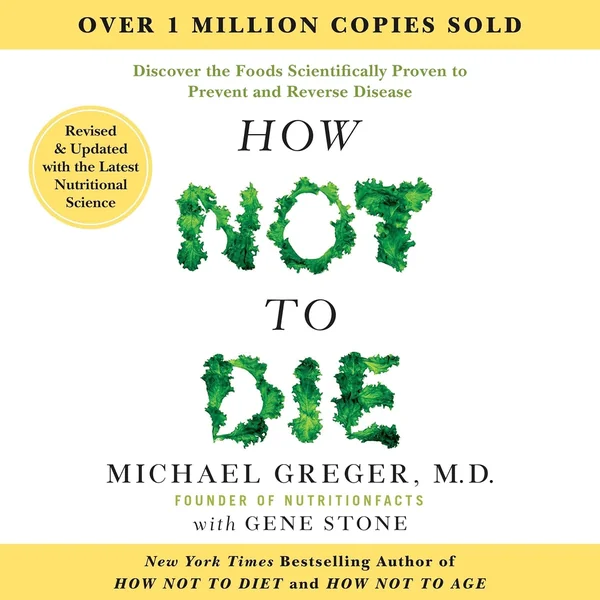
How Not to Die: Discover the Foods Scientifically Proven to Prevent and Reverse Disease by Michael Greger and Gene Stone
4.7
/ 5
How Not to Die: Revised and Updated is a New York Times bestseller by physician Michael Greger, M.D. FACLM, and co-author Gene Stone, now available as an audiobook from Macmillan Audio narrated by Greger himself. The book makes the case that the fifteen leading causes of disease-related death are largely preventable through diet and lifestyle, marshalling peer-reviewed scientific evidence to identify the foods and habits designed to extend healthy life. This review is based on the book's content and published reception, not hands-on use.
View on LuvemBooks →
The How Not to Die Cookbook: 100+ Recipes to Help Prevent and Reverse Disease by Michael Greger and Gene Stone
4.6
/ 5
Published by Flatiron Books in December 2017, The How Not to Die Cookbook is the practical, recipe-driven follow-up to Michael Greger's New York Times bestselling book How Not to Die, delivering more than 120 plant-based recipes for meals, snacks, and beverages designed to help prevent and reverse disease — grounded in Greger's Daily Dozen framework and intended for health-conscious home cooks ready to put science-backed nutrition into action.
View on LuvemBooks →
Follow up
Synthesized from verified book data & published reviews · How we review
Press Enter to ask. Answers come from our editorial Q&A — start typing to see related questions.
Age & Reading Level
Recommended age
Adult
Reading level
Adult
who it suits
Skip if you want an all-purpose or omnivore-friendly cookbook where culinary creativity and flavour exploration take centre stage.
Editorial Review
Published by Flatiron Books in December 2017, The How Not to Die Cookbook is the practical, recipe-driven follow-up to Michael Greger's New York Times bestselling book How Not to Die, delivering more than 120 plant-based recipes for meals, snacks, and beverages designed to help prevent and reverse disease — grounded in Greger's Daily Dozen framework and intended for health-conscious home cooks ready to put science-backed nutrition into action.
Read the Full ReviewBooks like The How Not to Die Cookbook
Curated picks for readers who enjoyed The How Not to Die Cookbook, with our reasoning for each match.
More by Michael Greger and Gene Stone
If you liked The How Not to Die Cookbook